
The Morgan story
History
In 1909 a railway draughtsman built a three-wheeler for himself. The firm he started still builds cars in Malvern Link.
- 6chapters
- 361dates in the timeline
- 1909to today
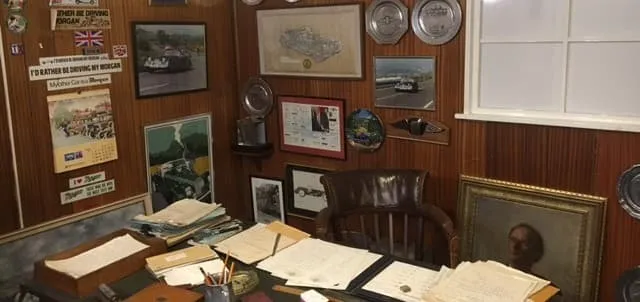
I’ve told the Morgan story in six chapters, from the railway works at Swindon to the Supersport, with a few of my own Morgan memories along the way!
Every fact that doesn’t come from the Registry’s own timeline carries its source. Where the sources disagree, I show both sides rather than pick one. HFS Morgan’s first car dates from 1909, built with help from Malvern College’s workshop. Wikipedia
Read
The story, in six chapters
-
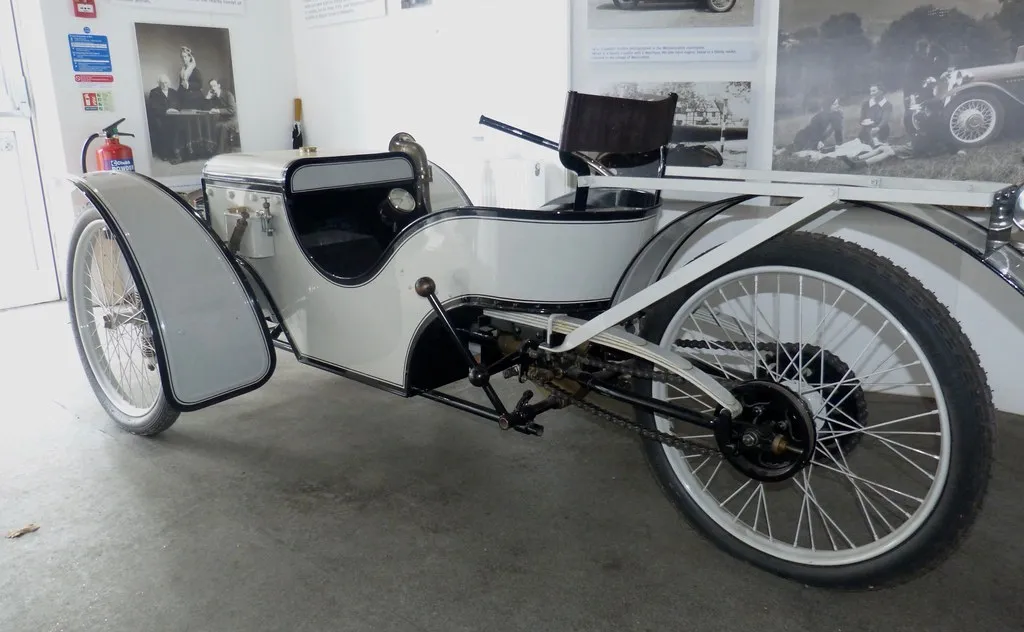 A draughtsman’s car A railway draughtsman builds a three-wheeler for himself. Within three years it is in the window at Harrods, and winning at Brooklands!
 Photo: Elsie esq., CC BY 2.0, via Flickr.
-
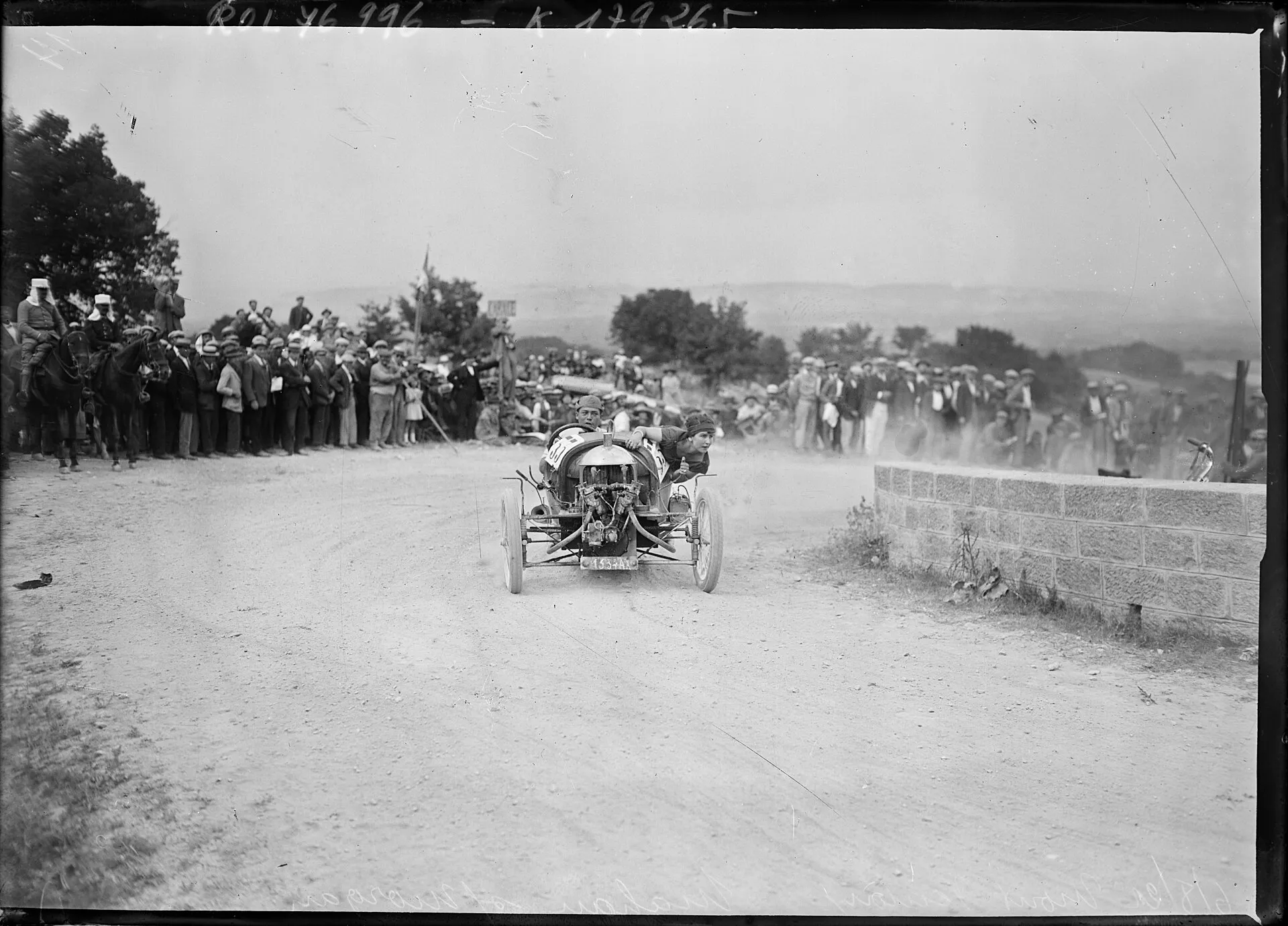 The car that did not count It wins at Amiens, is turned away from a British trial, and is banned from Brooklands. The establishment keeps finding reasons not to count it!
 Photo: Agence Rol, Bibliothèque nationale de France, Public domain, via Wikimedia Commons.
-
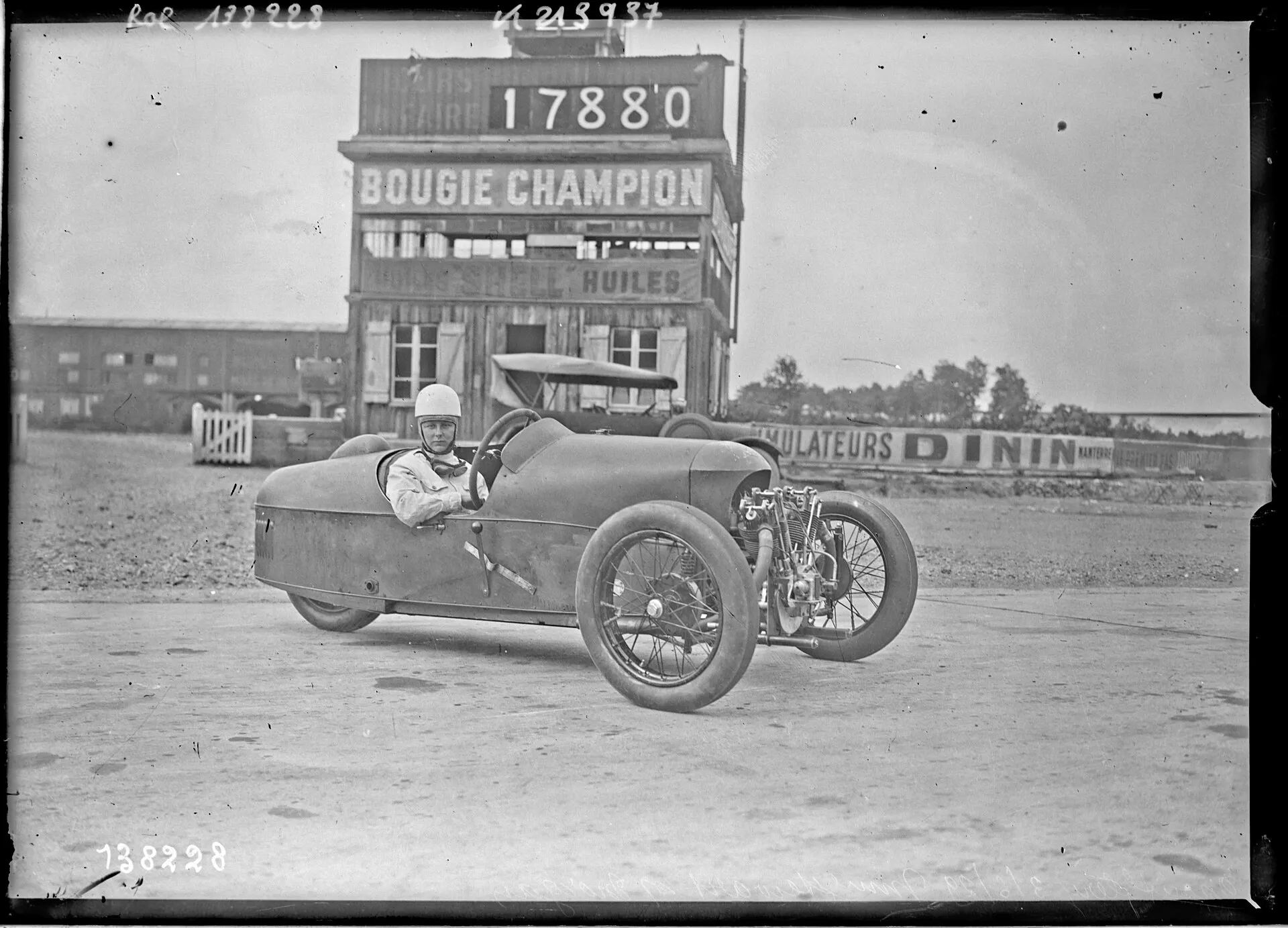 One engine at a time Records at Montlhéry, a fourth wheel at last, two runs at Le Mans, and another war. Each turn is decided by somebody else’s engine.
 Photo: Agence Rol, Bibliothèque nationale de France, Public domain, via Wikimedia Commons.
-
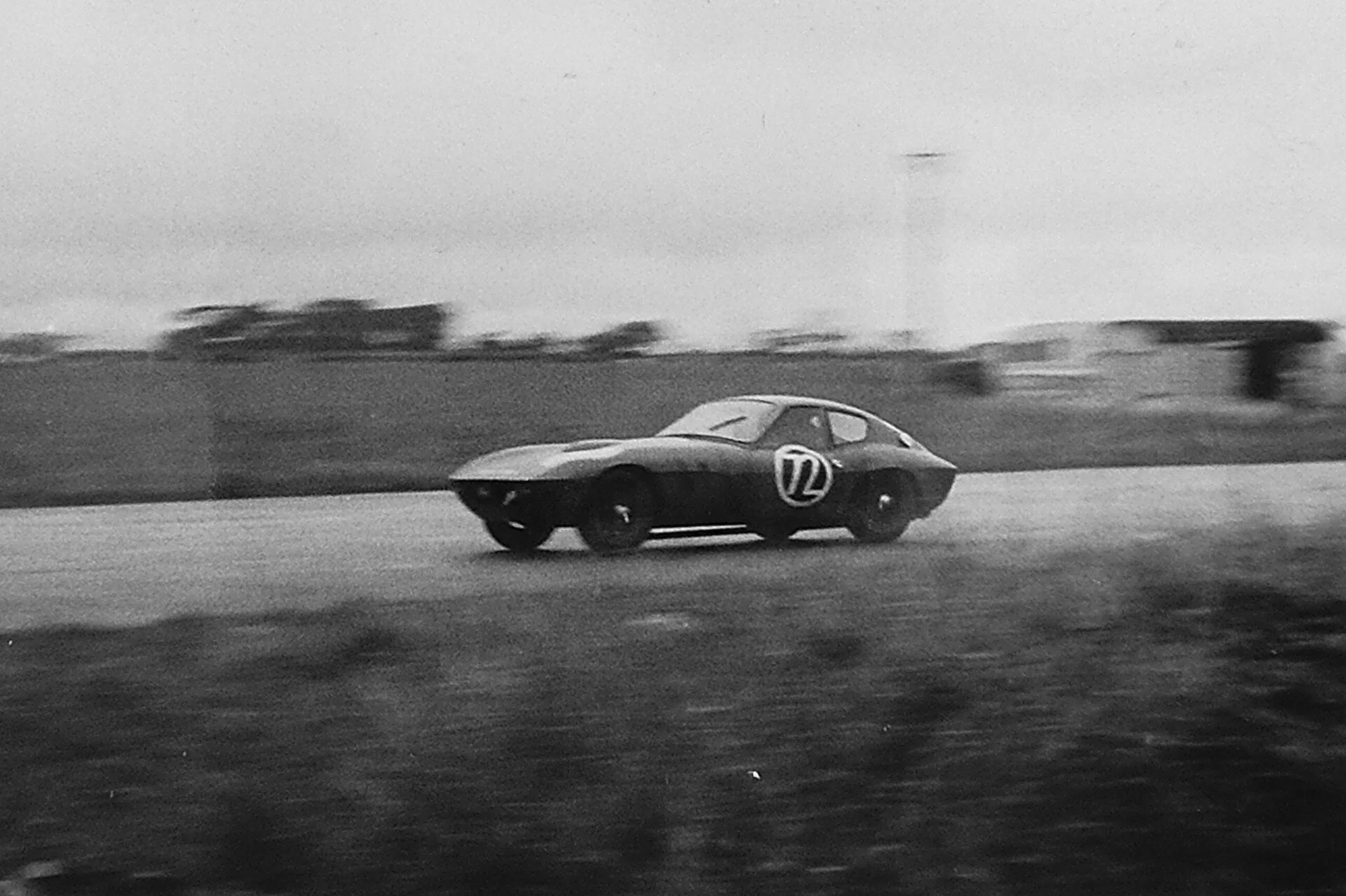 The Plus years A bigger engine slipped past the founder, an American market, a class win at Le Mans, and a V8 that hit me like a ton of bricks.
 Photo: Hugh Llewelyn, CC BY-SA 2.0, via Wikimedia Commons.
-
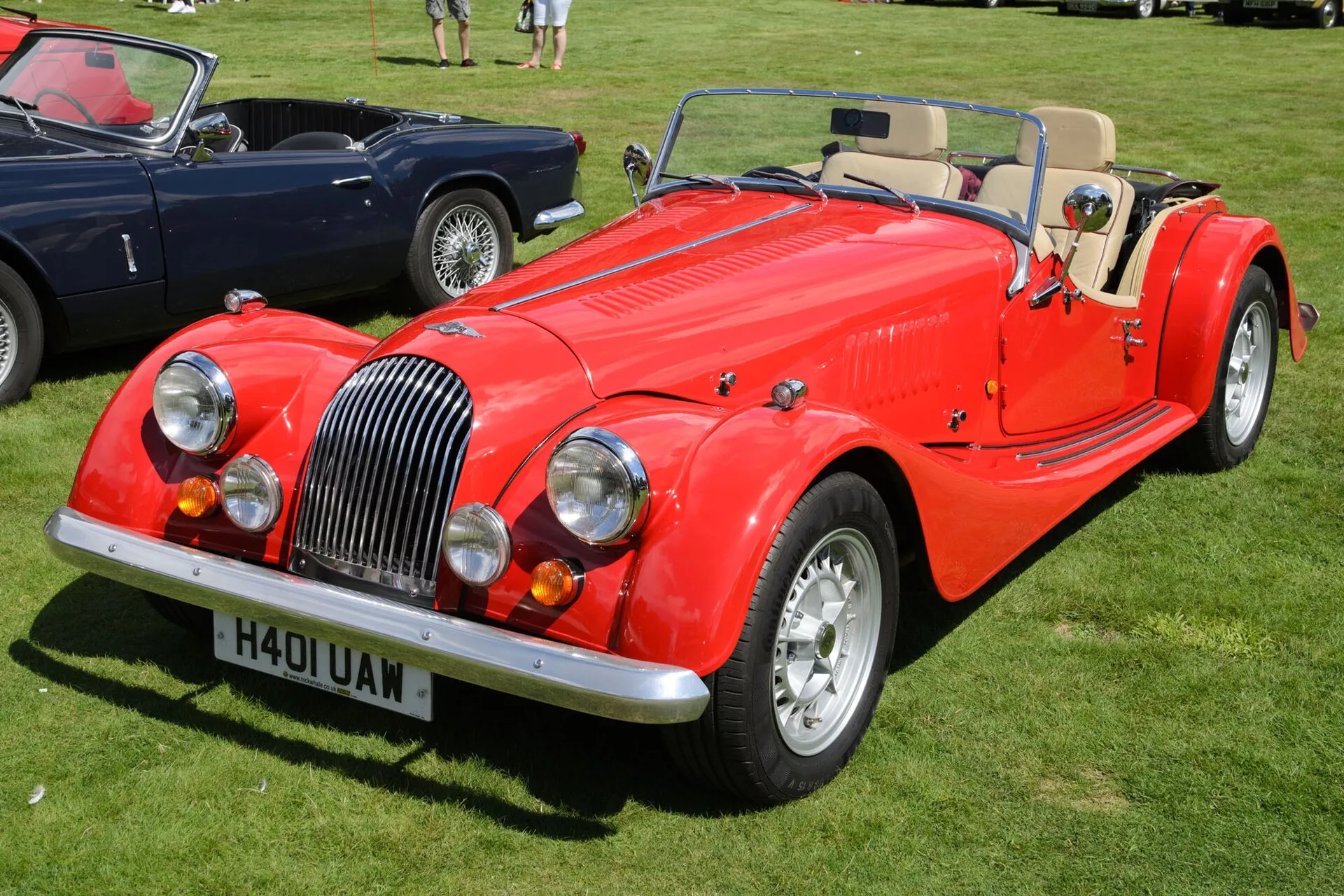 The waiting list America closes, a San Francisco importer finds a way back in, and the queue for a new Morgan stretches to years.
 -
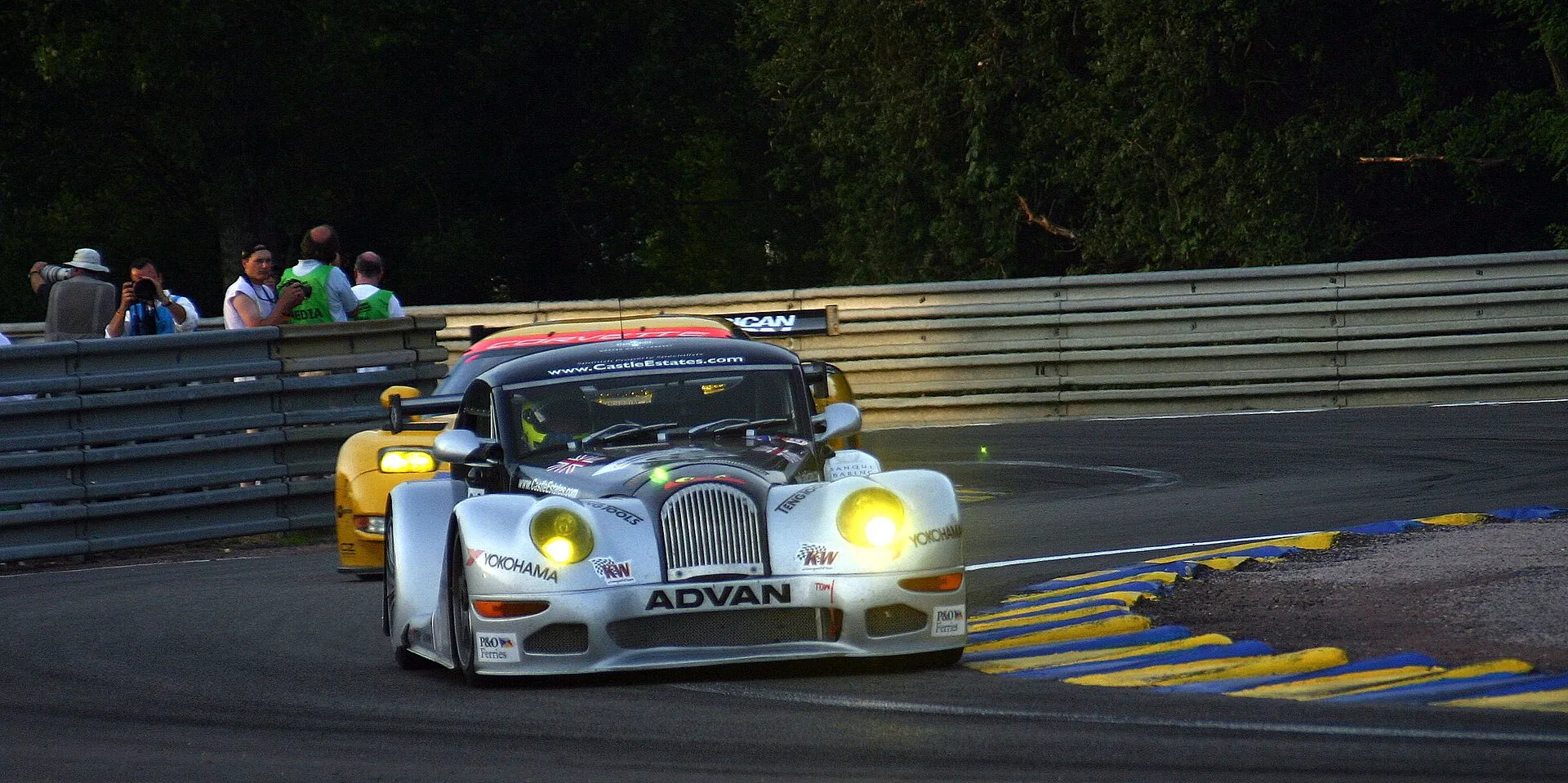 Aluminium and after An aluminium car, two returns to Le Mans, a boardroom fight, new owners, and the end of a suspension design first used in 1909…
 Photo: Martin Lee, CC BY-SA 2.0, via Wikimedia Commons.
Your Morgan
What was happening the year yours was built?
Type a year to see which Morgans were in production, what changed, how many cars the factory built, and how many from that year are in the Registry.
1909
- In the Registry
- 2 cars from 1909
- February 11, 1909 First Morgan built.
- 1909 Stephenson Peach, the engineering master at Malvern College, helps HFS machine the parts for his first three-wheeler, as the garage has almost no machine tools.
Told in Chapter I: A draughtsman’s car.
1910
- Being built
- Three-wheelers
- Built by the factory
- 55 cars
- In the Registry
- 1 car from 1910
- September 8, 1910 HFS Morgan applies for a patent on “Improvements in the Design and Construction of Tri-cars or other Light Automobile Vehicles” (GB 20,986), covering the front suspension.
- November 21, 1910 Morgan first shown at Olympia Motor Cycle Show
- December 26, 1910 Harry Morgan enters Morgan's first competitive event, the MCC London to Exeter Winter Trial in a Runabout, and won a Gold Medal.
- 1910 The patent drawings for the Morgan independent front suspension are drawn by a young John Black. He later becomes Sir John Black, head of the Standard Motor Company.
- c. 1910–1914 In the few years before the First World War Morgans take 10 British and world records and 24 gold medals in major reliability trials, by the company’s own count.
- c. 1910 The Standard Model three-wheeler is made, to about 1928.
- Three-wheelers First shown at Olympia
Told in Chapter I: A draughtsman’s car.
1911
- Being built
- Three-wheelers
- Built by the factory
- 750 cars
- In the Registry
- No cars from this year yet. If you own one, add it.
- August 17, 1911 HFS Morgan’s 1910 suspension patent (GB 20,986) is accepted.
- November 23, 1911 Morgan shows four models at the Olympia Motor Cycle Show: two single-seaters and two two-seaters (“sociables”), and a bare chassis. The Motor Cycle calls them “quite in the front rank of self-contained passenger motor cycles”.
- December 5, 1911 Harrods becomes the sole concessionaire for Morgan, and introduces their own bodywork for it.
- 1911 Harrods managing director Mr Burbridge puts a two-seater Morgan in the store window. The company later said it was the only car ever shown in a Harrods window.
- August 1911 Godfrey Applebee Ltd, of Great Portland Street, London, advertises as “sole London agents for Morgan Runabouts”, four months before Harrods becomes sole concessionaire.
Told in Chapter I: A draughtsman’s car.
1912
- Being built
- Three-wheelers
- In the Registry
- 2 cars from 1912
- March 27, 1912 1st cyclecar race to be run at Brooklands, won by Harry Martin in a Morgan
- April 1, 1912 Morgan & Co. becomes Morgan Motor Company Limited.
- June 12, 1912 Harry Morgan marries Hilda Ruth Day.
- November 9, 1912 HFS Morgan wins the Brooklands cyclecar hour race and takes the hour record from J. T. Wood (47 miles 1,390 yards, 25 September 1912), covering almost 60 miles in the hour.
- 1912 At the company’s formation, HFS’s father, Prebendary H.G. Morgan, becomes chairman and HFS becomes managing director. HFS and Ruth live next door to the first works on the Worcester Road.
- 1912 HFS’s father attends his son’s Brooklands one-hour record in a top hat, which the company calls probably the only top hat ever worn at the circuit.
- August 1912 Morgan stops having Runabout bodies built in Bromyard by Albert Pettifer and turns to William Clare, a coachbuilder half a mile from the works.
- c. 1912–1913 HFS’s sister, Miss Dorothy Morgan, is a regular entrant in reliability trials and wins many first-class awards driving a three-wheeler, by Morgan’s own account.
- c. 1912 The De Luxe three-wheeler is made, to about 1931. A De Luxe Family model runs from about 1930 to 1932.
Told in Chapter I: A draughtsman’s car.
1913
- Being built
- Three-wheelers
- Built by the factory
- 970 cars
- In the Registry
- 4 cars from 1913
- July 13, 1913 W. G. McMinnies, in a Morgan classed with the sidecars as a three-wheeler, wins the three-wheeler class at the Amiens Grand Prix and makes the fastest time of all the passenger machines (3 h 53 m 9 s, 41.9 mph). The cycle-car class and its prize go to Bourbeau’s Bédélia (3 h 55 m 54 s).
- July 17, 1913 HFS Morgan writes to The Motor Cycle disputing the classing of three-wheelers with sidecars after Amiens; the Cycle Car Club replies a week later.
- November 24, 1913 Olympia Motorcycle Show opens to rave reviews for Morgan.
- 1913 HFS Morgan wins the ACU Six Days’ Trial. Sources differ. The Motor Cycle’s results table gives him a gold medal. Wikipedia says he won.
- 1913 A Morgan sets the fastest time of the day at the Shelsley Walsh hill climb.
- 1913 A Morgan wins the Cyclecar Club’s Fuel Consumption Trial at 69.4 mpg. A two-seater costs 85 guineas at this time.
- 1913 W.G. McMinnies nicknames his Amiens-winning car the “Jabberwocky of Picardy”. The racing model becomes known as the Grand Prix.
- c. 1913 The Sporting three-wheeler is made, to about 1921.
- c. 1913 The Grand Prix three-wheeler is made, to about 1926.
- Three-wheelers Grand Prix model, after Amiens
1914
- Being built
- Three-wheelers
- Built by the factory
- 981 cars
- In the Registry
- 1 car from 1914
- August 7, 1914 Completion of Morgan's new Pickersleigh Road works. Sources differ. The unsigned company history says the new works opened in 1918, and Grace’s Guide puts an extension in October 1919.
- September 12, 1914 Harry Morgan patents a design for a four-wheeled Morgan.
- 1914 Morgan is excluded from the RAC Light Car and Cyclecar Trial because the car has three wheels, not four. A four-wheeler with a Dorman four-cylinder engine is designed in response but never built.
- 1914–1918 During the First World War, car output dwindles as men are called up. The works turns mainly to munitions and machinery for the war effort, and Malvern becomes a garrison town.
1915
- Being built
- Three-wheelers
- In the Registry
- No cars from this year yet. If you own one, add it.
- 1915 A four-seater is built for the Morgan family’s own use. After the war it goes on sale as the Family Runabout.
- c. 1915 The Family Four-Seater three-wheeler is made, to about 1937.
1916
- Being built
- Three-wheelers
- In the Registry
- No cars from this year yet. If you own one, add it.
- 1916 Lt William Leefe Robinson VC, the first pilot to shoot down a German airship over Britain (September 1916), is recorded as a Morgan driver.
- c. 1916 Aero prototypes appear. The Aero three-wheeler is made to about 1933.
1917
- Being built
- Three-wheelers
- In the Registry
- No cars from this year yet. If you own one, add it.
- 1917 Flying ace Captain Albert Ball VC owns a Morgan. He is said to have called it the nearest thing to flying without leaving the ground. He is killed on 7 May 1917, weeks after taking delivery. Accounts differ on the model: Motor Sport says a water-cooled, M.A.G.-engined car with disc wheels; others say a special Grand Prix model, whose changes are said to have influenced the Aero model of 1920.
1918
- Being built
- Three-wheelers
- In the Registry
- No cars from this year yet. If you own one, add it.
- 1918 Morgan experiments with a J.A.P. engine that has one water-cooled and one air-cooled cylinder.
- 1918–1919 HFS’s eldest daughter, Sylvia, lays the foundation stone of the new Pickersleigh Road factory, built to reach 50 cars a week. This made Morgan one of the largest British car producers of the time.
1919
- Being built
- Three-wheelers
- In the Registry
- 3 cars from 1919
- October 16, 1919 Official opening of the Pickersleigh Road extension.
- November 3, 1919 Peter Morgan born in Malvern Link.
- November 22, 1919 A new model, the Aero, is introduced at the Olympia Show. Sources differ. Morgan’s own history dates the Aero to 1920.
- November 22, 1919 A new model, the four-seater Family, is introduced at the Olympia Show.
- 1919 Helped by the car’s simplicity, Morgan is one of the first British makers back in full production after the war.
- 1919–1921 The Darmont brothers agree to build Morgans under licence at Courbevoie, near Paris, to avoid French import duty. The Darmont-Morgan goes on sale in 1921 and is made almost entirely in France by 1922.
- Three-wheelers Aero and Family models
1920
- Being built
- Three-wheelers
- Built by the factory
- 2,300 cars
- In the Registry
- No cars from this year yet. If you own one, add it.
- 1920 Three-wheeler prices: £145 for the Sporting model, £150 for the Grand Prix and £160 for the water-cooled De Luxe.
1921
- Being built
- Three-wheelers
- Built by the factory
- 2,500 cars
- In the Registry
- 2 cars from 1921
- 1921 The Popular model is launched at £150.
- c. 1921 Brooklands organisers (the BARC) stop allowing three-wheelers at their meetings, so Morgans race at club and BMCRC events instead.
- 1921 The works is building about 30 cars a week.
- 1921 Darmont-built Morgans take the first three places in the Paris–Nice trial.
1922
- Being built
- Three-wheelers
- In the Registry
- 4 cars from 1922
Nothing in the timeline is dated to 1922. The chapter below tells the surrounding years.
1923
- Being built
- Three-wheelers
- Built by the factory
- 2,300 cars
- In the Registry
- 2 cars from 1923
- 1923 The Standard model is cut to £100, with lighting £8 extra.
1924
- Being built
- Three-wheelers
- In the Registry
- 5 cars from 1924
- c. 1924 The first Stork mascot is seen.
- 1924 E.B. Ware’s Morgan crashes in the JCC 200 Mile Race at Brooklands after a rear tyre failure, and three-wheelers are banned from racing against cars there.
- Three-wheelers Stork mascot first seen
1925
- Being built
- Three-wheelers
- In the Registry
- 2 cars from 1925
- 1925 George Goodall joins as General Manager, replacing A. Hales, who had been with HFS since 1911. He later becomes Managing Director and retires at the end of 1958.
- c. 1925 The Aero Family three-wheeler is made, to about 1933. The Aero Super Sports runs from about 1926 to 1933.
Told in Chapter III: One engine at a time.
1926
- Being built
- Three-wheelers
- In the Registry
- 2 cars from 1926
Nothing in the timeline is dated to 1926. The chapter below tells the surrounding years.
Told in Chapter III: One engine at a time.
1927
- Being built
- Three-wheelers
- Built by the factory
- 1,700 cars
- In the Registry
- 9 cars from 1927
- 1927 The Super Aero sports model is introduced.
- 1927 A Standard three-wheeler costs £89 and an air-cooled Aero £111.
- c. 1927 The Super Sports three-wheeler is made, to about 1938.
Told in Chapter III: One engine at a time.
1928
- Being built
- Three-wheelers
- In the Registry
- 11 cars from 1928
- August 1928 The New Cyclecar Club’s first Brooklands meeting brings three-wheelers back to racing there, four years after the ban that followed E.B. Ware’s crash.
Told in Chapter III: One engine at a time.
1929
- Being built
- Three-wheelers
- Built by the factory
- 1,002 cars
- In the Registry
- 14 cars from 1929
- September 7, 1929 Gwenda Stewart drove 101.55 miles in 1 hour, the first time a 3-wheeler had covered over 100 miles in an hour.
- 1929 The Super Sports three-wheeler costs £145.
- c. 1929 The Delivery Van three-wheeler is made, to about 1935. The Sports Family runs from about 1930 to 1936.
Told in Chapter III: One engine at a time.
1930
- Being built
- Three-wheelers
- In the Registry
- 7 cars from 1930
- 1930 At Montlhéry, Gwenda Stewart and S.C.H. Davis set Morgan records from 1,500 km to 24 hours; her highest officially timed speed is 113.52 mph.
Told in Chapter III: One engine at a time.
1931
- Being built
- Three-wheelers
- In the Registry
- 10 cars from 1931
- 1931 A new three-wheeler arrives with three forward speeds and reverse, single-chain drive and detachable wheels.
Told in Chapter III: One engine at a time.
1932
- Being built
- Three-wheelers
- Built by the factory
- 352 cars
- In the Registry
- 24 cars from 1932
Nothing in the timeline is dated to 1932. The chapter below tells the surrounding years.
Told in Chapter III: One engine at a time.
1933
- Being built
- Three-wheelers
- Built by the factory
- 591 cars
- In the Registry
- 38 cars from 1933
- 1933 The Ford-engined F-type (F-4 four-seater) three-wheeler is introduced at the Olympia Motor Cycle Show, followed by the F-2 in 1935 and the F-Super in 1937.
- Three-wheelers F-type, with a Ford four-cylinder engine
Told in Chapter III: One engine at a time.
1934
- Being built
- Three-wheelers
- Built by the factory
- 659 cars
- In the Registry
- 61 cars from 1934
- c. 1934 The beetleback tail gives way to the barrelback, and the “Flying M” radiator mascot arrives with the barrelbacks.
- c. 1934 The F4 four-seater three-wheeler runs to 1952. The F2 two-seater follows from about 1935 and the F-Super from about 1938.
- Three-wheelers V-twins change from J.A.P. to Matchless engines
Told in Chapter III: One engine at a time.
1935
- Being built
- Three-wheelers
- Built by the factory
- 286 cars
- In the Registry
- 34 cars from 1935
- December 27, 1935 Morgan announces their four-wheeler, the 4-4. Sources differ. Boddy says the 4-4 arrived in 1936, and one enthusiast’s history dates its debut to March 1936.
Told in Chapter III: One engine at a time.
1936
- Being built
- Three-wheelers, 4/4
- Built by the factory
- 278 cars
- In the Registry
- 47 cars from 1936
- November 10, 1936 Preb. HG Morgan dies.
- 4/4 Coventry Climax, 1,122 cc
Told in Chapter III: One engine at a time.
1937
- Being built
- Three-wheelers, 4/4
- Built by the factory
- 425 cars
- In the Registry
- 37 cars from 1937
- April 10, 1937 First test of V8 Morgan.
- August 16, 1937 4 passenger Morgan introduced.
- 1937 HFS Morgan becomes Chairman and Governing Director after his father’s death.
- c. 1937–1940 A Morgan prototype with a 22 hp Ford V8 is dropped after the UK horsepower tax rises from 15 to 25 shillings per horsepower.
Told in Chapter III: One engine at a time.
1938
- Being built
- Three-wheelers, 4/4
- Built by the factory
- 338 cars
- In the Registry
- 47 cars from 1938
- June 19, 1938 Prudence Fawcett places 13th at Le Mans in a 4-4.
- August 8, 1938 First drophead coupe announced.
- October 16, 1938 DHC introduced.
- 1938 Morgan adopts a special 1,267 cc Standard engine for the 4-4, built at the personal request of Sir John Black, the same man who drew the 1910 patent. Sources differ. One enthusiast’s history says May 1939, and Wikipedia says the engine was fitted from 1939.
- 4/4 Three 4/4s at Le Mans
Told in Chapter III: One engine at a time.
1939
- Being built
- Three-wheelers, 4/4
- Built by the factory
- 173 cars
- In the Registry
- 23 cars from 1939
- February 5, 1939 Introduction of Le Mans Replica.
- March 12, 1939 Introduction of 4-4 Le Mans Replica.
- c. 1939 An experimental supercharged Morgan with an Arnott blower reaches over 80 mph from only 1,000 cc.
- Early 1939 After meeting HFS at the 1938 London Motor Show, New York dealer J.B. Ferguson (of Fergus Motors) imports his first few Morgans, among the earliest known imports to the USA.
- June 1939 A Morgan 4-4 finishes 15th overall and second in its class at Le Mans.
- 1939–1945 Car production stops for the Second World War. Only the Service shop and the Spares department are kept running.
- 1939–1945 The rest of the factory makes precision parts for the war effort, including parts for the Oerlikon anti-aircraft gun, aircraft undercarriage and carburettors.
- 1939–1945 The Standard Motor Company takes over some of the Morgan workshops for its aero-engine division.
- 1939–1945 Peter Morgan serves with the Royal Army Service Corps in the motor workshops in Sierra Leone.
- c. 1939–1950 Between 539 and 700 Standard Special engines are produced for the 4/4.
- 4/4 Standard Special, 1,267 cc
Told in Chapter III: One engine at a time.
1940
- Being built
- Three-wheelers, 4/4
- In the Registry
- No cars from this year yet. If you own one, add it.
- December 14, 1940 Peter Morgan marries Jane
Told in Chapter III: One engine at a time.
1941
- Being built
- Three-wheelers, 4/4
- In the Registry
- No cars from this year yet. If you own one, add it.
Nothing in the timeline is dated to 1941. The chapter below tells the surrounding years.
Told in Chapter III: One engine at a time.
1942
- Being built
- Three-wheelers, 4/4
- In the Registry
- No cars from this year yet. If you own one, add it.
- c. 1942 Halfway through the war, the wood shop and mill are leased to Sir Alan Cobham’s Flight Refuelling Ltd. It modifies a Handley Page Hereford bomber inside the factory to develop in-flight refuelling and wing anti-icing.
Told in Chapter III: One engine at a time.
1943
- Being built
- Three-wheelers, 4/4
- In the Registry
- No cars from this year yet. If you own one, add it.
Nothing in the timeline is dated to 1943. The chapter below tells the surrounding years.
Told in Chapter III: One engine at a time.
1944
- Being built
- Three-wheelers, 4/4
- In the Registry
- No cars from this year yet. If you own one, add it.
- May 1944 A letter in Motor Cycling proposes a club for Morgan three-wheeler owners. The first Bulletin goes out in October 1944.
Told in Chapter III: One engine at a time.
1945
- Being built
- Three-wheelers, 4/4
- In the Registry
- No cars from this year yet. If you own one, add it.
- July 29, 1945 1st post WW2 Morgan produced.
- September 1945 The Morgan Three Wheeler Club holds its inaugural general meeting at Malvern.
- 1945 Skilled staff return from the forces. Aluminium bodies let Morgan work around the steel shortage, making it one of the first British car factories to restart production.
- February 1945 The Morgan Three Wheeler Club holds its first social meeting, in South London.
Told in Chapter III: One engine at a time.
1946
- Being built
- Three-wheelers, 4/4
- Built by the factory
- 105 cars
- In the Registry
- 8 cars from 1946
- 1946 The last twelve V-twin three-wheelers are built and shipped to Australia.
- Three-wheelers The last twelve V-twins, shipped to Australia
Told in Chapter III: One engine at a time.
1947
- Being built
- Three-wheelers, 4/4
- Built by the factory
- 622 cars
- In the Registry
- 31 cars from 1947
- 1947 Peter Morgan joins the firm as Development Engineer and Draughtsman after being demobilised.
- 1947 Standard announces its “One Engine Policy”, so no 1,267 cc engines will be available after 1949 and Morgan must find another engine.
Told in Chapter III: One engine at a time.
1948
- Being built
- Three-wheelers, 4/4
- Built by the factory
- 86 cars
- In the Registry
- 23 cars from 1948
Nothing in the timeline is dated to 1948. The chapter below tells the surrounding years.
Told in Chapter III: One engine at a time.
1949
- Being built
- Three-wheelers, 4/4
- Built by the factory
- 183 cars
- In the Registry
- 28 cars from 1949
- 1949 A prototype is built with the 1.8-litre Standard Vanguard engine. It becomes the basis of the Plus 4. Sources differ. One enthusiast’s history dates the Plus 4 prototype to July 1950, three months before the show.
- 1949 Peter Morgan becomes a director of the company.
Told in Chapter III: One engine at a time.
1950
- Being built
- Three-wheelers, 4/4, Plus 4
- Built by the factory
- 212 cars
- In the Registry
- 37 cars from 1950
- September 23, 1950 Plus 4 announced.
- October 18, 1950 Plus 4 introduced at Earl's Court Show, London
- 1950s–1960s The USA becomes Morgan’s largest market, at times taking up to 85% of production. Motor Sport later wrote that the American market “probably saved the Company in the 1950s.”
- 1950 The company decides to stop making three-wheelers, as the four-wheelers sell abroad and the three-wheeler does not.
- Plus 4 Standard Vanguard, 2,088 cc
Told in Chapter IV: The Plus years.
1951
- Being built
- Three-wheelers, Plus 4
- Built by the factory
- 202 cars
- In the Registry
- 47 cars from 1951
- January 20, 1951 1st Plus 4 to USA; Angell Motors, Pasadena, CA; P 2104.
- February 20, 1951 Last Series 1 4-4 chassis number dispatched, chassis 2081. Unconfirmed. This entry and the next both name a last Series 1 4-4. Which is which has not been confirmed.
- March 13, 1951 Last Series 1 4-4 dispatched; chassis 1902. Unconfirmed. This entry and the one before both name a last Series 1 4-4. Which is which has not been confirmed.
- March 16, 1951 1st Plus 4s dispatched to (then) east coast Morgan distributor: Fergus Motors; P 2114, P 2115, P 2116.
- June 30, 1951 Morgan owners hold an inaugural meeting at Ye Olde Flying Horse in Kegworth, the start of the Morgan 4/4 Club.
- July 21, 1951 A second meeting at Kegworth founds the Morgan 4/4 Club, today’s Morgan Sports Car Club.
- July 29, 1951 Charles Morgan born.
- August 5, 1951 The Morgan 4/4 Club holds its first event, a road rally.
- 1951 and 1952 Morgan wins the team prize on the RAC Rally in both years, with Peter Morgan driving in both teams.
- March 1951 – September 1955 The 4/4 is out of production. It returns in September 1955 as the Series II with a Ford engine.
- July 1951 The Morgan Sports Car Club is formed with thirty members.
- 1951 Peter Morgan becomes vice chairman.
- 1951 At a Chester sprint, Cyril Hale’s Morgan three-wheeler comes within a tenth of a second of a Jaguar XK120.
- November 1951 The club’s first magazine, “Motoring and Morgans”, appears: 17 typed pages.
Told in Chapter IV: The Plus years.
1952
- Being built
- Three-wheelers, Plus 4
- Built by the factory
- 289 cars
- In the Registry
- 72 cars from 1952
- c. 1952 A Plus 4 Saloon prototype is marked on Braunstein’s chart.
- Three-wheelers Last of the vintage three-wheelers
Told in Chapter IV: The Plus years.
1953
- Being built
- Plus 4
- Built by the factory
- 595 cars
- In the Registry
- 119 cars from 1953
- July 14, 1953 Final Three-wheelers leave the factory. Sources differ. Wikipedia and Hagerty end three-wheeler production in 1952, and the unsigned company history says the decision to stop was made in 1950.
- October 18, 1953 First 4 seat DHC introduced.
- 1953–1954 The Plus 4 carries an interim radiator between the flat and cowled designs.
- 1953–1956 The Plus 4 moves to Triumph engines: first the TR2 (90 bhp), then the TR3 (100 bhp).
- Plus 4 Interim cowl; Triumph TR2 engine
Told in Chapter IV: The Plus years.
1954
- Being built
- Plus 4
- Built by the factory
- 85 cars
- In the Registry
- 57 cars from 1954
- June 1954 The final cowled radiator arrives on the Plus 4, with teardrop headlamp nacelles.
- c. 1954 The Plus 4 bustle-back body is made, to about 1958.
- c. 1954 Plus 4 four-seat drophead coupés are made: 51 in all, by the chart’s count.
- Plus 4 Cowled radiator
Told in Chapter IV: The Plus years.
1955
- Being built
- 4/4, Plus 4
- Built by the factory
- 278 cars
- In the Registry
- 97 cars from 1955
- October 1955 Series II 4/4 introduced.
- c. 1955 The Plus 4 chassis changes from trunnion, with the rear springs inside a tube, to shackle, with them held in shackles.
- 4/4 Series II, Ford 100E
Told in Chapter IV: The Plus years.
1956
- Being built
- 4/4, Plus 4
- Built by the factory
- 324 cars
- In the Registry
- 84 cars from 1956
- February 9, 1956 Ruth Morgan dies.
- September 14, 1956 First time Morgan was said to have a sliding pillar front suspension (incorrectly) by "AutoCar" road test of Series II 4/4.
Told in Chapter IV: The Plus years.
1957
- Being built
- 4/4, Plus 4
- Built by the factory
- 258 cars
- In the Registry
- 101 cars from 1957
- August 19, 1957 Last 4 seat DHC produced.
Told in Chapter IV: The Plus years.
1958
- Being built
- 4/4, Plus 4
- Built by the factory
- 294 cars
- In the Registry
- 127 cars from 1958
- July 27, 1958 Chris Lawrence first races the second-hand Plus 4 registered TOK 258, which he bought for £650.
Told in Chapter IV: The Plus years.
1959
- Being built
- 4/4, Plus 4
- Built by the factory
- 499 cars
- In the Registry
- 159 cars from 1959
- May 10, 1959 Chris Lawrence wins his first race in a Morgan at the BRSCC Brands Hatch Marque Race.
- June 15, 1959 HFS Morgan dies.
- September 5, 1959 Lalah Neuman Tallinghast first woman to drive in first Daytona International Speedway sports car race in a Plus 4. Unconfirmed. No source I have found mentions her, so this entry is unconfirmed.
- c. 1959 Plus 4 bonnet knobs change from bullseye to smooth.
Told in Chapter IV: The Plus years.
1960
- Being built
- 4/4, Plus 4
- Built by the factory
- 517 cars
- In the Registry
- 136 cars from 1960
- April 11, 1960 50th anniversary of the MMC.
- November 12, 1960 Plus 4 Super Sports produced.
- 1960 Morgan tells Road & Track that about 80% of its cars go to America, split evenly between the two coasts.
- c. 1960 Plus 4 disc brakes arrive, from chassis 4671.
- 4/4 Series III, Ford 105E
Told in Chapter IV: The Plus years.
1961
- Being built
- 4/4, Plus 4
- Built by the factory
- 253 cars
- In the Registry
- 171 cars from 1961
- February 14, 1961 First Super Sports introduced.
- June 1961 Le Mans refuses Chris Lawrence and Richard Shepherd-Barron’s Plus 4 (registered XRX 1), saying it is not in the spirit of the race.
- 4/4 Series IV, Ford 109E
Told in Chapter IV: The Plus years.
1962
- Being built
- 4/4, Plus 4
- Built by the factory
- 313 cars
- In the Registry
- 172 cars from 1962
- April 29, 1962 Lew Spencer, C Production SCCA National Champion, Plus 4 SS (Baby Doll) Sources differ. Wikipedia’s 1962 SCCA results name a different champion, Dave Clark in a Lotus.
- June 24, 1962 Morgan wins class in LeMans.
- 1962–1963 Magnolia instrument dials change to black.
- June 1962 At Le Mans, the class-winning Plus 4 Super Sports of Chris Lawrence and Richard Shepherd-Barron covers over 2,255 miles at an average of nearly 94 mph. It is then driven home to England on public roads.
- c. 1962 Plus 4 toggle switches arrive.
- c. 1962–1963 Plus 4 sidescreens change from one piece to sliding, and the drophead coupé gets a curved windscreen.
- Plus 4 Class win at Le Mans
Told in Chapter IV: The Plus years.
1963
- Being built
- 4/4, Plus 4
- Built by the factory
- 444 cars
- In the Registry
- 167 cars from 1963
- October 15, 1963 First Plus 4 Plus introduced at Earl's Court Motor Show, London.
- September 1963 Fergus Imported Cars merges with Fine Cars Inc. to form Fergus-Fine Cars in New York, which takes about 20 Morgans a month.
- 4/4 Series V, Ford 116E, 1,498 cc
- Plus 4 Plus 4 Plus coupé shown; 26 built
Told in Chapter IV: The Plus years.
1964
- Being built
- 4/4, Plus 4
- Built by the factory
- 332 cars
- In the Registry
- 178 cars from 1964
- 1964 The Morgan SLR, a streamlined racing coupé on a Plus 4 chassis, is designed by Chris Lawrence and John Sprinzel.
Told in Chapter IV: The Plus years.
1965
- Being built
- 4/4, Plus 4
- Built by the factory
- 400 cars
- In the Registry
- 202 cars from 1965
- November 27, 1965 Carl Swanson, E Production SCCA National Champion, Morgan Plus 4
- 1965 Seat belts arrive.
Told in Chapter IV: The Plus years.
1966
- Being built
- 4/4, Plus 4
- Built by the factory
- 455 cars
- In the Registry
- 182 cars from 1966
- 1966 Maurice Owen joins Morgan to develop the Rover V8-powered Plus 8.
Told in Chapter IV: The Plus years.
1967
- Being built
- 4/4, Plus 4
- Built by the factory
- 499 cars
- In the Registry
- 213 cars from 1967
- February 16, 1967 First Plus 8 roars into life.
- April 20, 1967 Last Plus 4 Plus produced.
- 1967 Morgan buys a Buick 215 V8 from General Motors for the Plus 8 prototype.
- c. 1967 The generator gives way to an alternator, by the chart’s estimate.
Told in Chapter IV: The Plus years.
1968
- Being built
- 4/4, Plus 4, Plus 8
- Built by the factory
- 454 cars
- In the Registry
- 102 cars from 1968
- May 6, 1968 Last Super Sports produced.
- September 12, 1968 Autocar publishes the first road test of the Plus 8, a month before its public launch at the Earl’s Court Motor Show. Unconfirmed. The date is Autocar’s road test as the bibliography records it. It is still to be confirmed with the owner who keeps the timeline.
- October 1968 Introduction of the Plus 8 at the Earl’s Court Motor Show, London.
- c. 1968 The 4/4 moves from the Series V (1,498 cc Ford 116E) to the Ford 1600.
- 1968 Bill Fink founds Isis Imports on Eddy Street in San Francisco. It later moves to Pier 33.
- December 1968 Motor Sport road-tests the Plus 8: Rover V8 with 161 bhp net, Moss gearbox, 125 mph, £1,487. Morgan is building two a week and plans about five a week in 1969.
- 4/4 Ford 1600
- Plus 8 Rover 3.5 V8, Moss gearbox
Told in Chapter IV: The Plus years.
1969
- Being built
- 4/4, Plus 4, Plus 8
- Built by the factory
- 311 cars
- In the Registry
- 113 cars from 1969
- March 21, 1969 Last DHC produced.
- c. 1969 A four-seater 4/4 joins the range, and runs until about 1991.
- January 1969 The last Plus 4 with a Triumph TR4A engine is built, by Braunstein’s chart.
Told in Chapter V: The waiting list.
1970
- Being built
- 4/4, Plus 8
- Built by the factory
- 433 cars
- In the Registry
- 124 cars from 1970
- 1970 Over 300 Morgans gather at Prescott for the club’s first big gathering, marking 60 years of Morgan production.
- 1970 According to the company, the Plus 8 gains US type approval after meeting American safety and clean-air rules.
Told in Chapter V: The waiting list.
1971
- Being built
- 4/4, Plus 8
- Built by the factory
- 413 cars
- In the Registry
- 101 cars from 1971
- 1971 The first wave of US safety and emissions regulations ends Morgan’s large American market.
- January 1971 The Morgan 4/4 Club is renamed the Morgan Sports Car Club.
- c. 1971 A one-off automatic Plus 8 drophead coupé is built for Jane Morgan; the factory keeps it.
Told in Chapter V: The waiting list.
1972
- Being built
- 4/4, Plus 8
- Built by the factory
- 337 cars
- In the Registry
- 84 cars from 1972
- c. 1972 The Plus 8 changes from the Moss four-speed gearbox to Rover’s four-speed. Dual brake master cylinders arrive about the same time.
- 1972 and 1975 Robin Gray wins the Fred Dixon Modsports Championship in a Plus 8. Sources differ. The company history spells his name Grey. Morgan’s own history dates Grey’s title to 1972 and gives 1975 to Chris Alford’s title in a 4/4.
- c. 1972 The Smiths heater changes from a circular to a box core.
- Plus 8 Rover four-speed gearbox
Told in Chapter V: The waiting list.
1973
- Being built
- 4/4, Plus 8
- Built by the factory
- 284 cars
- In the Registry
- 50 cars from 1973
Nothing in the timeline is dated to 1973. The chapter below tells the surrounding years.
Told in Chapter V: The waiting list.
1974
- Being built
- 4/4, Plus 8
- Built by the factory
- 644 cars
- In the Registry
- 48 cars from 1974
- 1974 Isis Imports begins converting new Plus 8s to run on propane, which makes them legal to import into the US again. Conversions continue until 1992, and 98% of the imported Morgans are Plus 8s.
Told in Chapter V: The waiting list.
1975
- Being built
- 4/4, Plus 8
- Built by the factory
- 338 cars
- In the Registry
- 51 cars from 1975
- c. 1975 The Plus 8 Sports Lightweight. The chart marks the run “19 built”.
- 1975 About 100 to 105 staff build 8 to 10 cars a week, and 65% are exported. A Plus 8 costs £2,925 and a two-seater Plus 4 £2,094.
- 1975 Chris Alford wins the BRSCC Production Sports Car Championship in a 4/4: fifteen wins in fifteen starts.
Told in Chapter V: The waiting list.
1976
- Being built
- 4/4, Plus 8
- Built by the factory
- 250 cars
- In the Registry
- 52 cars from 1976
- c. 1976 The Plus 8 body is made four inches wider.
- 1976–1994 The Plus 8 uses Rover’s LT77 five-speed gearbox.
- 1976 The club’s first national event, held at Harewood and Shelsley Walsh, marks 40 years of four-wheelers and the club’s 25th anniversary.
Told in Chapter V: The waiting list.
1977
- Being built
- 4/4, Plus 8
- Built by the factory
- 574 cars
- In the Registry
- 48 cars from 1977
- May 8, 1977 The first event called “MOG” is held at Ragley Hall. There has been a big club event every year since.
- Plus 8 Rover LT77 five-speed
Told in Chapter V: The waiting list.
1978
- Being built
- 4/4, Plus 8
- Built by the factory
- 277 cars
- In the Registry
- 53 cars from 1978
- 1978 All Morgan models gain EEC whole vehicle type approval.
- 1978–1979 MMC 11, the first production Plus 8 tested by Autocar, wins the 1978 BRDC Production Sports Car Championship with nine wins in twelve races. It takes the BRSCC title in 1979, driven by Charles Morgan and Rob Wells. Unconfirmed. The entry does not say which of Charles Morgan and Rob Wells drove in which year.
Told in Chapter V: The waiting list.
1979
- Being built
- 4/4, Plus 8
- Built by the factory
- 288 cars
- In the Registry
- 69 cars from 1979
Nothing in the timeline is dated to 1979. The chapter below tells the surrounding years.
Told in Chapter V: The waiting list.
1980
- Being built
- 4/4, Plus 8
- Built by the factory
- 716 cars
- In the Registry
- 52 cars from 1980
- c. 1980 The Plus 8’s 3.5-litre Rover V8 runs on twin Stromberg carburettors.
- 1980–1982 Morgans cover the greatest distance by a single-car entry in the Willhire 24 Hour race at Snetterton, then Britain’s only 24-hour race.
Told in Chapter V: The waiting list.
1981
- Being built
- 4/4, Plus 8
- Built by the factory
- 360 cars
- In the Registry
- 65 cars from 1981
- c. 1981–1984 Fiat-engined 4/4s: 93 in all by the chart’s count — 47 two-seaters plus one works car, 35 four-seaters and 10 two-litre cars.
- 4/4 Fiat 1600
Told in Chapter V: The waiting list.
1982
- Being built
- 4/4, Plus 8
- Built by the factory
- 101 cars
- In the Registry
- 64 cars from 1982
- c. 1982 The Plus 8 gets rack-and-pinion steering, and the 4/4 moves to Ford’s 1600 CVH engine.
- 4/4 Ford 1600 CVH
Told in Chapter V: The waiting list.
1983
- Being built
- 4/4, Plus 8
- Built by the factory
- 318 cars
- In the Registry
- 51 cars from 1983
Nothing in the timeline is dated to 1983. The chapter below tells the surrounding years.
Told in Chapter V: The waiting list.
1984
- Being built
- 4/4, Plus 8
- Built by the factory
- 411 cars
- In the Registry
- 53 cars from 1984
- c. 1984 The Plus 8 takes the fuel-injected 3.5-litre Rover SD1 “Flapper” engine (about 204 bhp).
- 1984 Over 1,200 Morgans from around the world gather at Eastnor Castle for the 75th anniversary.
- Plus 8 Fuel injection
Told in Chapter V: The waiting list.
1985
- Being built
- 4/4, Plus 4, Plus 8
- Built by the factory
- 527 cars
- In the Registry
- 94 cars from 1985
- January 8, 1985 Xan Morgan born.
- c. 1985–1987 The Plus 4 returns with Fiat’s 1,995 cc engine: 122 built, 90 two-seaters and 32 four-seaters.
- 1985 Charles Morgan, the founder’s grandson, joins the company full time.
- Plus 4 Returns with a Fiat engine
Told in Chapter V: The waiting list.
1986
- Being built
- 4/4, Plus 4, Plus 8
- Built by the factory
- 722 cars
- In the Registry
- 69 cars from 1986
- 1986 on Wood preservative treatment on all cars.
Told in Chapter V: The waiting list.
1987
- Being built
- 4/4, Plus 4, Plus 8
- Built by the factory
- 568 cars
- In the Registry
- 79 cars from 1987
- 1987 The Morgan Sports Car Championship, a one-make race series for owners, begins.
Told in Chapter V: The waiting list.
1988
- Being built
- 4/4, Plus 4, Plus 8
- Built by the factory
- 262 cars
- In the Registry
- 55 cars from 1988
- c. 1988 The Plus 4 changes to Rover’s 1,994 cc engine: the M16, later the T16.
- Plus 4 Rover M16
Told in Chapter V: The waiting list.
1989
- Being built
- 4/4, Plus 4, Plus 8
- Built by the factory
- 867 cars
- In the Registry
- 72 cars from 1989
Nothing in the timeline is dated to 1989. The chapter below tells the surrounding years.
Told in Chapter V: The waiting list.
1990
- Being built
- 4/4, Plus 4, Plus 8
- Built by the factory
- 889 cars
- In the Registry
- 58 cars from 1990
- May 1, 1990 BBC Troubleshooter shown.
- c. 1990 The Plus 8 moves to the 3.9-litre “Hotwire” Rover V8.
- 1990 When Sir John Harvey-Jones films Troubleshooter at the factory, the waiting list for a new Morgan is reported at around a decade.
- c. 1990 The narrow 4/4 body gives way to the wide Plus 8 body, four inches wider.
- Plus 8 3.9-litre “Hotwire” V8
Told in Chapter V: The waiting list.
1991
- Being built
- 4/4, Plus 4, Plus 8
- Built by the factory
- 724 cars
- In the Registry
- 62 cars from 1991
Nothing in the timeline is dated to 1991. The chapter below tells the surrounding years.
Told in Chapter V: The waiting list.
1992
- Being built
- 4/4, Plus 4, Plus 8
- Built by the factory
- 815 cars
- In the Registry
- 62 cars from 1992
- c. 1992 Servo-assisted brakes become standard on the Plus 4.
- 1992–1996 Morgan sells fully US-compliant cars in America, without propane conversion.
- 4/4 Ford Zetec, 16 valves
Told in Chapter V: The waiting list.
1993
- Being built
- 4/4, Plus 4, Plus 8
- Built by the factory
- 592 cars
- In the Registry
- 58 cars from 1993
- 17 Apr – 16 May 1993 Bruce Stapleton and Doug Morris finish 38th in a Morgan Plus 8 in the London–Sydney Marathon (44 stages).
Told in Chapter V: The waiting list.
1994
- Being built
- 4/4, Plus 4, Plus 8
- Built by the factory
- 935 cars
- In the Registry
- 76 cars from 1994
- 1994 on The Plus 8 uses the R380 gearbox, with a Morgan-specific remote linkage.
- 1994 MOG 94 at York draws nearly 1,000 Morgans.
Told in Chapter V: The waiting list.
1995
- Being built
- 4/4, Plus 4, Plus 8
- Built by the factory
- 697 cars
- In the Registry
- 75 cars from 1995
- 1995 Joe Ferguson, the long-time New York Morgan importer (Fergus Motors), dies in Dadeville, Alabama.
- 1995 The Morgan Three Wheeler Club’s 50th anniversary draws about 200 three-wheelers.
Told in Chapter V: The waiting list.
1996
- Being built
- 4/4, Plus 4, Plus 8
- Built by the factory
- 580 cars
- In the Registry
- 46 cars from 1996
- 1996 Charles Morgan and Bill Wykeham race an aluminium-chassis Plus 8 in seven rounds of the BPR GT series, which became the FIA GT Championship in 1997.
- c. 1996–2000 The 4.6-litre “Hotwire” Plus 8 is built: 335 cars, with about 215 bhp. A 4.0-litre GEMS engine of about 190 bhp runs alongside, to about 2004.
Told in Chapter V: The waiting list.
1997
- Being built
- 4/4, Plus 4, Plus 8
- Built by the factory
- 471 cars
- In the Registry
- 53 cars from 1997
- 1997 on Superform on all cars (the chart’s own term).
- 1997 A 4.6-litre V8 version of the Plus 8 is introduced, and a new water-based paint shop opens.
- Plus 8 4.6-litre V8
Told in Chapter V: The waiting list.
1998
- Being built
- 4/4, Plus 4, Plus 8
- Built by the factory
- 888 cars
- In the Registry
- 98 cars from 1998
- September 2, 1998 Maurice Owen dies.
- 1998 on The long door on all cars.
Told in Chapter V: The waiting list.
1999
- Being built
- 4/4, Plus 4, Plus 8
- Built by the factory
- 503 cars
- In the Registry
- 83 cars from 1999
- April 14, 1999 BBC Troubleshooter 2 shown.
- February 1999 Output reaches 11 cars a week, the highest since before the Second World War.
- 1999 Peter Morgan hands day-to-day running of the company to his son Charles and stays on as chairman.
Told in Chapter V: The waiting list.
2000
- Being built
- 4/4, Plus 4, Plus 8, Aero 8
- Built by the factory
- 515 cars
- In the Registry
- 63 cars from 2000
- February 29, 2000 Aero 8 introduced at the Geneva Motor Show.
- 2000 on A galvanised chassis on all cars.
- 2000–2004 Aero 8 Series 1 (Mk1), with BMW's 4.4-litre V8. The chart notes it kept the original chassis dimensions from the bulkhead back, with a couple of boot-lid revisions.
- Plus 4 Plus 4 paused for the Aero 8, to about 2004
- Aero 8 Unveiled at Geneva
Told in Chapter VI: Aluminium and after.
2001
- Being built
- 4/4, Plus 4, Plus 8, Aero 8
- Built by the factory
- 465 cars
- In the Registry
- 62 cars from 2001
- January 29, 2001 First message sent on Emog, from Lorne Goldman to Ed Herman.
- 2001 – September 2004 The Plus 4 is dropped when Rover’s T16 engine is no longer available. It returns in September 2004 with a 2.0-litre Ford Duratec engine.
Told in Chapter VI: Aluminium and after.
2002
- Being built
- 4/4, Plus 8, Aero 8
- Built by the factory
- 572 cars
- In the Registry
- 137 cars from 2002
- June 2002 A privately entered Morgan Aero 8 GT (Race Sports Salisbury) runs at Le Mans but retires.
- 2002 Morgan builds 80 “Le Mans ’62” limited editions for the 40th anniversary of the class win.
- Aero 8 At Le Mans; retired
Told in Chapter VI: Aluminium and after.
2003
- Being built
- 4/4, Plus 8, Aero 8
- Built by the factory
- 415 cars
- In the Registry
- 75 cars from 2003
- September 10, 2003 Original Morgan factory demolished.
- September 15, 2003 Demolition of Morgan & Co's first garage of 1905.
- October 20, 2003 Peter Morgan dies.
- 2003–2006 After Peter Morgan’s death, Alan Garnett becomes the first chairman from outside the Morgan family.
Told in Chapter VI: Aluminium and after.
2004
- Being built
- 4/4, Plus 4, Plus 8, Aero 8, Roadster
- Built by the factory
- 582 cars
- In the Registry
- 48 cars from 2004
- March 31, 2004 First V6 Roadster produced.
- May 4, 2004 Last Plus 8 produced. Sources differ. The unsigned company history says April 2004.
- April 2004 A farewell party for the Plus 8 at Prescott Hill Climb draws over 1,000 Morgans and more than 600 runs up the hill.
- June 2004 The Aero 8 GT returns to Le Mans and finishes the race.
- Plus 4 Returns with a Ford 2.0 Duratec
- Aero 8 At Le Mans; finished
- Roadster Ford 3.0 V6, replacing the Plus 8
Told in Chapter VI: Aluminium and after.
2005
- Being built
- 4/4, Plus 4, Aero 8, Roadster
- Built by the factory
- 584 cars
- In the Registry
- 73 cars from 2005
- March 1, 2005 Introduction of the Morgan AeroMax at the Geneva Motor Show.
- September 22, 2005 Morgan LifeCar announced. Sources differ. Morgan’s own history says the LIFE car was developed in 2008.
- 2005 The AeroMax debuts as a one-off: a 4.4-litre, 325 bhp car. Production Aero 8s later move to a 4.8-litre, 362 bhp engine.
- 2005–2007 Aero 8 Series 2: a larger boot, ABS brakes, and a wider frame and body.
- Aero 8 AeroMax one-off
Told in Chapter VI: Aluminium and after.
2006
- Being built
- 4/4, Plus 4, Aero 8, Roadster
- Built by the factory
- 339 cars
- In the Registry
- 38 cars from 2006
- 2006 4/4 70th Anniversary Edition.
- January 2006 For the 4/4’s 70th anniversary, Morgan announces 142 cars: two numbered cars for each year of 4/4 production.
- July 2006 The four-seater returns to the range, built at about two a week.
- 2006 Isis Imports offers Plus 8s fitted with a 400 hp Chevrolet LS2 V8.
- c. 2006 Roadsters for North America: about 82 are imported, then some 20 more (some say 40), for 102 or about 122 in all. Airbags were the problem. Sources differ. Braunstein’s chart itself gives two totals, 102 and about 122.
- 4/4 70th anniversary: 142 cars
Told in Chapter VI: Aluminium and after.
2007
- Being built
- 4/4, Plus 4, Aero 8, Roadster
- Built by the factory
- 638 cars
- In the Registry
- 47 cars from 2007
- 2007–2009 Aero 8 Series 3, with straighter-looking headlights.
- 2007 The Aero 8 America is made, with louvred sides, special colours and side pipes. Automatic transmission is standard in the US and optional elsewhere.
Told in Chapter VI: Aluminium and after.
2008
- Being built
- 4/4, Plus 4, Aero 8, Roadster
- Built by the factory
- 156 cars
- In the Registry
- 41 cars from 2008
- December 5, 2008 HFS family home demolished.
- 2008–2009 A new winged Morgan logo.
Told in Chapter VI: Aluminium and after.
2009
- Being built
- 4/4, Plus 4, Aero 8, Roadster
- Built by the factory
- 690 cars
- In the Registry
- 49 cars from 2009
- April 24, 2009 Introduction of the new Morgan Aero SuperSports.
- July 24, 2009 Official Morgan Centennial Celebration begins.
- 2009–2015 Aero 8 Series 4: the AeroMax and Super Sports on an extended coupe body. Automatic transmission only in the US, optional elsewhere.
- April 2009 The Princess Royal opens the Morgan Visitor Centre, a converted social club, for the centenary.
- 1–2 August 2009 The Morgan Centenary Festival is held at Cheltenham Racecourse, with over 300 three-wheelers among the cars.
- 2–3 May 2009 At Silverstone, the opening round of the FIA GT3 European Championship, AutoGT Racing’s Morgan Aero SuperSports GT3 wins both races.
- c. 2009 The Roadster ‘100’ Special Edition is built, limited to 100. The chart says supposedly only 63 were built.
- c. 2009 The LIFECar concept is shown, with an electric powertrain by QinetiQ and a fuel cell.
- Aero 8 Aero SuperSports
- Roadster Roadster ‘100’ special edition
- Concepts and one-offs LIFECar concept: electric powertrain, QinetiQ fuel cell
Told in Chapter VI: Aluminium and after.
2010
- Being built
- 4/4, Plus 4, Aero 8, Roadster
- Built by the factory
- 740 cars
- In the Registry
- 35 cars from 2010
- August 15, 2010 Introduction of the concept Morgan EVA GT at Pebble Beach Concours
- December 3, 2010 Morgan Technologies Limited, the operating company, is incorporated (Companies House 07459137), with Charles Morgan among its first directors.
- 2010 The company’s assets are moved to a new company, Morgan Technologies Ltd. It changes its name back to The Morgan Motor Company in 2018.
Told in Chapter VI: Aluminium and after.
2011
- Being built
- 4/4, Plus 4, Aero 8, Roadster, 3 Wheeler, Super 3
- Built by the factory
- 910 cars
- In the Registry
- 27 cars from 2011
- March 3, 2011 Introduction of the new Morgan Three Wheeler at the Geneva Motor Show.
- June 30, 2011 The SuperDry Edition 3 Wheeler, limited to 200.
- Dec 2011 4/4 75th Anniversary 2.0-litre, a limited edition.
- c. 2011 The Plus 4 SS, limited to 60 for the UK, is built. The chart lists six colours beside it: Sports Red, Almond Green, English White, Iris Blue, RAF Blue and Primrose Yellow.
- Late 2011 The Mazda MX-5 gearbox becomes standard on the Plus 4.
- Plus 4 Mazda MX-5 gearbox, standard
- 3 Wheeler, Super 3 Unveiled at Geneva
Told in Chapter VI: Aluminium and after.
2012
- Being built
- 4/4, Plus 4, Plus 8, Aero 8, Roadster, 3 Wheeler, Super 3
- Built by the factory
- 1,144 cars
- In the Registry
- 24 cars from 2012
- January 27, 2012 First production model of the Morgan Three Wheeler registered
- March 7, 2012 Introduction of the Morgan E at Geneva Auto Show
- March 8, 2012 Morgan shows the Plus E, an electric car with a 70 kW motor from Zytek. Unconfirmed. The date is only on Braunstein’s chart and has not been checked against another source.
- March 13, 2012 Introduction of the new Aero Morgan Coupe at Geneva Auto Show
- March 13, 2012 Introduction of the new Morgan PLUS 8 at Geneva Auto Show
- 2012 on Mazda MX-5 gearbox on all cars except the Roadster.
- May 2012 Roadster Series 4, with Ford’s 3.7-litre Cyclone V6 (260–270 bhp). The chart also notes power steering on the 3.7-litre car and a Roadster CX announced, neither with a date.
- Autumn 2012 The Gulf Edition 3 Wheeler, limited to 100.
- 2012 The Morgan name returns to Le Mans with OAK Racing’s Pescarolo-based Morgan LMP2, which also finishes second in class at the 2012 Sebring 12 Hours.
- June 2012 US deliveries of the new 3 Wheeler begin.
- c. 2012 The Roadster Brooklands Edition is built, limited to 50.
- c. 2012 The Plus 4 SS ‘Baby Doll’ VI is built.
- Plus 8 BMW 4.8 V8
- Aero 8 Aero Coupé
- Roadster Ford 3.7 Cyclone V6
- Concepts and one-offs Plus E: Zytek 70 kW electric motor (8 March)
Told in Chapter VI: Aluminium and after.
2013
- Being built
- 4/4, Plus 4, Plus 8, Aero 8, Roadster, 3 Wheeler, Super 3
- Built by the factory
- 1,178 cars
- In the Registry
- 35 cars from 2013
- October 14, 2013 Charles Morgan released from Board of Directors at MMC
- November 13, 2013 The SuperSports Junior, a pedal car. Sources differ. Morgan’s own history says the pedal car was added for the 2009 centenary.
- Jul 2013 The Brooklands Edition 3 Wheeler is announced, limited to 50.
- 2013 EvaGT production is cancelled.
- June 2013 The #45 Morgan LMP2 is the official Le Mans “Art Car”.
- 3 Wheeler, Super 3 1,000th modern three-wheeler (13 November)
Told in Chapter VI: Aluminium and after.
2014
- Being built
- 4/4, Plus 4, Plus 8, Aero 8, Roadster, 3 Wheeler, Super 3
- Built by the factory
- 984 cars
- In the Registry
- 17 cars from 2014
- August 25, 2014 MMC produces its 1000th New Trike chassis Sources differ. The Registry’s timeline gives an exact day for this entry. Braunstein’s chart dates the 1,000th modern three-wheeler to 13 November 2013.
- September 3, 2014 Introduction of the Morgan ST-1 at the factory Sources differ. Braunstein’s chart calls it the SP1.
- September 22, 2014 Introduction of the Morgan Plus 8 Speedster
- 2014 The Plus 4 Super Sports returns, limited to 60 cars.
- c. 2014 The Roadster ARV6 track car is built.
- c. 2014 The 3 Wheeler gets engineering upgrades: a stiffer chassis, an improved centre drive unit and bevel box, re-engineered steering and an urban cooling pack.
- Plus 8 Plus 8 Speedster, limited edition
- 3 Wheeler, Super 3 Engineering upgrades
- Concepts and one-offs SP1: a one-off on a Roadster chassis (3 September)
Told in Chapter VI: Aluminium and after.
2015
- Being built
- 4/4, Plus 4, Plus 8, Aero 8, Roadster, 3 Wheeler, Super 3
- Built by the factory
- 800 cars
- In the Registry
- 12 cars from 2015
- March 3, 2015 Introduction of the new Morgan Aero 8 at Geneva Auto Show
- July 24, 2015 Introduction of the Morgan AR Plus 4
- Q4 2015 Aero 8 Series 5 (Mark 2) production starts; it runs to 2018.
- c. 2015 The AR Plus 4, with a Cosworth engine, is built: 50 in all.
- c. 2015 The 4/4 Speedster is not produced after legal problems. Two prototypes exist, one grey and one orange.
- Q1 2015 Production of the Aero SuperSports (limited to 100, 32 for the USA) and the Aero Coupé ends.
- Aero 8 Series 5
Told in Chapter VI: Aluminium and after.
2016
- Being built
- 4/4, Plus 4, Plus 8, Aero 8, Roadster, 3 Wheeler, Super 3
- Built by the factory
- 800 cars
- In the Registry
- 14 cars from 2016
- March 2, 2016 Production model of Electric 3-wheeler Morgan shown
- July 25, 2016 Limited Edition of Selfridge EV3 by Morgan shown
- Mar 2016 4/4 80th Anniversary Edition: 80 cars. The chart believes a grey Speedster was the first.
- c. 2016 Production of the Roadster Four Place is halted, by the chart.
- 4/4 80th Anniversary Edition, 80 cars
Told in Chapter VI: Aluminium and after.
2017
- Being built
- 4/4, Plus 4, Plus 8, Aero 8, Roadster, 3 Wheeler, Super 3
- Built by the factory
- 850 cars
- In the Registry
- 10 cars from 2017
- February 20, 2017 Charles Morgan settles dispute with family, MMC
- June 13, 2017 MMC buys its factory back
- 2017 MOG at Malvern draws 1,500 Morgans.
- c. 2017 The Aero GT is built, limited to 8.
Told in Chapter VI: Aluminium and after.
2018
- Being built
- 4/4, Plus 4, Plus 8, Aero 8, Roadster, 3 Wheeler, Super 3
- Built by the factory
- 750 cars
- In the Registry
- 13 cars from 2018
- May 4, 2018 Last Aero 8 chassis begins production at the factory
- August 10, 2018 Morgan Technologies Limited becomes Morgan Motor Company Limited again (resolution dated 24 July 2018).
- Q4 2018 The EV3 electric three-wheeler is cancelled.
- 2018 The 50th anniversaries of both the Plus 8 and Isis Imports.
- 2018 Morgan’s sales are £33.8 million, with £3.2 million net profit, from about 700 cars.
- April 2018 The Roadster Series 4 rear suspension changes from leaf springs to a five-link coil-sprung rear.
- Plus 8 50th Anniversary edition
- Roadster Five-link rear suspension (April)
- 3 Wheeler, Super 3 Electric EV3 cancelled
Told in Chapter VI: Aluminium and after.
2019
- Being built
- Plus 4, Roadster, 3 Wheeler, Super 3, Plus Six, Supersport
- Built by the factory
- 750 cars
- In the Registry
- 15 cars from 2019
- February 15, 2019 Morgan Roadster discontinued Sources differ. The Registry’s timeline gives an exact day for this entry. Braunstein’s chart has the Series 4 Roadster built until 2020, and the factory’s production record counts 80 Roadsters that year.
- February 28, 2019 Morgan Plus 8 discontinued Sources differ. Wikipedia says the BMW-engined Plus 8 ran from 2012 to 2018. Morgan’s own page says 2012 to 2019. Morgan’s 2025 account says the last Plus 8 in core production was built in 2018, with nine Plus 8 GTRs in 2021.
- March 5, 2019 MMC sells majority ownership to the investment group Investindustrial, whose other funds also hold a stake in Aston Martin Lagonda.
- March 5, 2019 Introduction of the new Morgan Plus 6 at the Geneva Auto Show
- March 5, 2019 As part of the Investindustrial deal, Morgan’s management and all its employees are given a share of the business for the first time.
- April 3, 2019 The Investindustrial sale completes on the public register: Sports Cars (England) Acquisitions Ltd is recorded as holding 75% or more of Morgan Motor Company Ltd, Charles Morgan stops being a registered holder of more than 25%, and four directors, including chairman Dominic Riley, leave the board.
- April 22, 2019 Plus 6 introduced
- December 10, 2019 4/4 discontinued Sources differ. Morgan’s own 4/4 page says it was made from 1936 to 2018.
- December 11, 2019 Morgan announces that the traditional steel chassis, in use since 1936, will end in 2020, with the 4/4, Plus 4 and Roadster replaced by CX-Generation cars.
- c. 2019 110th anniversary editions are built: a Plus 4 110th Works Edition of 50 cars, and 110th Anniversary editions of the 3 Wheeler and the Roadster.
- Plus Six, Supersport Plus Six at Geneva: the first CX car
Told in Chapter VI: Aluminium and after.
2020
- Being built
- Plus 4, 3 Wheeler, Super 3, Plus Six, Supersport
- Built by the factory
- 600 cars
- In the Registry
- 7 cars from 2020
- January 20, 2020 Plus 4 and all ladder chassis models discontinued
- January 24, 2020 Plus Four introduced Sources differ. Wikipedia says it was revealed online on 3 March 2020, after the Geneva show was cancelled.
- February 10, 2020 Bill Fink, famous Morgan importer, killed in home fire, Bodega, Ca
- November 20, 2020 Braunstein’s chart marks the end of the modern three-wheeler, after 33 cars of the P101 run-out edition. Sources differ. Morgan’s own 3 Wheeler page says it ran until the summer of 2021.
- Summer 2020 The Morgan Experience Centre reopens after redevelopment, with an interactive museum called The Archive.
- c. 2020 The Plus 4 70th Edition with a gold chassis is built: 20 in all.
- Plus 4 BMW turbo four, CX platform
- 3 Wheeler, Super 3 End of the 3 Wheeler, by the chart (20 November)
Told in Chapter VI: Aluminium and after.
2021
- Being built
- Plus 4, 3 Wheeler, Super 3, Plus Six, Supersport
- Built by the factory
- 635 cars
- In the Registry
- 5 cars from 2021
- March 19, 2021 Last group of 30 Trikes produced
- October 28, 2021 MMC fined 60,000 pounds for safety breach unloading a car chassis on delivery
- July 2021 The CX-T, an off-road Plus Four, is built in a limited run. Sources differ. Braunstein’s chart gives the run as 7 cars in one place and 8 in another.
- 2021 The BMW 4.8-litre V8’s run ends with nine motorsport-inspired Plus 8 GTRs, after the last Plus 8 in core production in 2018.
- Plus 4 CX-T off-road edition
- Plus 8 Nine Plus 8 GTRs close the BMW V8’s run
- 3 Wheeler, Super 3 P101 run-out edition
- Concepts and one-offs CX-T off-road Plus Four (July)
Told in Chapter VI: Aluminium and after.
2022
- Being built
- Plus 4, 3 Wheeler, Super 3, Plus Six, Supersport
- Built by the factory
- 534 cars
- In the Registry
- 5 cars from 2022
- February 24, 2022 Morgan Super 3 introduced
- October 28, 2022 Nick Wilson joins MMC as new Chief of Staff
- November 9, 2022 The Plus Four and Plus Six are rebranded, with changes for the 2023 model year.
- December 31, 2022 Steve Morris, chief executive at the Super 3 launch, leaves the board of Morgan Motor Company Ltd.
- c. 2022 The Plus Four LM62 Le Mans Special Edition is built: 62 in all.
- Plus 4 Rebranded Plus Four, 2023 model year
- Plus Six, Supersport Rebranded Plus Six, 2023 model year
Told in Chapter VI: Aluminium and after.
2023
- Being built
- Plus 4, 3 Wheeler, Super 3, Plus Six, Supersport
- Built by the factory
- 690 cars
- In the Registry
- No cars from this year yet. If you own one, add it.
- December 6, 2023 Morgan XP-1, an all-electric Trike, introduced
- 2023 The Super 3 is approved for sale in the US as a motor tricycle.
- November 2023 Morgan and Pininfarina announce their collaboration on the Midsummer.
Told in Chapter VI: Aluminium and after.
2024
- Being built
- Plus 4, 3 Wheeler, Super 3, Plus Six, Supersport
- Built by the factory
- 419 cars
- In the Registry
- 2 cars from 2024
- January 11, 2024 The CX Plus Four, launched in 2019, reaches its fourth version, with a new interior and an LED screen. The chart notes the car’s technology is otherwise unchanged.
- January 15, 2024 Massimo Fumarola is the new CEO of MMC
- January 17, 2024 Complete recall of Morgan Super 3s sent to USA (62) due to defective pedal box housing
- May 16, 2024 Morgan Midsummer model introduced to the world
- July 9, 2024 Morgan announces the Super 3 Origins Collection: nine specifications, nine cars of each.
- September 12, 2024 MMC plans to reintroduce the automatic Plus Four to the USA in Spring 2025
- October 9, 2024 Massimo Fumarola steps down as CEO of MMC Sources differ. Companies House ends his directorship on 31 October 2024.
- November 1, 2024 Braunstein’s chart marks the official end of Plus Six production. Sources differ. Morgan’s own FAQ says the last Plus Six was built in March 2025.
- November 2, 2024 Matthew Hole appointed Managing Director of MMC Sources differ. Companies House records him as a director from 31 October 2024.
- October 2024 The Plus Six Pinnacle, limited to 30 cars, closes out Plus Six production. Sources differ. Braunstein’s chart marks the official end of Plus Six production on 1 November 2024. Morgan’s own FAQ says the last Plus Six was built in March 2025.
- 3 Wheeler, Super 3 Super 3 Origins Collection
- Concepts and one-offs XP-1: electric Super 3 prototype
- Plus Six, Supersport Midsummer, with Pininfarina: 50 cars
- Plus Six, Supersport Official end of Plus Six production, by the chart
Told in Chapter VI: Aluminium and after.
2025
- Being built
- Plus 4, 3 Wheeler, Super 3, Plus Six, Supersport
- Built by the factory
- 515 cars
- In the Registry
- 10 cars from 2025
- February 12, 2025 Steven Armstrong appointed Chairman of MMC, succeeding Lawrence Price, who stays on the board as a non-executive director.
- March 11, 2025 The Supersport is unveiled live at Pickersleigh Road, hosted by Richard Hammond, on the new CXV aluminium platform, replacing the Plus Six.
- March 27, 2025 MMC confronted with business decision selling in US and US tariffs
- April 5, 2025 The first CX Plus Four for the United States is registered, at Frazee in Florida. Unconfirmed. Only on Braunstein’s chart; no other source has been seen.
- June 30, 2025 A UK–US trade deal cuts the US tariff on British cars from 27.5% to 10%, within a quota of 100,000 cars a year.
- October 15, 2025 MMC OKed to sell Plus Fours in US with automatic only, no more than 275 total Sources differ. Wikipedia gives a cap of 325 cars a year.
- November 2, 2025 Morgan Supersport now top of line, taking over from Plus Six Sources differ. Morgan’s own announcement says the Supersport was unveiled live on 11 March 2025.
- December 11, 2025 Morgan marks 25 years of BMW engines, dating the partnership to the Aero 8 of 2000.
- Plus 4 First CX Plus Four registered in the US
Told in Chapter VI: Aluminium and after.
2026
- Being built
- Plus 4, 3 Wheeler, Super 3, Plus Six, Supersport
- In the Registry
- No cars from this year yet. If you own one, add it.
- March 10, 2026 The last of the 50 Midsummer roadsters is built.
- June 12, 2026 Morgan announces a US-specification Supersport, with the Supersport body and a 2.0-litre BMW four-cylinder engine. Its arrival in America is expected in the fall of 2026.
- July 15, 2026 Morgan says the Supersport is now available to order throughout the United States, excluding California, with a 2.0-litre BMW four-cylinder engine. American production begins in August and the first customer cars arrive from September.
- April 2026 The Supersport 400, with 402 bhp, becomes the most powerful Morgan ever built.
- June 2026 Morgan reveals the Midsummer Coupé, a fixed-head version of the Midsummer. Nine client commissions will follow the 50 roadsters.
- Concepts and one-offs Midsummer Coupé revealed: 9 commissions to follow (24 June)
- Plus Six, Supersport Supersport 400, the most powerful Morgan
- Plus Six, Supersport Supersport on sale in the US, with a 2.0-litre BMW four (July)
Told in Chapter VI: Aluminium and after.
At a glance
Every Morgan line, 1909 to today
When each family of Morgans was built, what changed along the way, and, shaded beneath, how many of its cars the Registry holds, year by year.
Point at a mark or a shaded year to read it here. Each shaded year opens those cars in the Registry.
Swipe sideways to follow the lines to today.
The chart as text, with sources
Three-wheelers
- 1910–1952 V-twin and F-type three-wheelers. Wikipedia, Unsigned company history
- 1910 First shown at Olympia. Motor Sport, 1965
- 1913 Grand Prix model, after Amiens. Unsigned company history
- 1919 Aero and Family models. Unsigned company history
- c. 1924 Stork mascot first seen. Braunstein chart, v139
- 1933 F-type, with a Ford four-cylinder engine. Unsigned company history
- c. 1934 V-twins change from J.A.P. to Matchless engines. Braunstein chart, v139
- 1946 The last twelve V-twins, shipped to Australia. Unsigned company history
- 1952 Last of the vintage three-wheelers. Braunstein chart, v139
4/4
- 1936–1950 Series I. Wikipedia
- 1955–2018 Series II onward, Ford and Fiat engines. Wikipedia
- 1936 Coventry Climax, 1,122 cc. Wikipedia
- 1938 Three 4/4s at Le Mans. Braunstein chart, v139
- 1939 Standard Special, 1,267 cc. Wikipedia
- 1955 Series II, Ford 100E. Wikipedia
- 1960 Series III, Ford 105E. Wikipedia
- 1961 Series IV, Ford 109E. Wikipedia
- c. 1963 Series V, Ford 116E, 1,498 cc. Braunstein chart, v139
- c. 1968 Ford 1600. Braunstein chart, v139
- c. 1981 Fiat 1600. Braunstein chart, v139
- c. 1982 Ford 1600 CVH. Braunstein chart, v139
- 1992 Ford Zetec, 16 valves. Unsigned company history
- 2006 70th anniversary: 142 cars. Unsigned company history
- 2016 80th Anniversary Edition, 80 cars. Braunstein chart, v139
Plus 4
- 1950–1969 Vanguard and Triumph engines. Wikipedia
- 1985–2001 Fiat, then Rover engines. Classic & Sports Car, Unsigned company history
- 2004–2020 Ford Duratec. Unsigned company history, Braunstein chart, v139
- 2020–today Plus Four, on the CX platform. Wikipedia
- 1950 Standard Vanguard, 2,088 cc. Unsigned company history
- 1953 Interim cowl; Triumph TR2 engine. Wikipedia, Classic & Sports Car
- 1954 Cowled radiator. gomog.com
- 1962 Class win at Le Mans. Hagerty UK
- 1963 Plus 4 Plus coupé shown; 26 built. Wikipedia
- 2000 Plus 4 paused for the Aero 8, to about 2004. Braunstein chart, v139
- 1985 Returns with a Fiat engine. Classic & Sports Car
- 1988 Rover M16. Classic & Sports Car
- 2004 Returns with a Ford 2.0 Duratec. Unsigned company history
- 2011 Mazda MX-5 gearbox, standard. Braunstein chart, v139
- 2020 BMW turbo four, CX platform. Wikipedia
- 2021 CX-T off-road edition. Braunstein chart, v139
- 2022 Rebranded Plus Four, 2023 model year. Braunstein chart, v139
- 2025 First CX Plus Four registered in the US. Braunstein chart, v139
Plus 8
- 1968–2004 Rover V8. Wikipedia
- 2012–2018 BMW V8, on the Aero chassis. Wikipedia, Braunstein chart, v139
- 1968 Rover 3.5 V8, Moss gearbox. Wikipedia
- 1972 Rover four-speed gearbox. Wikipedia
- 1977 Rover LT77 five-speed. Wikipedia, Hagerty, Plus 8 guide
- 1984 Fuel injection. Unsigned company history
- c. 1990 3.9-litre “Hotwire” V8. Braunstein chart, v139
- 1997 4.6-litre V8. Unsigned company history
- 2012 BMW 4.8 V8. Wikipedia
- 2014 Plus 8 Speedster, limited edition. Braunstein chart, v139
- 2018 50th Anniversary edition. Braunstein chart, v139
- 2021 Nine Plus 8 GTRs close the BMW V8’s run. Morgan, 25 years with BMW
Aero 8
- 2000–2018 Bonded aluminium, BMW V8. Wikipedia
- 2000 Unveiled at Geneva. Wikipedia
- 2002 At Le Mans; retired. 24h-lemans.com
- 2004 At Le Mans; finished. 24h-lemans.com
- 2005 AeroMax one-off. Unsigned company history
- 2009 Aero SuperSports. Wikipedia
- 2012 Aero Coupé. Wikipedia
- 2015 Series 5. Braunstein chart, v139
Roadster
- 2004–2019 Ford V6. Unsigned company history
- 2004 Ford 3.0 V6, replacing the Plus 8. Unsigned company history
- 2009 Roadster ‘100’ special edition. Braunstein chart, v139
- 2012 Ford 3.7 Cyclone V6. Braunstein chart, v139
- 2018 Five-link rear suspension (April). Braunstein chart, v139
EVA GT
- 2010–2013 Shown at Pebble Beach; production cancelled (never in production). Braunstein chart, v139
3 Wheeler, Super 3
- 2011–2021 3 Wheeler, S&S V-twin. Wikipedia
- 2022–today Super 3. Wikipedia
- 2011 Unveiled at Geneva. Wikipedia
- 2013 1,000th modern three-wheeler (13 November). Braunstein chart, v139
- 2014 Engineering upgrades. Braunstein chart, v139
- 2018 Electric EV3 cancelled. Wikipedia
- 2020 End of the 3 Wheeler, by the chart (20 November). Braunstein chart, v139
- 2021 P101 run-out edition. Wikipedia
- 2024 Super 3 Origins Collection. Braunstein chart, v139
Concepts and one-offs
- c. 2009 LIFECar concept: electric powertrain, QinetiQ fuel cell. Braunstein chart, v139
- 2012 Plus E: Zytek 70 kW electric motor (8 March). Braunstein chart, v139
- 2014 SP1: a one-off on a Roadster chassis (3 September). Braunstein chart, v139
- 2021 CX-T off-road Plus Four (July). Braunstein chart, v139
- c. 2024 XP-1: electric Super 3 prototype. Braunstein chart, v139
- 2026 Midsummer Coupé revealed: 9 commissions to follow (24 June). Morgan, Midsummer Coupé
Plus Six, Supersport
- 2019–2025 Plus Six, BMW six, CX platform. Wikipedia
- 2025–today Supersport, CXV platform. Wikipedia
- 2019 Plus Six at Geneva: the first CX car. Wikipedia
- 2022 Rebranded Plus Six, 2023 model year. Braunstein chart, v139
- 2024 Midsummer, with Pininfarina: 50 cars. Wikipedia
- 2024 Official end of Plus Six production, by the chart. Braunstein chart, v139
- 2026 Supersport 400, the most powerful Morgan. Wikipedia
- 2026 Supersport on sale in the US, with a 2.0-litre BMW four (July). Morgan, Supersport in the US
“c.” marks a year read from where an item sits on Braunstein’s chart, which gives no date for it.
The record
Every date, and how to date a car
Open questions
Where the sources disagree
Each question links to the chapter that sets out both sides, with their sources.
- Did a Morgan win the 1913 Cyclecar Grand Prix at Amiens?It made the fastest time and won its class. The race report puts the Bédélia first, in the cycle-car class.
- What stopped HFS Morgan’s car in the 1911 Six Days’ Trial?A broken chain, a broken driving-shaft, or “gear transmission trouble”, depending on which week’s report you read.
- Which car won its class at Le Mans in 1962, wearing TOK 258?Two cars claim it, three published accounts disagree, and the Registry holds both cars.
- When did HFS Morgan open his first garage?May 1905 by one account, 1906 by another.
- How much of Morgan’s output went to America?About 80%, by Morgan’s own account in 1960. Up to 85%, by others.
- When did the last vintage three-wheeler leave the works?1952, or July 1953.
- When did the modern three-wheeler end?Summer 2021, by Morgan’s own page. 20 November 2020, by Braunstein’s chart.
- When did the Roadster end?February 2019, in the Registry’s timeline. Braunstein’s chart has the Series 4 built until 2020.
- When did the Plus Six end?March 2025, by Morgan’s own FAQ. 1 November 2024, by Braunstein’s chart.
- Which years did American Morgans run on propane?1974 to 1992, by Isis Imports’ own history. About 1978 to about 1995, by Braunstein’s chart.
- Did the Morgan family keep a stake in 2019?The buyer’s own announcement says yes. One encyclopaedia says no.
Sources
Where this comes from
Where every fact on this page that is not from the Registry itself comes from.
Show all 23 sources
-
Wikipedia
Wikipedia, “H. F. S. Morgan” (text CC BY-SA 4.0; facts cited, not reproduced). Checked 4 October 2026.
-
Wikipedia
Wikipedia, “Morgan 3-Wheeler” (text CC BY-SA 4.0; facts cited, not reproduced). Checked 4 October 2026.
-
Unsigned company history
“Morgan Motor Company History”, an unsigned history in the company’s voice (about 2006), copied as a PDF by a Norwegian Morgan club. Checked 4 October 2026.
Origin unconfirmed. It reads as Morgan’s own website history, but the original page has not been found. It has errors (it puts the 1939 Le Mans car first in class, when the results say second), so nothing here rests on it alone where it matters.
-
Motor Sport, 1965
Bill Boddy, “The Vintage Years of the Morgan 3-Wheeler”, Motor Sport, June and August 1965. Checked 4 October 2026.
-
Braunstein chart, v139
Not an official Morgan Motor Company publication; its author notes it may contain errors, and that new technology reached some cars of a model year before others. Where the chart gives no date, the year shown here is read from the item’s position on the chart and marked “c.”.
-
Wikipedia
Wikipedia, “Morgan 4/4” (text CC BY-SA 4.0; facts cited, not reproduced). Checked 4 October 2026.
-
Wikipedia
Wikipedia, “Morgan Motor Company” (text CC BY-SA 4.0; facts cited, not reproduced). Checked 4 October 2026.
-
Wikipedia
Wikipedia, “Morgan +4” (text CC BY-SA 4.0; facts cited, not reproduced). Checked 23 September 2026.
-
Classic & Sports Car
“Seven decades of separation: the Morgan Plus 4 at 70”, Classic & Sports Car. Checked 4 October 2026.
-
Wikipedia
Wikipedia, “Morgan Plus Four” (text CC BY-SA 4.0; facts cited, not reproduced). Checked 4 October 2026.
-
gomog.com
Blair, “Morgan four-wheeled cars 1936–1995”, gomog.com. Checked 4 October 2026.
An enthusiast’s page. Its production figures differ from Wikipedia’s in places.
-
Hagerty UK
Hagerty UK, “When Morgan had the last laugh at the 1962 Le Mans”. Checked 23 September 2026.
-
Wikipedia
Wikipedia, “Morgan +4+” (text CC BY-SA 4.0; facts cited, not reproduced). Checked 4 October 2026.
-
Wikipedia
Wikipedia, “Morgan Plus 8” (text CC BY-SA 4.0; facts cited, not reproduced). Checked 4 October 2026.
-
Hagerty, Plus 8 guide
Alisdair Suttie, “Morgan Plus 8 buyer’s guide”, Hagerty UK, 6 March 2025. Checked 4 October 2026.
-
Morgan, 25 years with BMW
Morgan Motor Company, “Morgan celebrates 25 years of successful partnership with BMW”, news release, 11 December 2025. Checked 6 October 2026.
-
Wikipedia
Wikipedia, “Morgan Aero 8” (text CC BY-SA 4.0; facts cited, not reproduced). Checked 4 October 2026.
-
24h-lemans.com
Automobile Club de l’Ouest, “Morgan at the 24 Hours of Le Mans”, 24h-lemans.com. Checked 23 September 2026.
-
Morgan, Midsummer Coupé
Morgan Motor Company, “Morgan unveils exclusive Midsummer Coupé”, news release, 24 June 2026. Checked 6 October 2026.
-
Wikipedia
Wikipedia, “Morgan Plus Six” (text CC BY-SA 4.0; facts cited, not reproduced). Checked 4 October 2026.
-
Wikipedia
Wikipedia, “Morgan Supersport” (text CC BY-SA 4.0; facts cited, not reproduced). Checked 4 October 2026.
-
Wikipedia
Wikipedia, “Morgan Midsummer” (text CC BY-SA 4.0; facts cited, not reproduced). Checked 4 October 2026.
-
Morgan, Supersport in the US
Morgan Motor Company, “Morgan Supersport now available in the United States”, news release, 15 July 2026. Checked 6 October 2026.