The Morgan story · The numbers
What the Registry shows
Five things only the Registry can say, worked out from the cars its owners have reported.
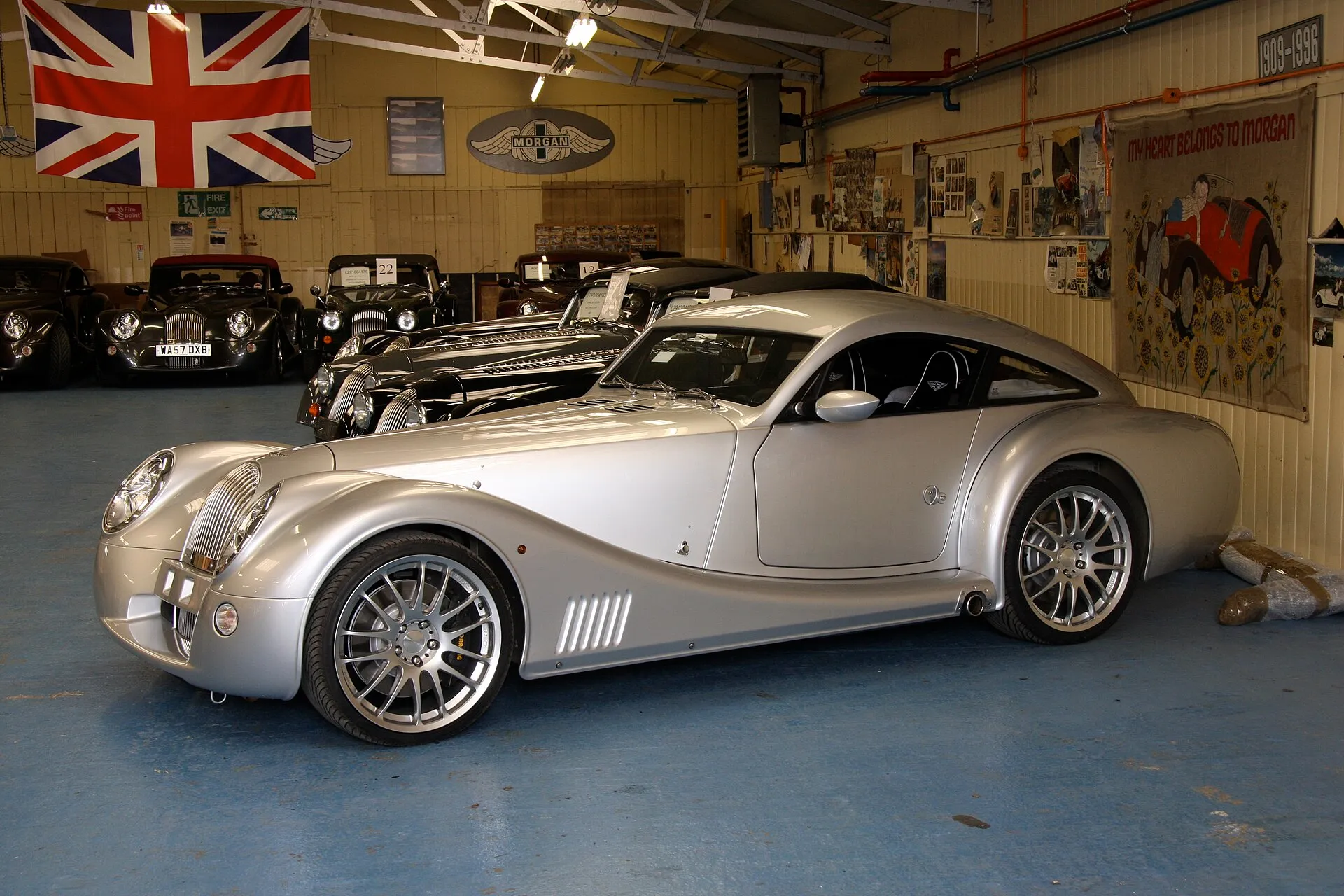
Cover: Customer cars awaiting despatch, 2009. Photo: Brian Snelson, CC BY 2.0, via Wikimedia Commons.
The Registry holds 5,894 Morgans, each reported by someone who owns or knows it. That is a sample, not a census, and it records where a car is now, not where it was sold. Within those limits it can still say some things nothing else can.
One
The oldest Morgans on record
The Registry has 26 cars dated before 1925. These are the oldest, with the year as their owners gave it.
- 1909 Runabout Kharkov, Ukraine
- 1909 Trike Rolvenden, United Kingdom
- 1910 Trike Australia
- 1912 Trike United Kingdom
- 1912 Trike Bridgnorth, Shropshire, United Kingdom
- 1913 Quadricycle Cranbrook, Kent, United Kingdom
The first Morgan was built in 1909. Two cars in the Registry carry that date. How it came about.
Two
Cars from each decade
The 1960’s are the peak, with 1,636 cars, 28% of every dated car in the Registry.
Each bar opens those cars in the Registry. The 1960’s are the Plus 4 and early Plus 8 years, the Plus years; the 1940’s are thin because the factory built no cars through the war. Morgan, History (2022)
Three
When four wheels overtook three
In the Registry the four-wheelers pull clearly ahead in 1937, the year after the 4-4 arrived. Before that the three-wheelers peak in 1934, at 61 cars.
Three-wheelers Four-wheelers
The same figures as a table
| Year | Three-wheelers | Four-wheelers |
|---|---|---|
| 1930 | 7 | 0 |
| 1931 | 10 | 0 |
| 1932 | 24 | 0 |
| 1933 | 38 | 0 |
| 1934 | 61 | 0 |
| 1935 | 34 | 0 |
| 1936 | 25 | 22 |
| 1937 | 8 | 29 |
| 1938 | 11 | 36 |
| 1939 | 6 | 17 |
| 1940 | 0 | 0 |
| 1941 | 0 | 0 |
| 1942 | 0 | 0 |
| 1943 | 0 | 0 |
| 1944 | 0 | 0 |
| 1945 | 0 | 0 |
| 1946 | 5 | 3 |
| 1947 | 5 | 26 |
| 1948 | 3 | 20 |
| 1949 | 5 | 23 |
| 1950 | 6 | 31 |
| 1951 | 4 | 43 |
| 1952 | 4 | 68 |
| 1953 | 0 | 119 |
The same crossing shows in the factory’s own figures. The fourth wheel tells how the 4-4 came about. The Registry counts the 1913 Quadricycle on neither side, and no Morgan of any kind is dated 1940 to 1945.
Four
Where each decade’s cars live now
Of the cars built in the 1960’s, 72% are now in the United States. By the 2000’s that share is 18%.
Share of the cars with a known country, 5,743 in all. It follows the story: America took most of Morgan’s output in the 1950’s and 1960’s, then closed its doors to new cars from 1969 to 1973. Because the Registry shows where cars are now, the share also reflects cars that were exported later and cars that came home.
Five
The chart’s counts, against the Registry
Mark Braunstein’s chart prints how many cars were built of some models. The Registry holds the cars owners have reported, matched on their own wording, so it can only ever hold some of them.
Each row is the Registry’s count against the chart’s figure, and the bar is the share the Registry holds: flat DHCs are Plus 4 drophead coupés with the flat radiator, and cowled DHCs the ones with the cowled. Matching is on what owners wrote in a car’s type and notes, so a car described differently is missed. Braunstein chart, v139 More of these are on the production page.
Sources
Where this comes from
Where the outside facts on this page come from. Everything else is counted from the Registry.
-
Morgan, History (2022)
Morgan Motor Company, “Morgan History”, morgan-motor.com/history/, as archived by the Internet Archive’s Wayback Machine on 22 May 2022. Checked 4 October 2026.
The company’s own account. The live page no longer exists, and the archived copy shows only the opening of each paragraph.
-
Braunstein chart, v139
Not an official Morgan Motor Company publication; its author notes it may contain errors, and that new technology reached some cars of a model year before others. Where the chart gives no date, the year shown here is read from the item’s position on the chart and marked “c.”.