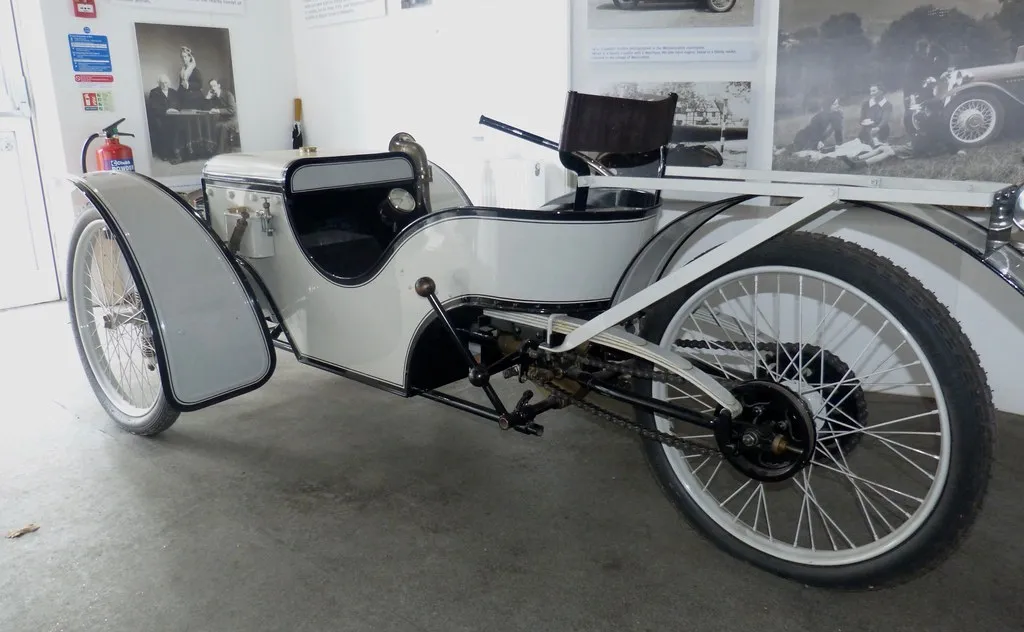
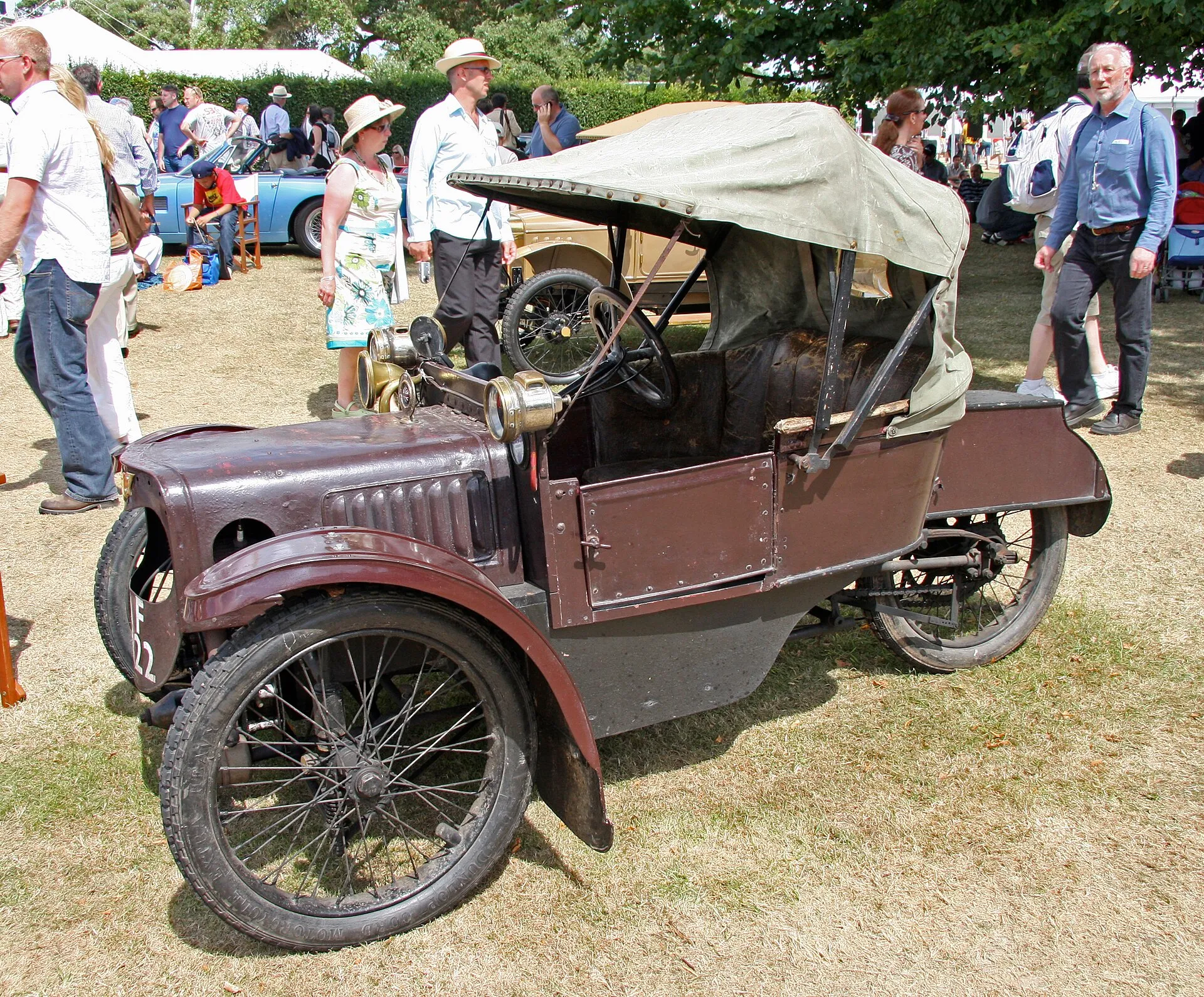
The first Morgan was never meant to be sold! Henry Frederick Stanley Morgan built it for himself in 1909, from a motorcycle engine and a frame of steel tube, with a little help from the engineering master at Malvern College. Within two years it had been shown at Olympia and put in the window at Harrods, and by 1912 it was winning the very first cyclecar race ever run at Brooklands… but the rule-makers had not noticed it yet.
The Registry holds 5 cars built by 1912, the oldest of them dated 1909 by their owners. See them.
1881–1909A draughtsman’s car
HFS, as everyone came to call him, was born in 1881, the son of a Herefordshire clergyman, the Reverend Prebendary H.G. Morgan. Wikipedia He trained at the Crystal Palace Engineering College and then spent seven years at the Great Western Railway’s works in Swindon, as a pupil and draughtsman. Motor Sport, 1965, Unsigned company history
He left the railway to open a garage in Malvern Link, selling Darracqs and Wolseleys, and even ran a bus service with a Wolseley! Wikipedia, Unsigned company history In 1908 he bought a 7 hp Peugeot V-twin engine, and with the help of Malvern College’s workshop and its engineering master, William Stephenson-Peach, he built a light three-wheeler around it. Wikipedia, Motor Sport, 1965
Sources differ
Where he was born: Moreton Jeffries Rectory, says the company history; Stoke Lacy Rectory, says Motor Sport’s 1965 history. Unsigned company history, Motor Sport, 1965
When he left the railway: late 1904, with the garage open by May 1905, according to Wikipedia and the Registry timeline; 1906, according to Motor Sport and the company history. Morgan’s own history says that in May 1905 he bought a house, Chestnut Villa, on Worcester Road in Malvern Link and built a small garage beside it, which sides with May 1905, and Grace’s Guide also has him leaving the railway in late 1904 and opening a garage in May 1905. Wikipedia, Motor Sport, 1965, Unsigned company history, Morgan, History (2022), Grace’s Guide: H. F. S. Morgan
The part that lasted was the front suspension. Each front wheel rode on a stub axle that slid up and down a fixed vertical pillar against a coil spring. Wikipedia calls it an inverted sliding pillar, and the idea had been tried on a steam car as far back as 1873, but Morgan made it his own. Wikipedia HFS applied for a patent on 8 September 1910, and it was accepted the following August. Patent GB 20,986 The patent drawings were made by a bright young draughtsman named John Black, who would one day run the Standard Motor Company. Remember him—he comes back! Unsigned company history
1910–1911Olympia, and Harrods
Morgan’s first show was the Olympia Motor Cycle Show in November 1910, with two single-seaters: one with an 8 hp twin and one with a 4 hp single-cylinder J.A.P. engine. They took about thirty orders. Motor Sport, 1965 The press took notice, too. The Motor Cycle told its readers that “a three wheeled runabout which should on no account be missed” was the Morgan in the annexe: “low and rakish looking”, with the engine out in front “where it receives a maximum cooling draught”, a tiller to steer by, and the driver “half reclining”. It was “a very cleverly designed runabout for a single rider”. The Motor Cycle, 24 November 1910 A week later the same magazine decided the two single-seaters “could be used by ladies”! The Motor Cycle, 1 December 1910
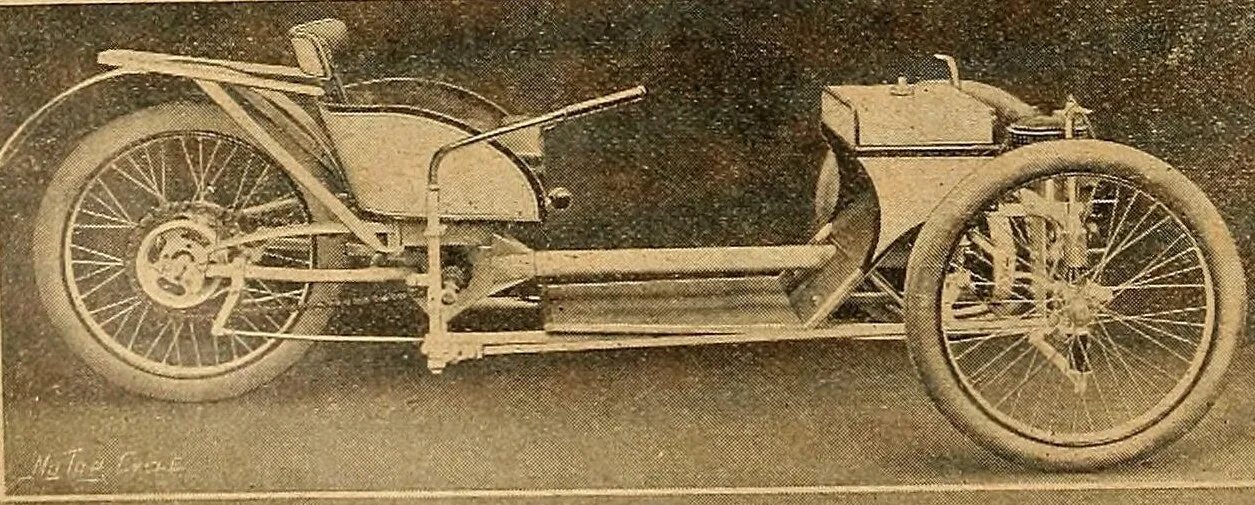
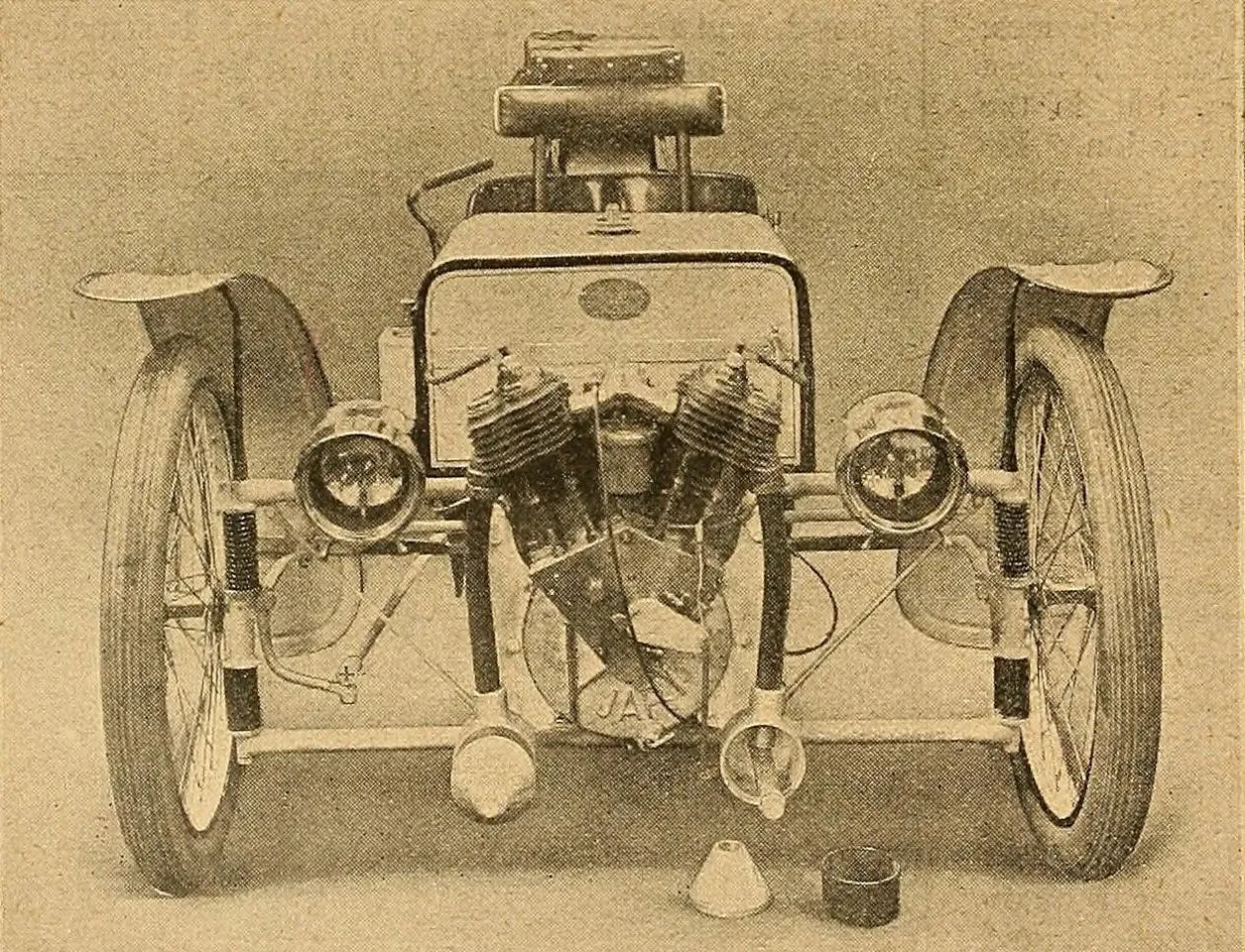
From the magazines: how the first Morgan worked, and what it was up against
The Motor Cycle’s 1910 report goes into the works. A metal-to-metal clutch drove a shaft to a bevel wheel on a countershaft, and a chain ran from each end of that to the rear wheel; gears of different sizes were engaged by dog clutches. It was “very lightly constructed throughout”, so low that it “might with its present sized wheels prove unsuitable for use in districts where the roads are very rough”, and its front springing, with a spiral spring above and below the axle, reminded the writer of the Sizaire-Naudin car. The Motor Cycle, 24 November 1910 The survey a week later added that both runabouts had free engines and variable gears. The Motor Cycle, 1 December 1910
A commentator looking back over the year named the Morgan among the new three-wheelers meeting a demand from business riders for a machine that did not skid and kept the weather off. He warned that the first tricars had been killed by price: anything listed over £100 “could not hope to survive when a second-hand small car of decent construction was procurable at £75–£90”. The Motor Cycle, 29 December 1910
The lesson of 1910 was plain enough: people wanted to bring a passenger. So the 1911 show had two-seaters. Unsigned company history, Hagerty UK The Motor Cycle’s report lists four Morgans that year, two single-seaters and two two-seaters (it calls them “sociables”), and a bare chassis. It says the machines had built a high reputation in trials since their first show, and calls them “quite in the front rank of self-contained passenger motor cycles”. The Motor Cycle, 23 November 1911
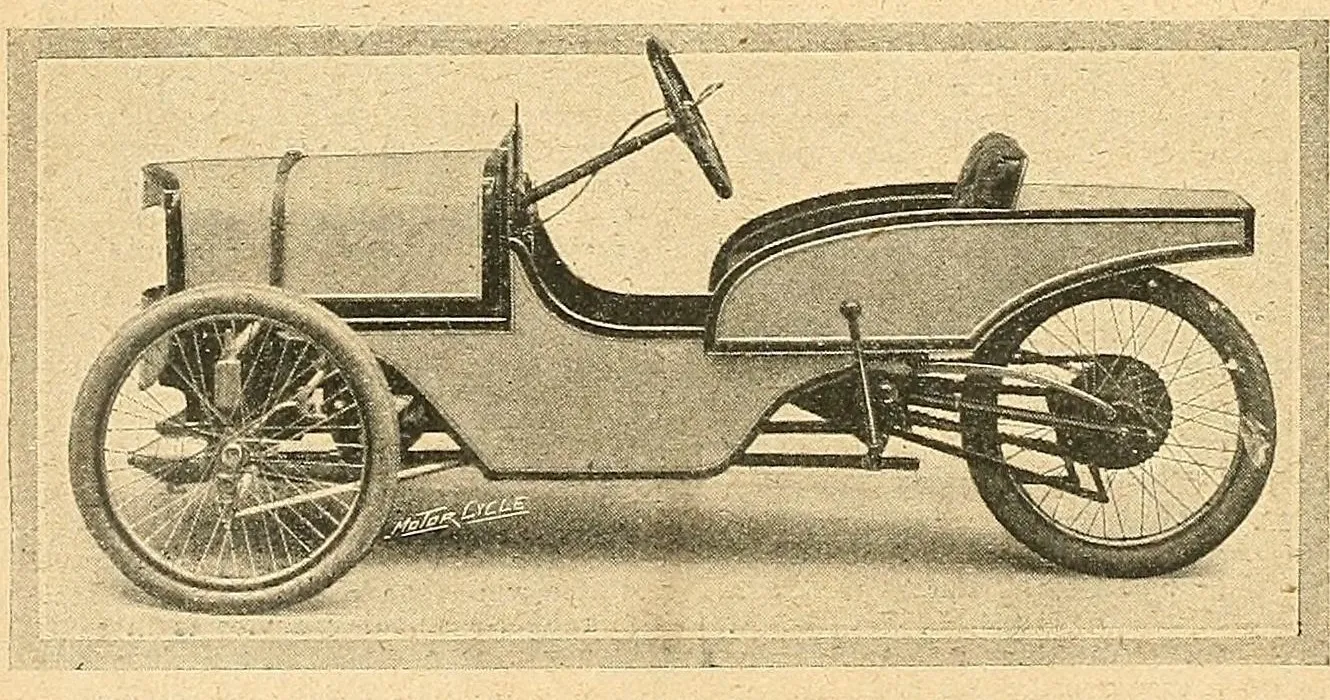
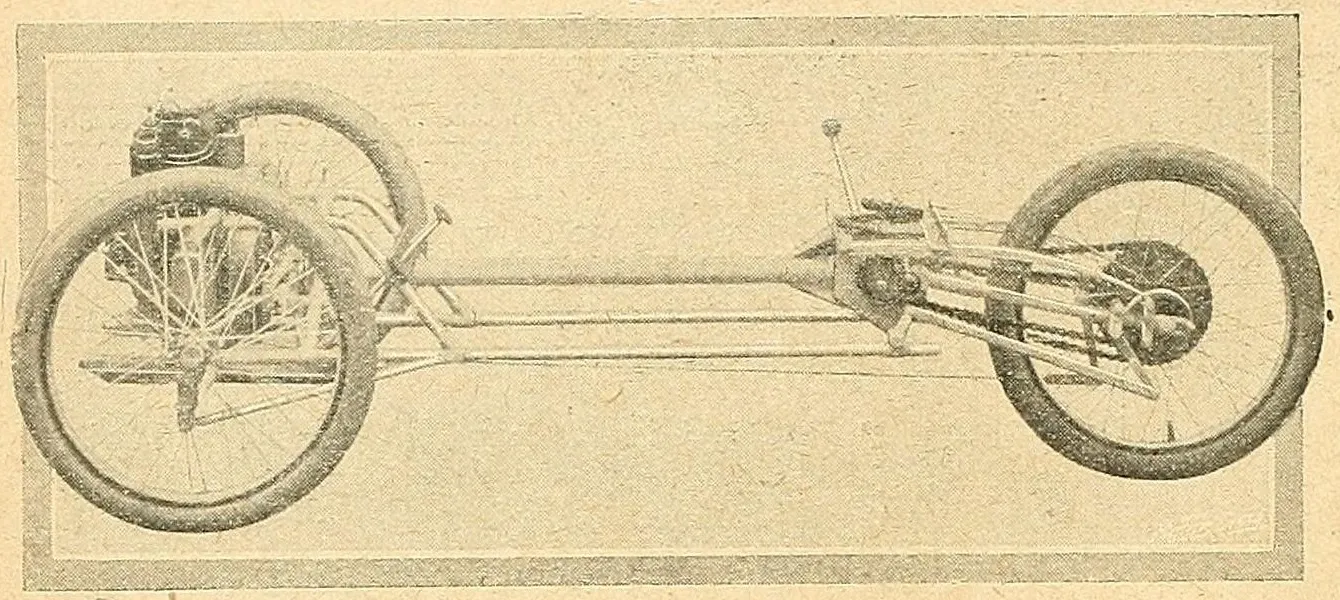
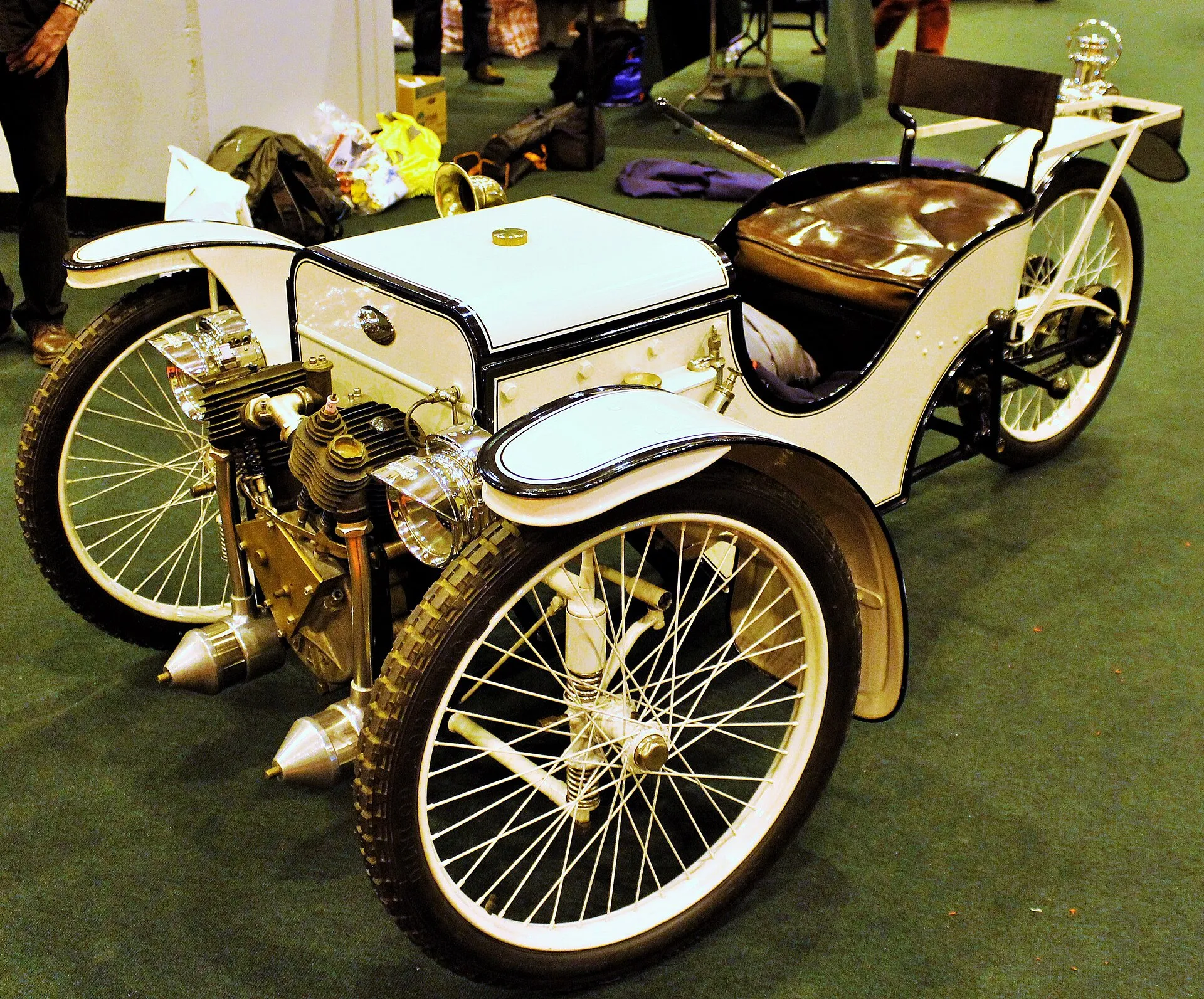
Then came Harrods. Its managing director, a Mr Burbridge, saw one and put it right in the store’s window—by the company’s own account, the only car ever to stand there! Unsigned company history It sold for £65. Wikipedia, Hagerty UK According to the Registry timeline, Harrods became the sole concessionaire that December and fitted its own bodies.
Not every body was made in Malvern, either. A local-history society’s account says Albert Pettifer, a coachbuilder in Bromyard, built the body for the first prototype in 1910 and re-bodied the 1911 show car as a two-seater, and that Harrods’ exclusive agency lasted about a year. By August 1912 the demand was too much for one small Bromyard firm, and HFS turned to William Clare, a coachbuilder half a mile from the works. Bromyard Society, 2010
Sources differ
Who was Morgan’s sole London agent: Harrods, from December 1911, in the Registry timeline, and the local-history article says its agency lasted about a year but that there were at least two others. An advertisement in The Motor Cycle in August 1911, four months before, shows Godfrey Applebee Ltd of Great Portland Street calling itself “sole London agents for Morgan Runabouts”. Bromyard Society, 2010, The Motor Cycle, August 1911 (advertisement)
The orders soon outran the little garage. HFS asked several large manufacturers to build the car for him, and every one of them turned him down. The company history calls that fortunate, and I have to agree: he spent the deposits on machine tools instead! Unsigned company history
1910–1911The trials, and a broken shaft
Nothing proved a car in those days like a long, hard reliability trial, and HFS drove them himself. He started on Boxing Day 1910, in the Motor Cycling Club’s London–Exeter winter run, an overnight dash through the dark with a breakfast stop at Exeter. The entry list has “H. Morgan, 8 Morgan Runabout” at number 64, The Motor Cycle, 22 December 1910 and the results list “H. F. S. Morgan (8 twin Morgan Runabout)” among the fifty gold-medal winners who finished within twenty-four hours. The Motor Cycle, 5 January 1911
The Yorkshire quarterly trial of 22 April 1911 nearly ended his day—and his car. Coming into Saltburn Bank, the report says, “Morgan was travelling at a great pace, but underestimated his speed, and at the last bend the inside wheel of his runabout lifted, and he crashed into the wall”. Both steering wheels were knocked back several inches and the axle was badly bent, “but despite this contretemps Morgan proceeded after effecting slight adjustments”, and finished the course! The Motor Cycle, 27 April 1911
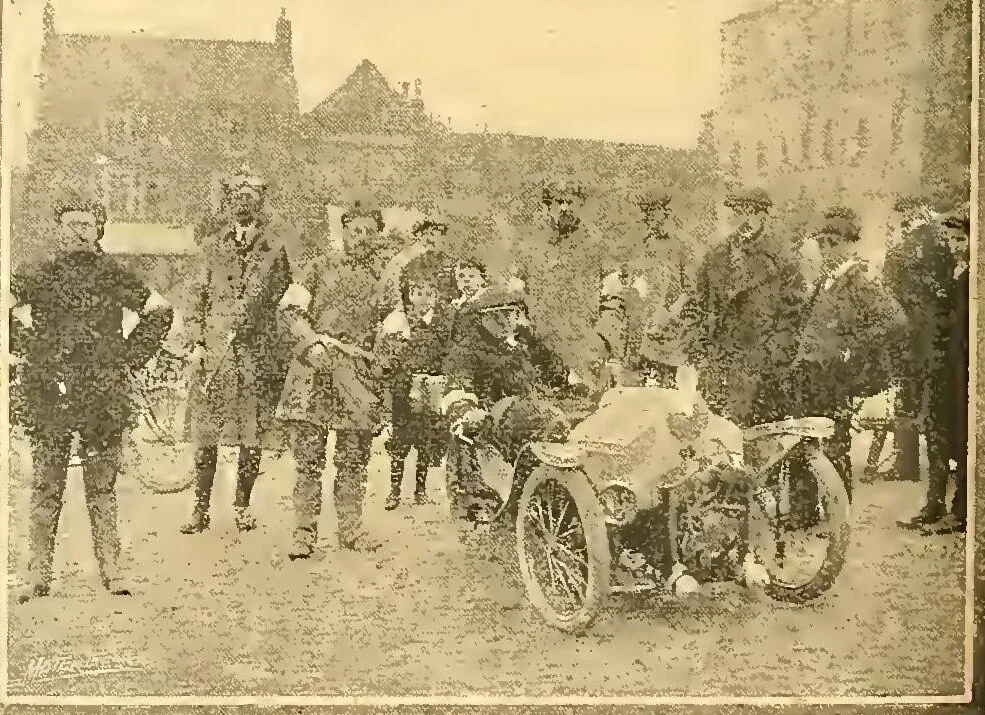
At Whitsun he drove from London to Edinburgh and back. He wrote to the magazine that he had done it “on top gear, without the slightest hitch, except one puncture”, and his Morgan took one of the special gold medals for the double journey. The Motor Cycle, 15 June 1911, The Motor Cycle, 22 June 1911 The two-seater made its competition debut that August in the Auto-Cycle Union’s Six Days’ Reliability Trials, which set out from Harrogate on Monday 14 August 1911. It was a rare bird there: runabouts were 1.29 per cent of the entry. On the second day the magazine came upon “poor Morgan, whose two-seated runabout had been performing so well”, put out of the running “by a broken chain which could not be repaired in time”… The Motor Cycle, 17 August 1911
Sources differ
What stopped the Morgan. The report written on the road says a broken chain. The magazine’s list of retirements a week later says “broken driving-shaft between clutch and gear box”, on the second day. The Motor Cycle, 24 August 1911 The judge’s report, a week after that, says only that it “retired owing to gear transmission trouble”. The Motor Cycle, 31 August 1911 A reader complaining in September of the dog-clutch gear on four-wheeled sidecar outfits, which had collapsed twice on his own, adds: “I see that a similar fate overtook Morgan — a plucky pioneer — in the Six Days’ Trials”. The Motor Cycle, 7 September 1911 The accounts may describe one failure from different distances; the magazine does not say.
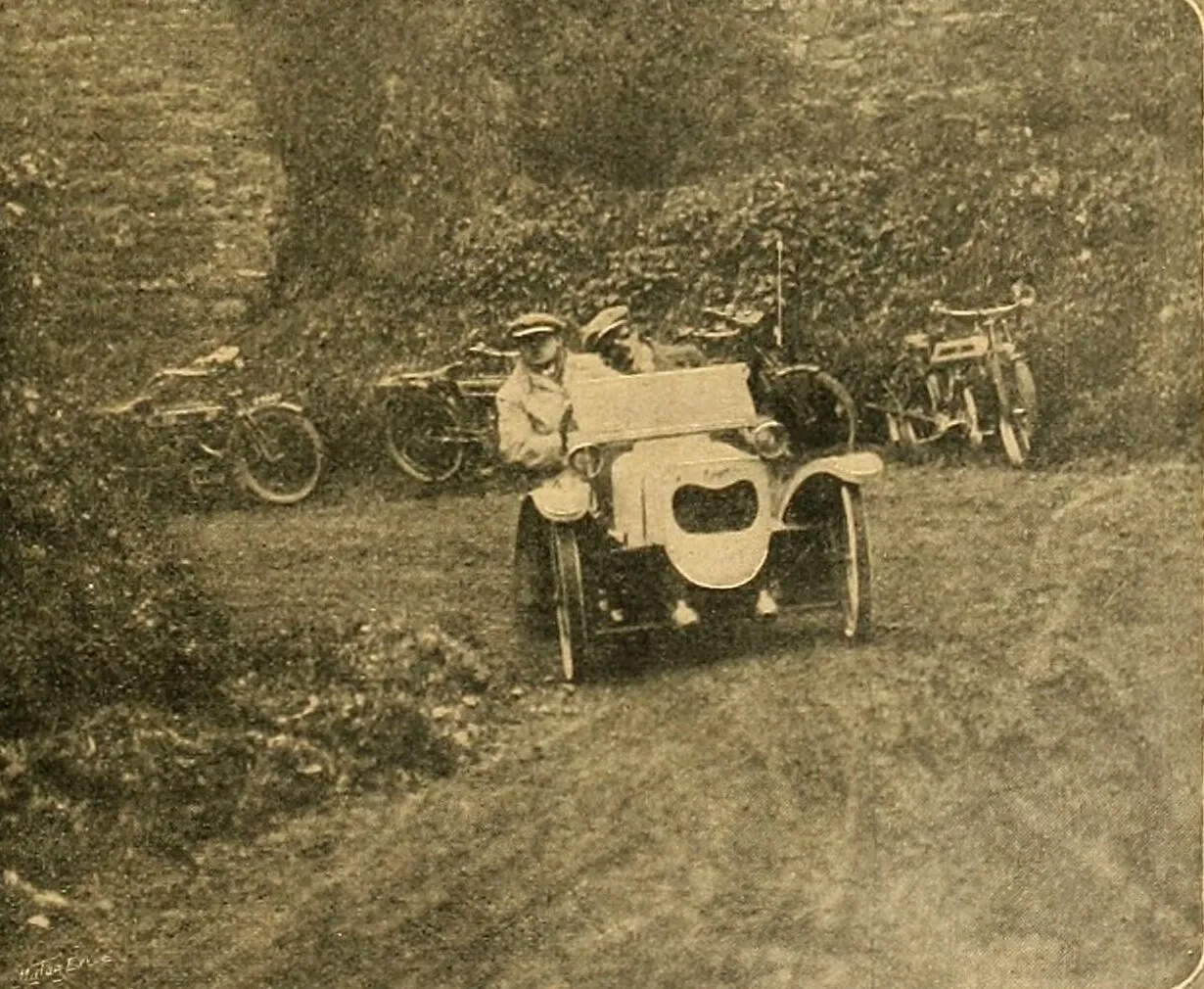
The autumn went better. At the inter-club championship at Banbury in September, HFS drove for the Oxford club, made four clean ascents of Edge Hill, and came home with a gold medal and a share of the cup. The Motor Cycle, 21 September 1911 In October, on a 167-mile trial to Farlow Bank and Birdlip, only twelve of fifty-one machines made non-stop runs, and his three-speed Morgan was one of them, with a first-class certificate. The magazine photographed his “new design runabout” climbing both test hills “with comparative ease”. The Motor Cycle, 19 October 1911
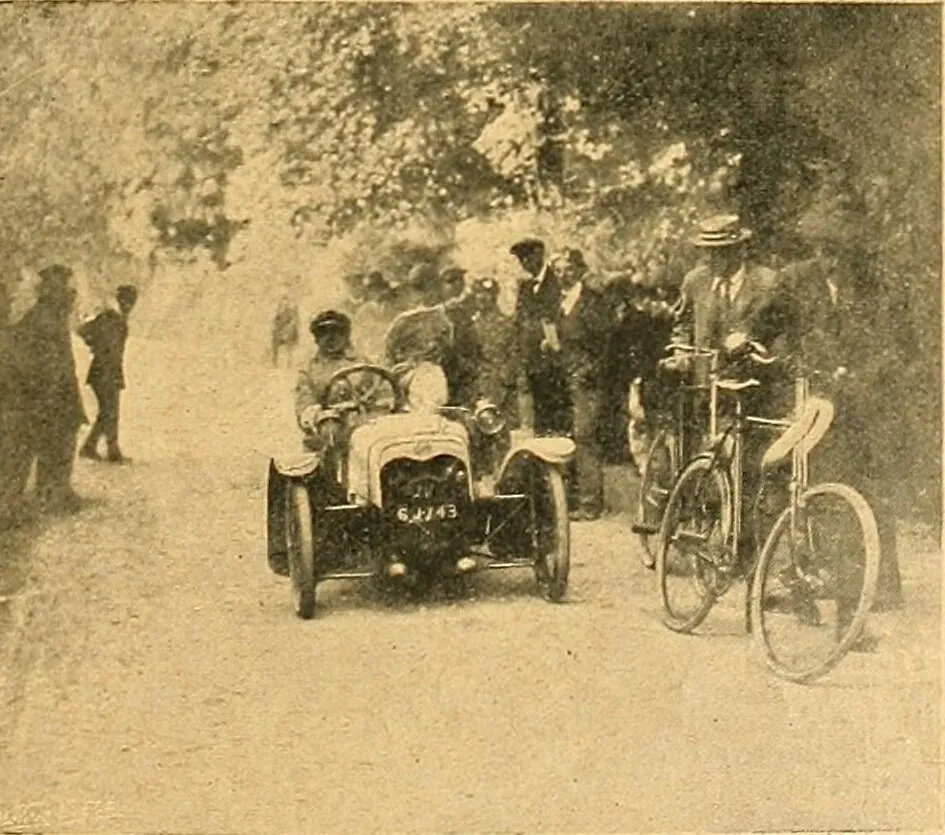
By the end of the year there was a waiting list. At the 1911 show the magazine counted the Morgan among the makes that had “booked sufficient orders to last them for many months”, and added: “we even heard of a £10 premium being offered on a Morgan runabout for delivery at the beginning of the New Year.” The Motor Cycle, 30 November 1911 Not a bad start for a car its maker had built for his own use!
From the magazines: more from 1911
The Auto-Cycle Union’s quarterly trial of 28 January 1911, 127 miles from Croydon to Hastings and back, went less well on paper. Sixty-five machines started. The Morgan runabout “missed a first-class certificate through not being equipped with magneto ignition”: the rules made a magneto compulsory and the Morgan had an accumulator. The Motor Cycle, 9 February 1911 Morgan and Co. wrote to explain that all their machines on the market had magnetos, but “owing to a delay in the delivery of the magneto, the runabout entered for this trial was not so fitted”, and that in hill-climbing and the non-stop run it “behaved perfectly”. The Motor Cycle, 16 February 1911
Then HFS wrote in his own name. In a letter of 23 February, “The Problem of the Runabout”, he argued that a light “quad” ought to be almost as fast as “my runabout tricar, the speed of which on the hills you were good enough to commend in your account of the recent Quarterly Trials”; it must be light, under 4 cwt, and cost less than £100. “I am not without hope”, he ended, “that such a machine may be produced before very long, possibly at Malvern.” The Motor Cycle, 23 February 1911 The same month the magazine reported the Morgan at the Leicester show, with a drawing of its rear-wheel springing. The Motor Cycle, 16 February 1911
After Saltburn, the magazine’s photograph of him at Thirsk says the front wheels, which should have been four inches in front of the engine, had been knocked level, “yet the driver completed the course”. The tabulated results record the machine as 976 cc, two-speed, chain-driven, with a “replaced plug” and the wall at Saltburn. The Motor Cycle, 27 April 1911
On the London–Edinburgh run, the magazine first left him off its list of survivors of the return journey, then corrected itself: the Morgan “performed both the outward and homeward journeys in magnificent style with a 4 to 1 gear”. His own letter added: “I did equally well on the same tricar in the London-Exeter run at Christmas.” Fifteen of the twenty-two passenger machines finished. The Motor Cycle, 15 June 1911, The Motor Cycle, 22 June 1911
On the second day of the Six Days, the route crossed a moorland road so loose and rutty that the correspondent wondered how the lightweights stood it; at the hill before it, he noted, “Godfrey, F. Smith, and Morgan came up particularly well”. The table in the same issue gives motor bicycles 93.51 per cent of the machines, sidecars 5.20 per cent and runabouts 1.29 per cent. The Motor Cycle, 17 August 1911 At Banbury the Oxford team’s win “proved most popular”: it won on reliability, its marks for regular running and hill-climbing not quite as good as those of Coventry, the holders. The Motor Cycle, 21 September 1911 On the October trial the judges noted that his car now had a bonnet over the engine and a metal shield for the magneto. The Motor Cycle, 19 October 1911
How well the car was really selling is harder to say. On 21 December the columnist “Ixion”, looking back over the year, wrote that “the Morgan runabouts, the A.C. sociables, and various sidecar outfits sold in tolerable numbers, without any single pattern achieving the popularity of a first grade motor bicycle”. The Motor Cycle, 21 December 1911 A Belgian reader who wrote for the makers’ address was told that the Morgan and the A.C. were “the best-known tricars in England”. The Motor Cycle, 9 November 1911
1912Brooklands, and a top hat
In 1912 the business became a limited company, with the Reverend H.G. Morgan as chairman and his son as managing director. Unsigned company history, Wikipedia That same spring a Morgan driven by Harry Martin won a cyclecar race at Brooklands, and won it easily. Unsigned company history The Motor Cycle’s report a week later puts it on Wednesday 27 March 1912, the first race of its kind: Martin was a quarter of a mile ahead after one lap and was timed at about 59 mph, in a Morgan with a 90 × 77.5 mm J.A.P. engine and a boat-shaped body. The Motor Cycle, 4 April 1912
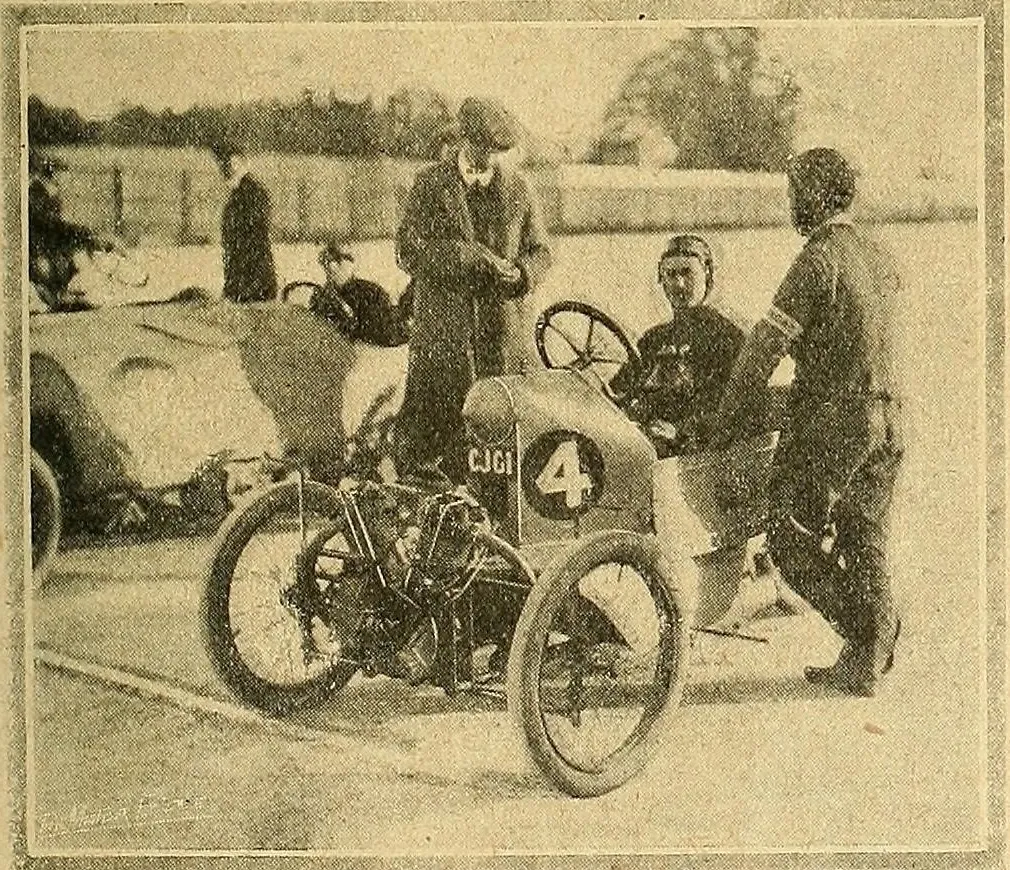
HFS kept collecting silverware. On 13 April he won his class at the Oxford club’s Pink Hill climb in the Chilterns, in about 1 minute 37 seconds against 1 minute 45 and 1 minute 52 for two G.W.K.s, and the report says the Morgan’s speed was “so well known that it will be no surprise to hear that it was the fastest in its class”. The Motor Cycle, 18 April 1912 He was the first cyclecar driver into Doncaster on the London–Edinburgh run, and finished it with a gold medal. The Motor Cycle, 6 June 1912, The Motor Cycle, 30 May 1912 In August, on the English Six Days’ Trials at Taunton, he took a gold medal and a special prize for the best ascent of Porlock in the passenger class. The Motor Cycle, 22 August 1912 (He was not perfect: the same issue notes that he was disqualified from another trial for arriving more than fifteen minutes ahead of schedule!) The Motor Cycle, 22 August 1912
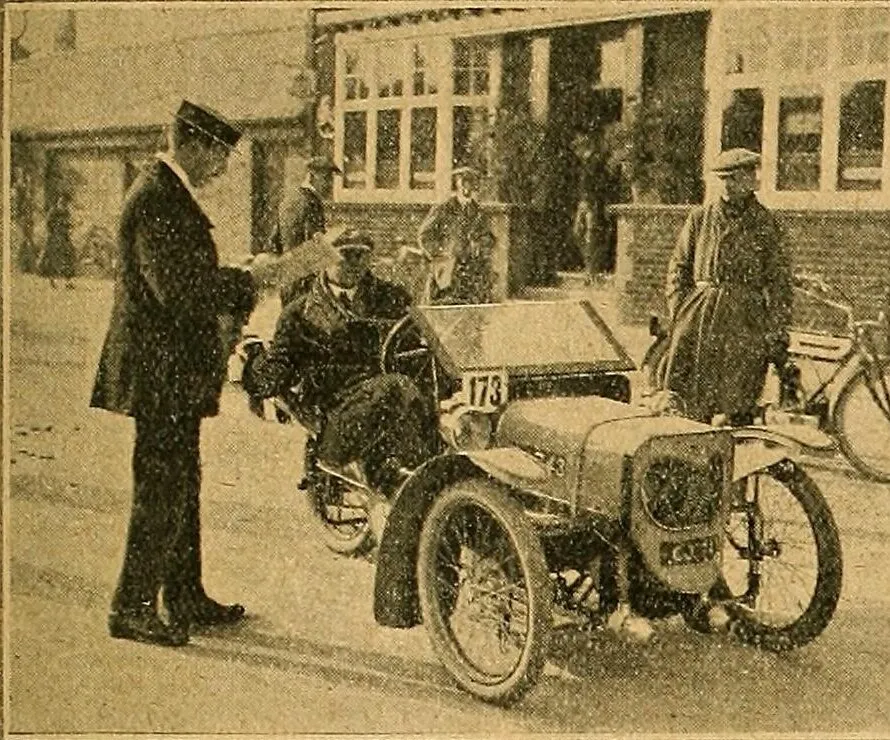
It was a family business from the start. HFS’s sister, Miss Dorothy Morgan, was a regular entrant in reliability trials and won many first-class awards in a three-wheeler. In the few years before the war, by the company’s own count, Morgans took ten British and world records and 24 gold medals in major trials. Morgan, History (2022)
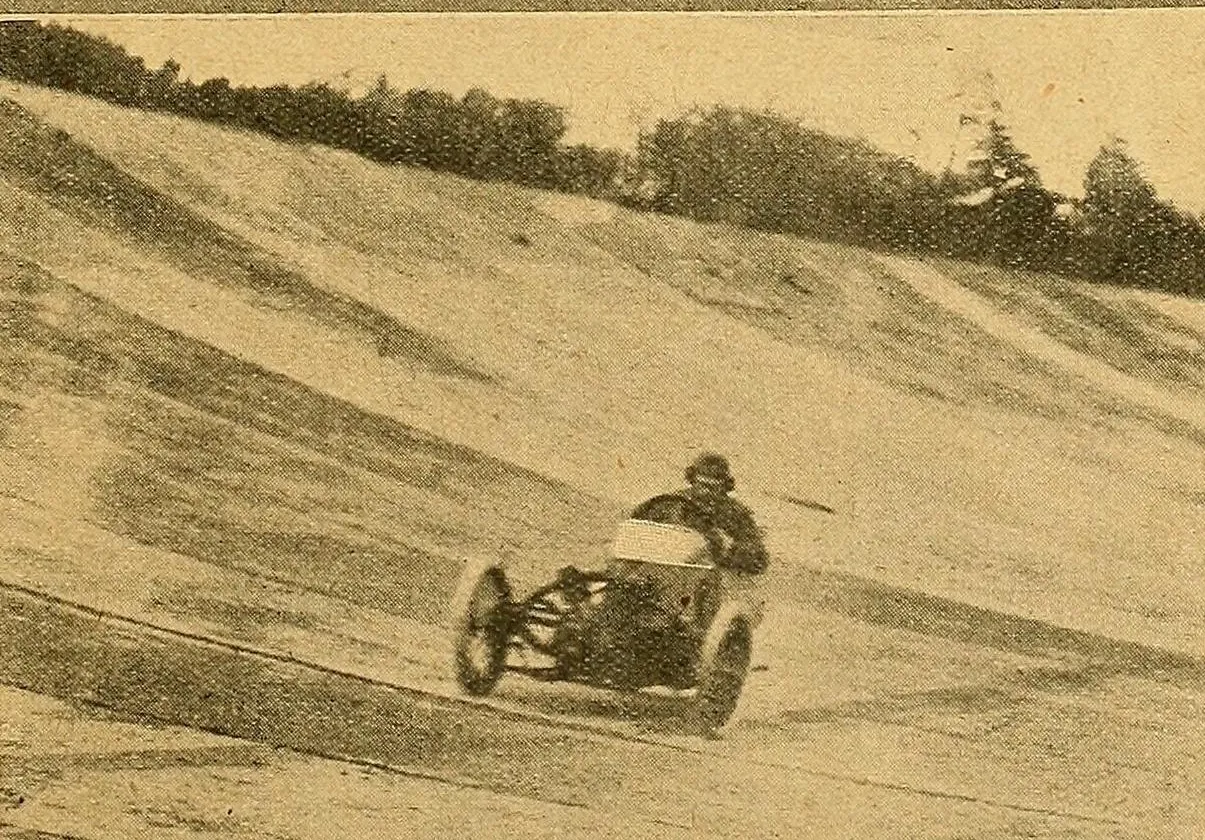
Late that year HFS went for the cyclecar one-hour record at Brooklands himself, in a narrow single-seater, and got it: 59 miles and 1,120 yards in the hour, by Motor Sport’s account. Motor Sport, 1965 The Motor Cycle reported on 14 November that he had won the cyclecar hour race and taken the record from J. T. Wood’s 47 miles 1,390 yards, set on 25 September, The Motor Cycle, 14 November 1912 and three weeks later printed a photograph of him at about a mile a minute. The Motor Cycle, 5 December 1912 His father came to watch—in a top hat! The company history thinks it was probably the only top hat ever worn at the track. Unsigned company history
Sources differ
How far HFS went in his hour at Brooklands on 9 November 1912. Motor Sport says 59 miles 1,120 yards, and the magazine’s caption on 5 December says 59 miles 1,123 yards; its caption on 28 November says he “covered a few yards short of sixty miles”. Motor Sport, 1965, The Motor Cycle, 5 December 1912, The Motor Cycle, 28 November 1912 But the report in the same 28 November issue, “G.W.K. Regains Hour Record”, says the G.W.K. took the record back with 56 miles 76 yards and lists the Morgan’s “previous best” as 55 miles 329 yards, and the reader’s tally of 21 November says 55 mph. The “seven miles” by which that report says HFS beat the G.W.K.’s 25 September record fits the smaller figure better than the larger. The Motor Cycle, 28 November 1912, The Motor Cycle, 21 November 1912
From the magazines: more from 1912
The Christmas 1911 London–Exeter run had two Morgans entered, F. B. Webber’s and G. W. England’s. The report called Webber’s “probably the best lighted vehicle in the competition”: a Vandervell dynamo driven by a belt from the outside flywheel, feeding two car-pattern lamps that “gave an enormous light”. The Motor Cycle, 11 January 1912
In February the magazine quoted a letter HFS had written to The Autocar, explaining why a motor-cycle-type runabout should not have too luxurious a body: “A heavy body entails either too little speed or too large an engine”. He had, he wrote, been asked to fit a Silent Knight engine. The Motor Cycle, 8 February 1912 A fortnight before, a reader signing himself Cecil Kimber, an “ardent advocate of three or more wheels for all-weather business travelling”, had asked how the A.C. and Morgan runabouts fared in the Exeter run, whether the Morgans had been driven without a passenger, and how they took “a sharp turn to the left”. The editor replied that the runabouts, “with one exception, carried passengers”. The magazine prints no address, and I have not established which Cecil Kimber he was. The Motor Cycle, 25 January 1912 A Morecambe dealer’s advertisement a week later priced twenty-six new Morgan Runabouts at £89 5s each, which is exactly 85 guineas, the price the company history gives for the two-seater a year later. The Motor Cycle, 15 February 1912 (advertisement), Unsigned company history
Not every race went the Morgan’s way. At the Brooklands club’s meeting on 20 April, Harry Martin started from scratch in a five-lap cyclecar handicap; the magazine judged the Morgan “clearly the fastest machine, but could not pull up the allotted handicap”, and Wadden’s Autotrix won. The Motor Cycle, 25 April 1912 On the London–Edinburgh run the magazine praised the cycle cars that came through, “the G.W.K., A.C., Morgan, Chater-Lea … did extremely well”, and its list of awards puts HFS’s Morgan, with J. T. Wood’s G.W.K., at the end of the gold medals. The Motor Cycle, 30 May 1912, The Motor Cycle, 6 June 1912
A reader’s end-of-year tally, “The Records of Cyclecars in 1912”, gave the Morgan a gold medal in the London–Exeter run, a special gold in London–Edinburgh, a gold and a silver cup in the English Six Days, a first-class certificate in the A.C.U. autumn trial, and the first Brooklands cyclecar race, and says that the November one-hour cyclecar race “was easily won by the Morgan (55 m.p.h.), which holds the hour record”. The Motor Cycle, 21 November 1912 The magazine’s catalogue of the Olympia show in November gives the Morgan, No. 18, as an 8–10 hp air-cooled V-twin of 964 cc, with two speeds and no reverse, a wheelbase of 6 ft and a track of 3 ft 10 in, side-by-side seats, a chassis weight of 3 cwt and 4 cwt complete. The Motor Cycle, 28 November 1912 A fortnight later its reviewer wrote that “the genuine cycle car, as opposed to the miniature automobile de luxe, has scarcely come into existence”: the Morgan chassis, “weighing 2¾ cwts., with an 8 h.p. engine, has few rivals either in lightness, price, or general efficiency”. The Motor Cycle, 12 December 1912