The Morgan story · The people
Who’s who
The people the story keeps coming back to, in the order they arrive.
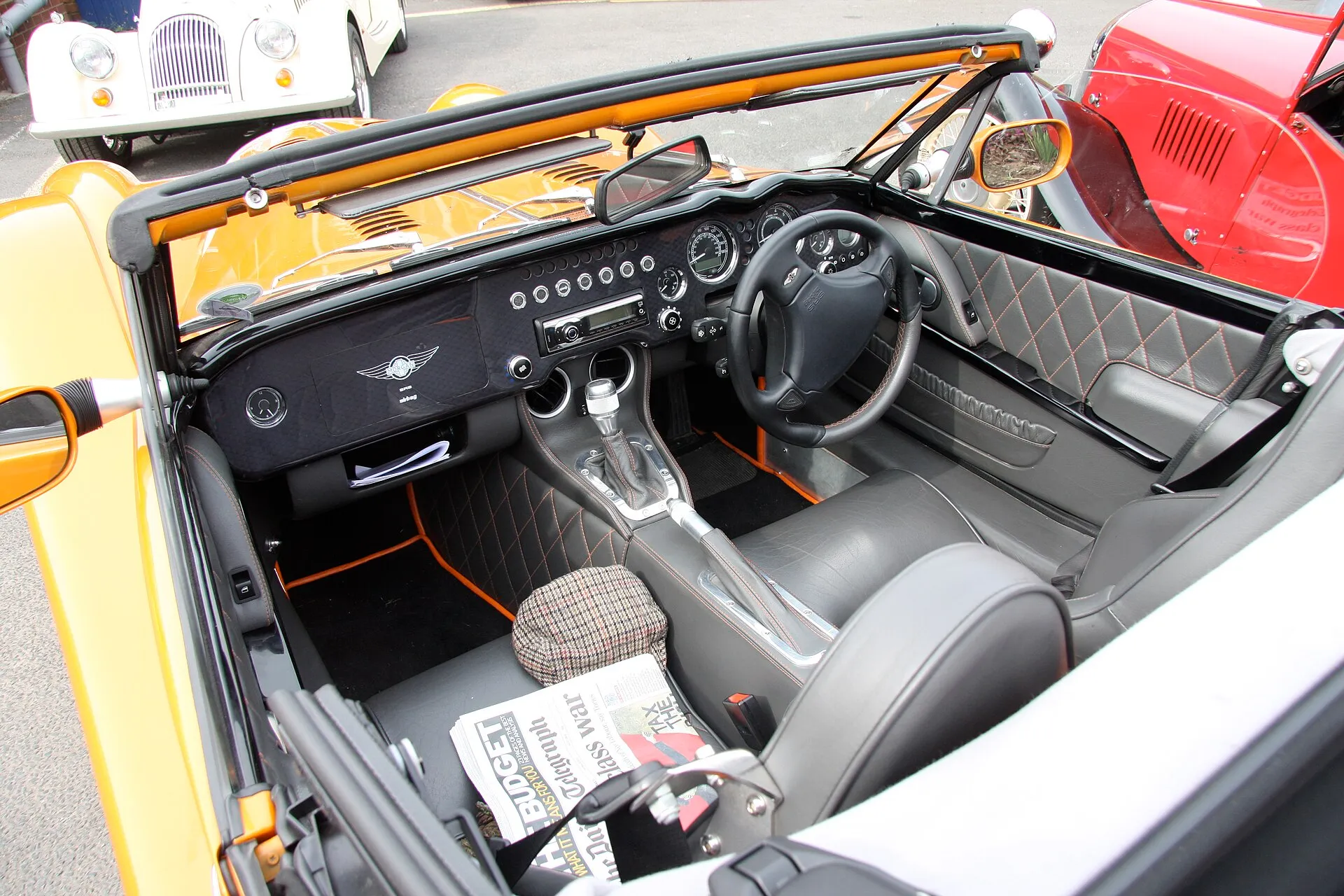
Cover: The factory floor, 2009. Photo: Brian Snelson, CC BY 2.0, via Wikimedia Commons.
16 people, each with the few facts the chapters rest on and a link to where the story is told. Where a freely licensed portrait exists it is shown, with its credit. I have not found one for the Morgan family.
In order of arrival
The people
-
H. F. S. Morgan
Henry Frederick Stanley Morgan, known as HFS, was born in 1881, the son of a Herefordshire clergyman. He trained at the Crystal Palace Engineering College and spent seven years at the Great Western Railway’s Swindon works as a pupil and draughtsman. Wikipedia, Motor Sport, 1965, Unsigned company history
He opened a garage in Malvern Link, and in 1909 built a light three-wheeler for himself. He patented its sliding-pillar front suspension in 1910. Wikipedia, Patent GB 20,986
He died in June 1959, fifty years after he built his first car. Wikipedia
Read more: A draughtsman’s car, The founder’s last years
-
Dorothy Morgan
Miss Dorothy Morgan, HFS’s sister, was a regular entrant in reliability trials and won many first-class awards in a three-wheeler, by Morgan’s own account. Morgan, History (2022)
Read more: Brooklands, and a top hat
-
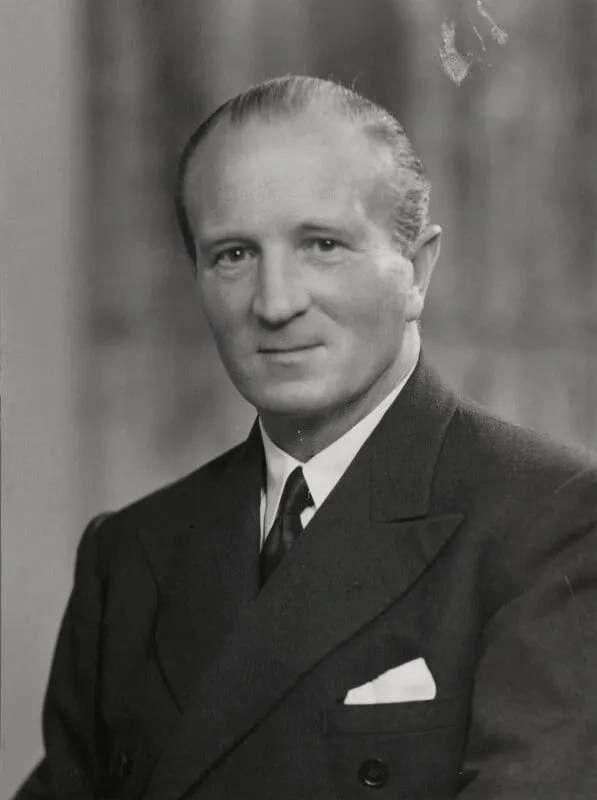
Sir John Black, head of the Standard Motor Company, in 1943. Photo: Elliott & Fry, National Portrait Gallery, London, Public domain, via Wikimedia Commons. John Black
As a young draughtsman he made the drawings for HFS’s 1910 patent. He later ran the Standard Motor Company, and at his express wish Standard built Morgan a special 1,267 cc engine for the 4-4. Unsigned company history
Read more: A draughtsman’s car, Sir John Black’s engine
-
Harry Martin
Martin won the first cyclecar race at Brooklands on 27 March 1912 in a Morgan. He led by a quarter of a mile after one lap and was timed at about 59 mph. The Motor Cycle, 4 April 1912
Read more: Brooklands, and a top hat
-
W. G. McMinnies
McMinnies covered the 163 miles of the 1913 Cyclecar Grand Prix at Amiens first, at 41.9 mph, in a Morgan. The Morgans were classed as three-wheelers, so he won that class and made the fastest time of all the passenger machines, while the cycle-car prize went to a Bédélia. Motor Sport, 1965, The Motor Cycle, 17 July 1913
Read more: Amiens
-
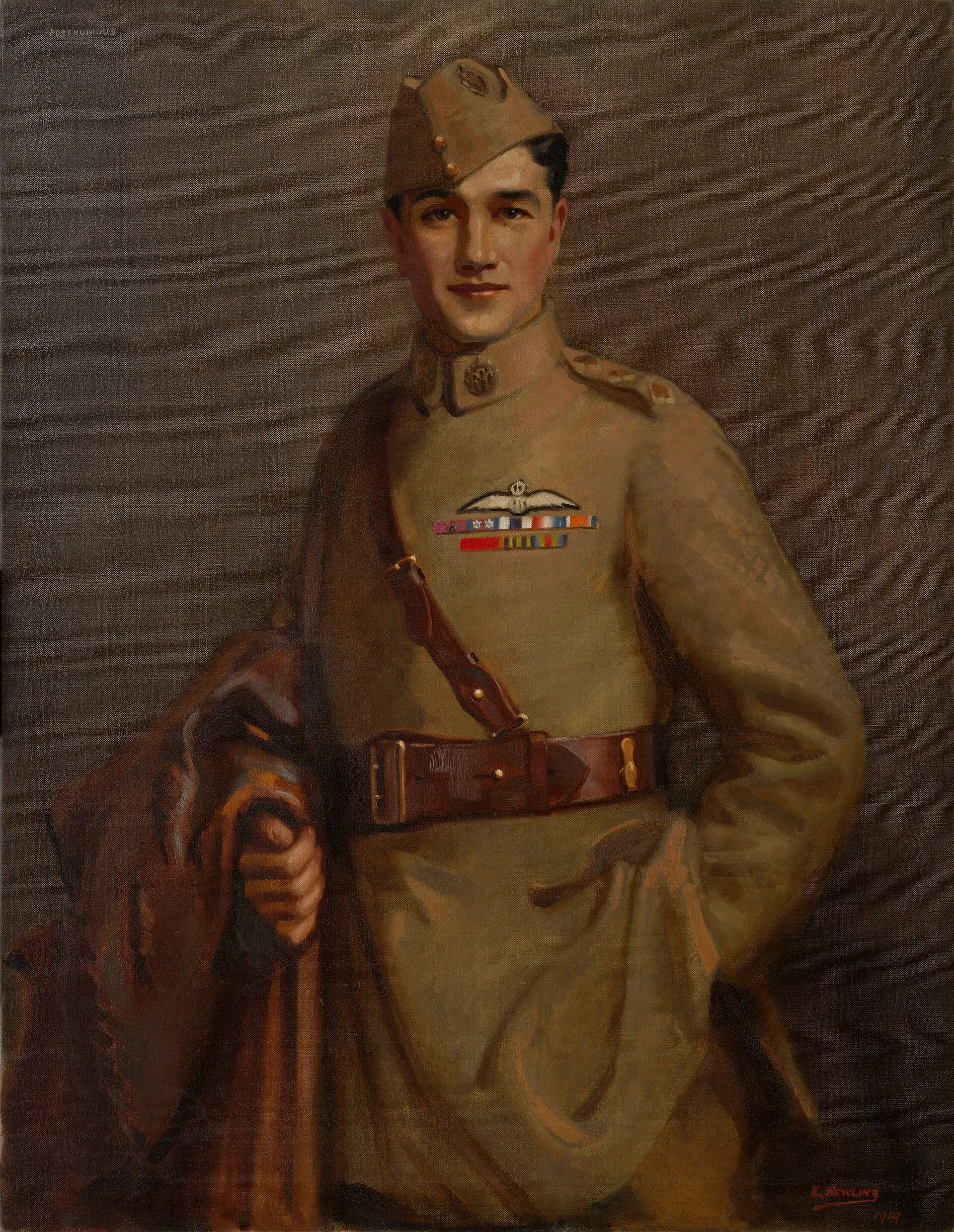
Captain Albert Ball VC, painted by Edward Newling in 1919. Photo: Edward Newling, Imperial War Museums, Public domain, via Wikimedia Commons. Albert Ball
Captain Albert Ball owned a Morgan three-wheeler and, by Morgan’s own account, said that driving it was the closest thing to flying without leaving the ground. Morgan’s own history says the Aero of 1920 was inspired by his specially bodied Grand Prix car. Morgan Motor Company, Morgan, History (2022)
Read more: The war, and a flying ace
-
George Goodall
Goodall joined in 1925 as general manager and later ran the company until the end of 1958. Unsigned company history
Read more: Back at Brooklands
-
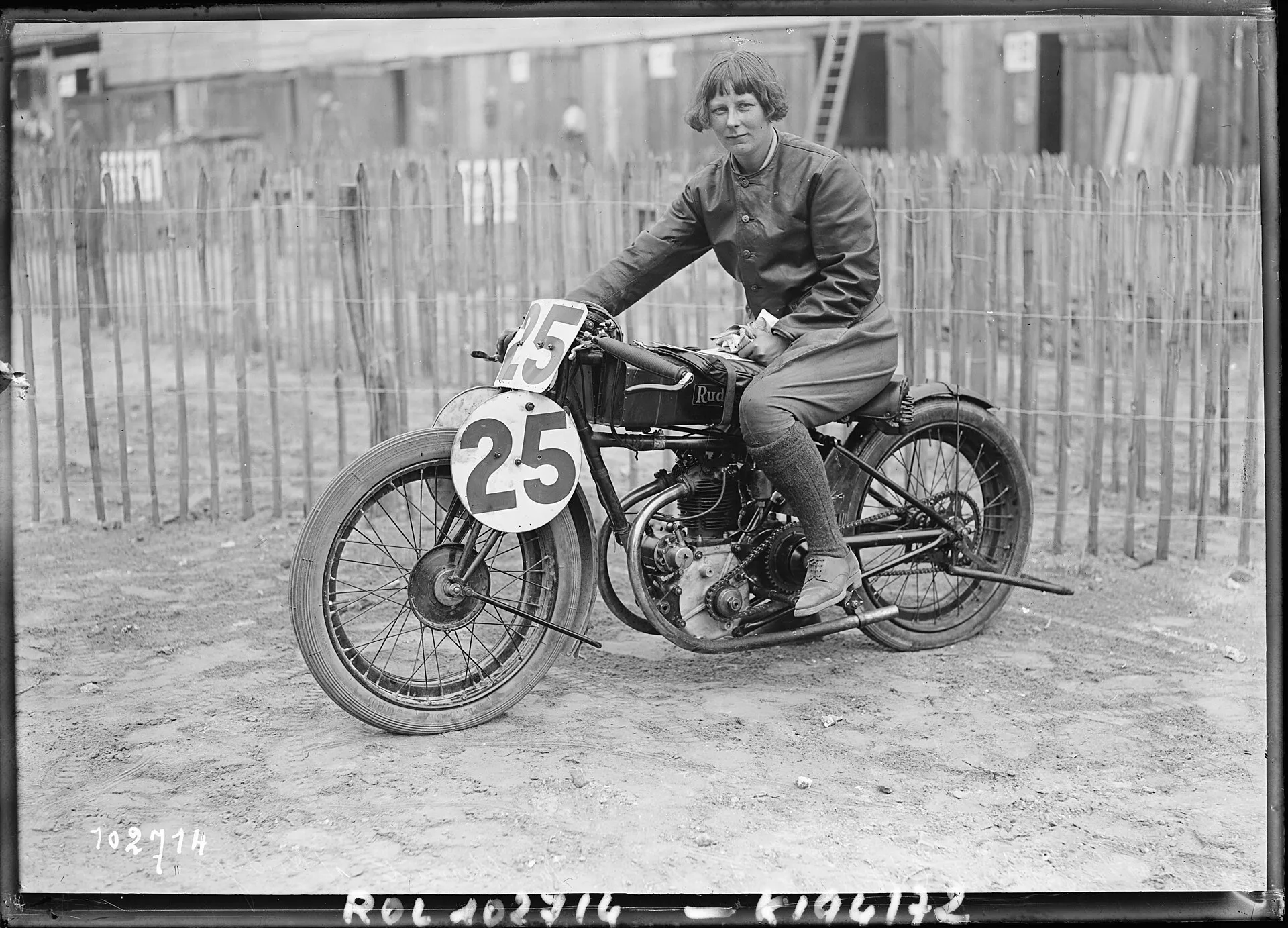
Gwenda Stewart on a Rudge motorcycle at Montlhéry, 17 July 1925. Not a Morgan: the press caption reads “Mrs Stewart sur Rudge”. Photo: Agence Rol, Bibliothèque nationale de France, Public domain, via Wikimedia Commons. Gwenda Stewart
She had driven ambulances in the First World War and set motorcycle records in the 1920’s. In a Morgan Super Sports at Montlhéry she covered more than a hundred miles in an hour, the first time a three-wheeler had done so. Motor Sport dates it 1929, and Morgan’s own history 1930. Wikipedia, Motor Sport, 1965, Morgan, History (2022)
Read more: A hundred miles in an hour
-
Prudence Fawcett
She wanted to race at Le Mans, and the Winter Garden garage agreed to run a 4-4 for her, with HFS’s consent. The car finished 13th in 1938. mogsport.net, Wikipedia
Read more: Le Mans, twice
-
Peter Morgan
He joined the firm in 1947, back from the army. He fitted the 2,088 cc Vanguard engine to the first Plus 4 against his father’s limit of 1,750 cc, and let the car make the argument. He became chairman when HFS died in 1959. Unsigned company history, Wikipedia, Classic & Sports Car
He retired from running the company at eighty, in 1999, and died on 20 October 2003, still chairman. Wikipedia
Read more: A bigger engine, Farewells
-
Chris Lawrence
Lawrence bought a second-hand Plus 4 in 1958, won races with it, and with Richard Shepherd-Barron won the 2-litre class at Le Mans in 1962 in a Morgan wearing the registration TOK 258. With John Sprinzel he designed the SLR in 1964. Hagerty UK, 24h-lemans.com, Unsigned company history
Read more: The plate that won Le Mans, The coupé, and the SLR
-
Lew Spencer
His Plus 4, Baby Doll, was a regular on the winners’ rostrum in the United States and built up a large following. Unsigned company history
Read more: America
-
Bill Fink
He founded Isis Imports in San Francisco in 1968 and, in 1974, won approval to convert new Plus 8s to run on propane, which made them legal to import. The conversions went on until 1992. Simanaitis Says, Wikipedia
Read more: Propane, from San Francisco
-
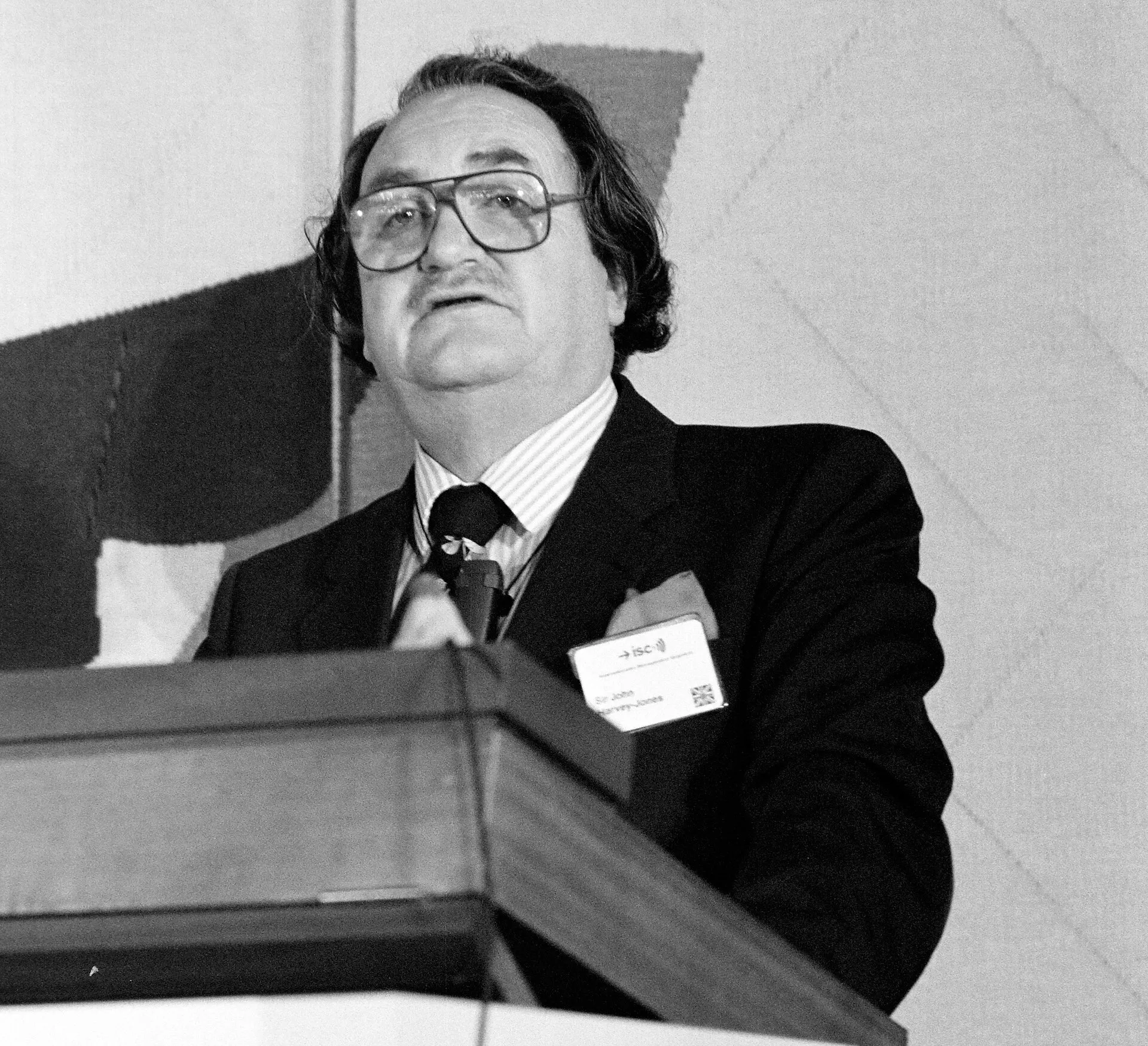
Sir John Harvey-Jones speaking at an international management symposium in 1988. Photo: Regina Kühne, CC BY-SA 4.0, via Wikimedia Commons. Sir John Harvey-Jones
The former ICI chairman brought the BBC’s Troubleshooter to the works in 1990 and advised Morgan to modernise and build more cars. The family declined. He later said he was pleased to have been proved wrong. Wikipedia, Christian Science Monitor, 1990
Read more: Troubleshooter
-
Charles Morgan
A former ITN news cameraman, he joined the company full time in 1985, by Wikipedia’s account, and in 1987 by Morgan’s own. He raced MMC 11, the Plus 8 that won a production-car championship in the late 1970’s (the timeline does not say which of the two years he drove it), and an aluminium-chassis Plus 8 in 1996. Wikipedia, Morgan, History (2022), Unsigned company history
He was removed as managing director and voted off the board in 2013 in a dispute over the EVA GT. The dispute was settled in February 2017 and he was invited onto a Family Council with his shareholding unchanged. Wikipedia, PistonHeads, evo
Read more: Eleven a week, The boardroom
-
Mark Braunstein
He compiles the unofficial model chart, “The Morgan — First and Last of the Real Sports Cars”, from sources that include Ken Hill’s Illustrated Morgan Buyer’s Guide, John Tipler’s The Cars & The Factory, and Morgan historians and enthusiasts, and revises it as new facts arrive. Version 94 is dated 18 October 2020 and version 139 24 June 2026. Braunstein chart, v139
The chart says plainly that it is not an official Morgan Motor Company publication, that it may contain errors, and that new technology reached some cars of a model year before others. Braunstein chart, v139
Read more: How to date a Morgan, Every Morgan line, 1909 to today
Sources
Where this comes from
Where the facts about these people come from. Each one is also sourced in the chapter that tells it.
Show all 23 sources
-
Wikipedia
Wikipedia, “H. F. S. Morgan” (text CC BY-SA 4.0; facts cited, not reproduced). Checked 4 October 2026.
-
Motor Sport, 1965
Bill Boddy, “The Vintage Years of the Morgan 3-Wheeler”, Motor Sport, June and August 1965. Checked 4 October 2026.
-
Unsigned company history
“Morgan Motor Company History”, an unsigned history in the company’s voice (about 2006), copied as a PDF by a Norwegian Morgan club. Checked 4 October 2026.
Origin unconfirmed. It reads as Morgan’s own website history, but the original page has not been found. It has errors (it puts the 1939 Le Mans car first in class, when the results say second), so nothing here rests on it alone where it matters.
-
Patent GB 20,986
H. F. S. Morgan, “Improvements in the Design and Construction of Tri-cars or other Light Automobile Vehicles”, British patent 20,986 (applied 8 September 1910, accepted 17 August 1911), via Google Patents. Checked 4 October 2026.
-
Morgan, History (2022)
Morgan Motor Company, “Morgan History”, morgan-motor.com/history/, as archived by the Internet Archive’s Wayback Machine on 22 May 2022. Checked 4 October 2026.
The company’s own account. The live page no longer exists, and the archived copy shows only the opening of each paragraph.
-
The Motor Cycle, 4 April 1912
“B.M.C.R.C. First Monthly Meeting”, The Motor Cycle, vol. 10, no. 471 (4 April 1912), pp. 375–377, via the Internet Archive. Checked 4 October 2026.
-
The Motor Cycle, 17 July 1913
“The Sidecar and Cycle Car Race” and the final results, The Motor Cycle, vol. 11 (17 July 1913), pp. 935–939, via the Internet Archive. Checked 4 October 2026.
-
Morgan Motor Company
Morgan Motor Company, “3 Wheeler”, Past Models. Checked 4 October 2026.
-
Wikipedia
Wikipedia, “Gwenda Hawkes” (text CC BY-SA 4.0; facts cited, not reproduced). Checked 4 October 2026.
-
mogsport.net
mogsport.net, Morgan at Le Mans: pages on Prudence Fawcett, the 1939 race and TOK 258. Checked 4 October 2026.
An enthusiasts’ site; its author is not named.
-
Wikipedia
Wikipedia, “1938 24 Hours of Le Mans” (text CC BY-SA 4.0; facts cited, not reproduced). Checked 4 October 2026.
-
Wikipedia
Wikipedia, “Peter Morgan (automaker)” (text CC BY-SA 4.0; facts cited, not reproduced). Checked 4 October 2026.
-
Classic & Sports Car
“Seven decades of separation: the Morgan Plus 4 at 70”, Classic & Sports Car. Checked 4 October 2026.
-
Hagerty UK
Hagerty UK, “When Morgan had the last laugh at the 1962 Le Mans”. Checked 23 September 2026.
-
24h-lemans.com
Automobile Club de l’Ouest, “24 Hours of Le Mans – Morgan 1962-2022, a limited edition in honor of a class win”, 24h-lemans.com. Checked 23 September 2026.
-
Simanaitis Says
Dennis Simanaitis, “Happy 50th, Isis Imports! Congratulations, Bill Fink!”, simanaitissays.com, 1 March 2018. Checked 4 October 2026.
-
Wikipedia
Wikipedia, “Morgan Plus 8” (text CC BY-SA 4.0; facts cited, not reproduced). Checked 4 October 2026.
-
Wikipedia
Wikipedia, “Morgan Motor Company” (text CC BY-SA 4.0; facts cited, not reproduced). Checked 4 October 2026.
-
Christian Science Monitor, 1990
Alexander MacLeod, “British Industry’s ‘Hercule Poirot’”, The Christian Science Monitor, 7 June 1990. Checked 4 October 2026.
-
Wikipedia
Wikipedia, “Charles Morgan (automaker)” (text CC BY-SA 4.0; facts cited, not reproduced). Checked 4 October 2026.
-
PistonHeads
Mike Duff, “Why Morgan sold itself to the Italians”, PistonHeads, 6 March 2019. Checked 4 October 2026.
-
evo
Tom Wiltshire, “Morgan Motor Company settles dispute with Charles Morgan”, evo, 21 February 2017. Checked 4 October 2026.
-
Braunstein chart, v139
Not an official Morgan Motor Company publication; its author notes it may contain errors, and that new technology reached some cars of a model year before others. Where the chart gives no date, the year shown here is read from the item’s position on the chart and marked “c.”.