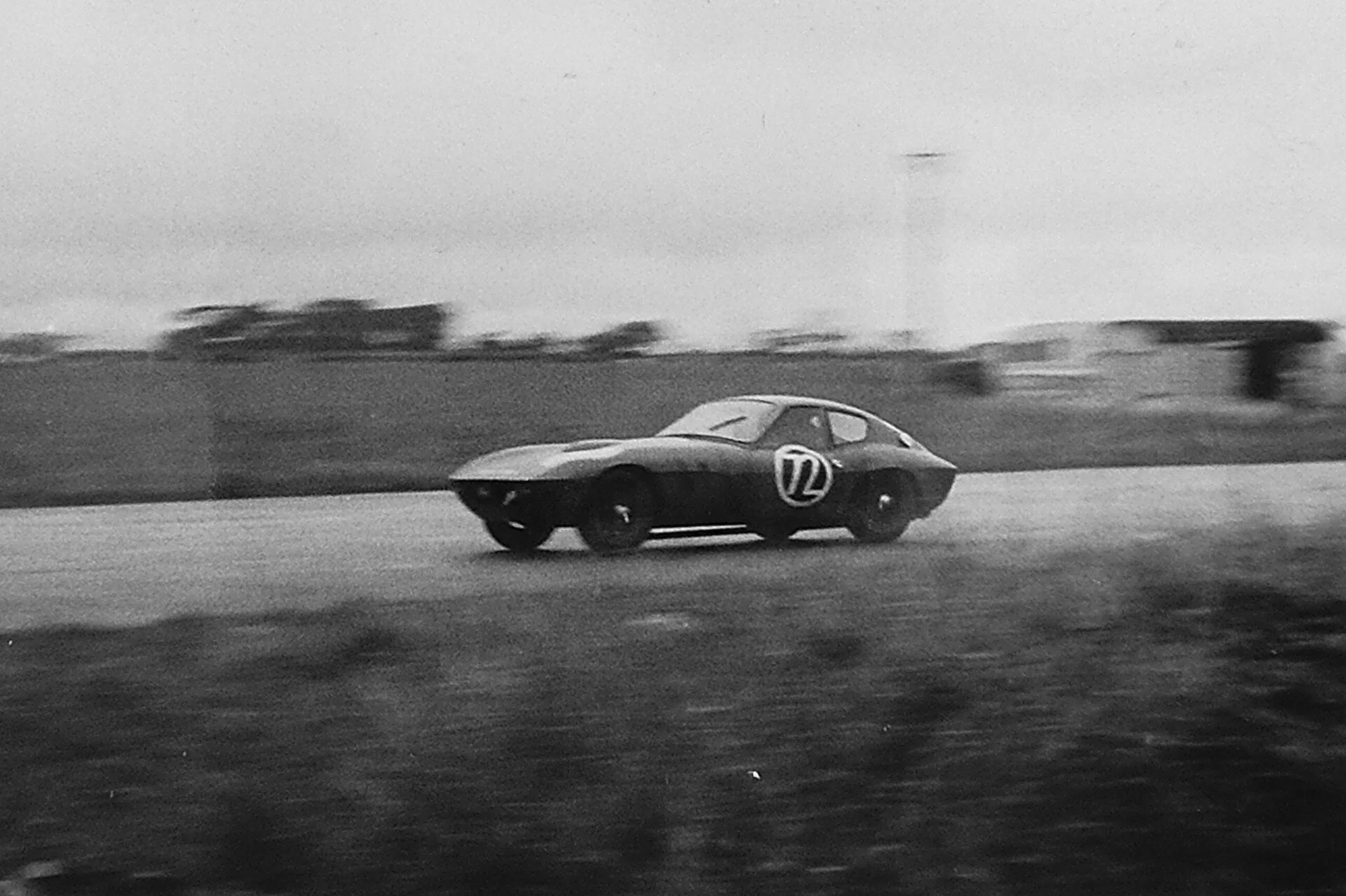
By 1950 the Morgan was forty years old and looked it—and that was half the point! What changed over the next eighteen years was everything underneath: a bigger engine, a new market across the Atlantic, a class win at Le Mans, a glass-fibre coupé that nobody bought, and an American V8 that would carry the company for decades. It is also where I come in…
The Registry holds 2,417 cars built in these years. 1,732 of them, 72%, are in the United States today, which tells you the shape of this chapter. See them all.
1947–1952A bigger engine
The trouble started in 1947, when the Standard Motor Company announced that it would build one engine and no other. The special 1,267 cc unit it had been making for the 4-4 would end after 1949, and Morgan had to find something else. Unsigned company history
Peter Morgan, the founder’s son, had joined the firm that year as a development engineer and draughtsman, back from the army. Unsigned company history, Wikipedia The obvious engine was Standard’s new 2,088 cc Vanguard. The obstacle was his father, who would not have an engine over 1,750 cc in a Morgan. So Peter fitted the Vanguard anyway, and then let the car make the argument! Classic & Sports Car
It worked. The Plus 4 was shown at the Earl’s Court Motor Show in October 1950, with 68 bhp, a stronger frame and a Moss gearbox, and deliveries began in 1951. Wikipedia, Unsigned company history, Classic & Sports Car Motor Sport remembered it a year later as “an exciting newcomer” at Earl’s Court, with 68 bhp in an eight-foot wheelbase chassis. Motor Sport, October 1951 In 1951, and again in 1952, Morgan won the team prize on the RAC Rally, with Peter Morgan driving in both teams. Unsigned company history
Sources differ
The Registry timeline and the company history put the first Vanguard-engined prototype in 1949. An enthusiast’s history of the four-wheelers dates it July 1950, three months before the show. Unsigned company history, gomog.com
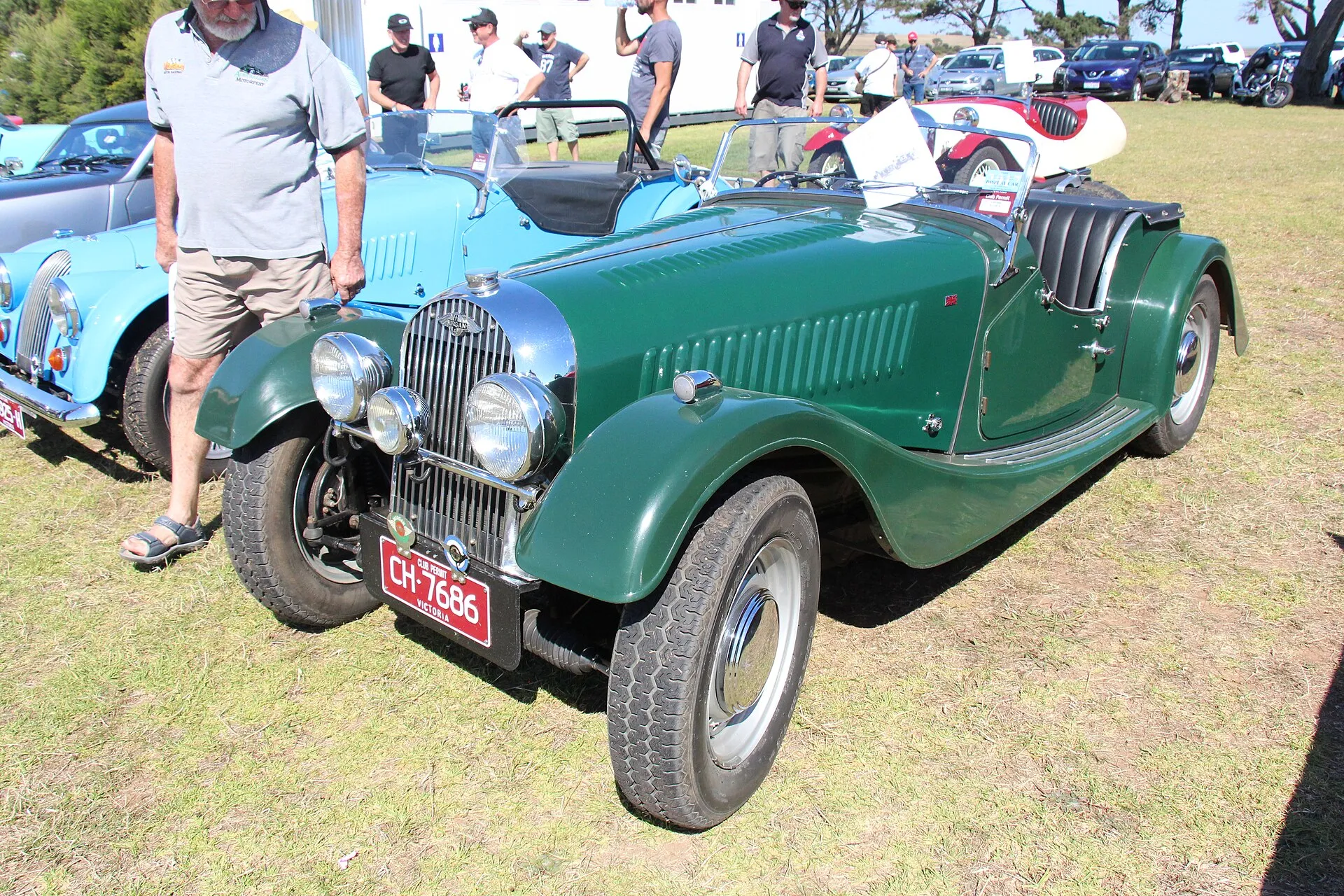
The Registry has 231 Plus 4s built from 1950 to 1953, the flat-radiator years. See them.
1939–1968America
The American story began before the war. A New York dealer, J.B. Ferguson, met H.F.S. Morgan at the London Motor Show in 1938 and had imported his first few Morgans by early 1939. His firm, Fergus Motors, became Fergus Imported Cars and then, in September 1963, Fergus-Fine Cars, and by the 1960’s it was taking about twenty Morgans a month. Ferguson Club
The Plus 4 opened the West Coast. The first one for America went to Angell Motors in Pasadena in January 1951, and the first for the East Coast to Fergus that March. Those dates are from the Registry timeline.
In 1960 Morgan told Road & Track that about 80% of its cars went to America, split evenly between the two coasts. Classic & Sports Car And the Americans raced them! Lew Spencer’s Plus 4, Baby Doll, was a regular on the winners’ rostrum and built up a large following. Unsigned company history
My own first look at one came the other way round, in England. On a three-month fellowship in London in 1968, I saw a beautiful 1960-ish Plus 4 at a tennis match, and while I was taking several pictures (some girl kept getting in the way!), I noticed how its classic lines belied its performance. I never got to sit in it, alas… That story is in my Saga.
Sources differ
How much went to America: about 80%, by Morgan’s own account to Road & Track in 1960, or up to 85%, as the Registry timeline and Wikipedia put it. Classic & Sports Car, Wikipedia
The Registry timeline makes Lew Spencer the 1962 SCCA C Production national champion. Wikipedia’s list of that year’s champions gives C Production to a Lotus Super Seven. Wikipedia
1953–1956Flat, interim, cowled
If you are dating a Plus 4, this is the change to know. Until late 1953 the radiator stood upright and flat at the front, as it had on every four-wheeled Morgan. Then it went behind a curved cowl blended into the bonnet. The first cars had an interim cowl that curved back only at the top, and only about nineteen were built that way—if you have one, you have a rare bird! The final shape, curved at the top and sides, followed in 1954. Wikipedia, gomog.com
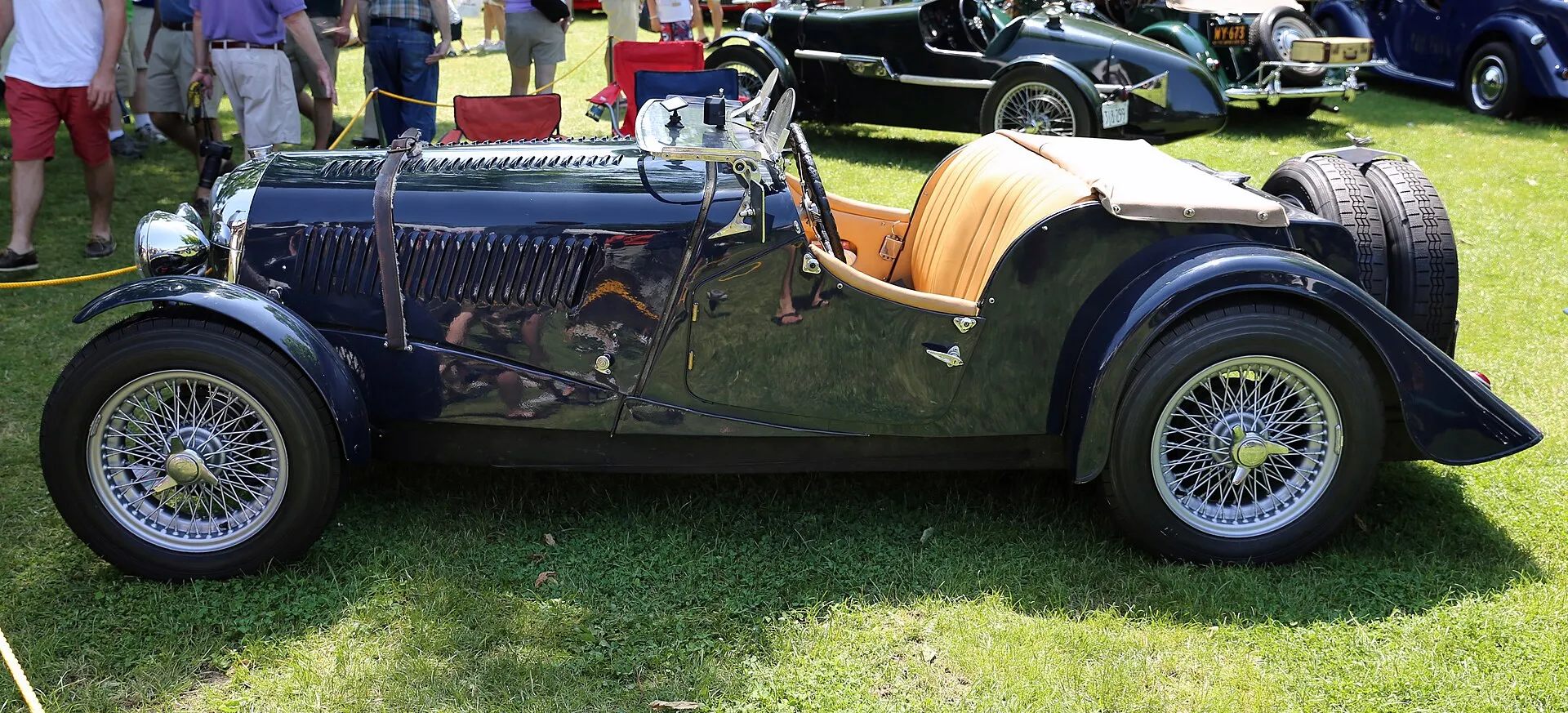
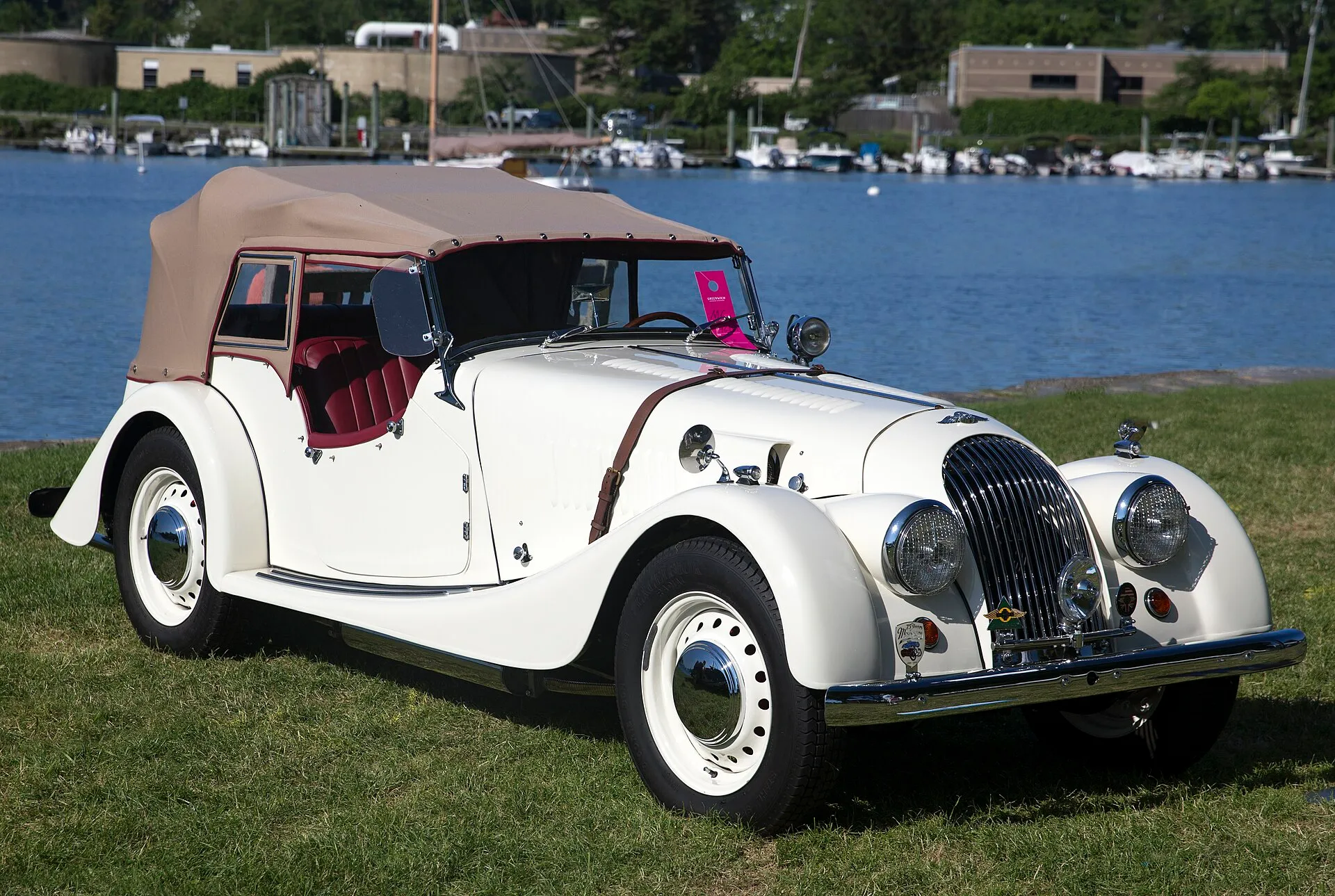
Under the bonnet, the Vanguard gave way to Triumph’s TR2 engine with 90 bhp, and then the TR3 with 100. Unsigned company history, Classic & Sports Car Peter Morgan also brought back the cheaper 4/4 in 1955, as the Series II with a Ford engine. Wikipedia
Sources differ
When the 4/4 returned as the Series II: 1955, according to Wikipedia, an enthusiast’s history and the Registry timeline; 1954, according to the company history. Wikipedia, gomog.com, Unsigned company history
1959The founder’s last years
H.F.S. Morgan died in June 1959, fifty years after he built his first car. Wikipedia Peter Morgan became chairman, and his first problem was a serious tax bill. Wikipedia
I feel I have enjoyed it all.
1958–1962The plate that won Le Mans
Now for one of my favourite Morgan stories! Chris Lawrence bought a second-hand Plus 4 for £650 and first raced it on his birthday, 27 July 1958. It was registered TOK 258. Hagerty UK By the Registry timeline’s account, his first win in a Morgan came at Brands Hatch in May 1959, and he kept right on winning.
In 1961 he and Richard Shepherd-Barron entered a Plus 4 for Le Mans. It passed the first checks, and then the organisers turned it away: it was not in the spirit of the race, they said, and amounted to a car from 1939 with disc brakes! Lawrence later learned that Triumph’s team manager, Ken Richardson, had lobbied against them. Hagerty UK
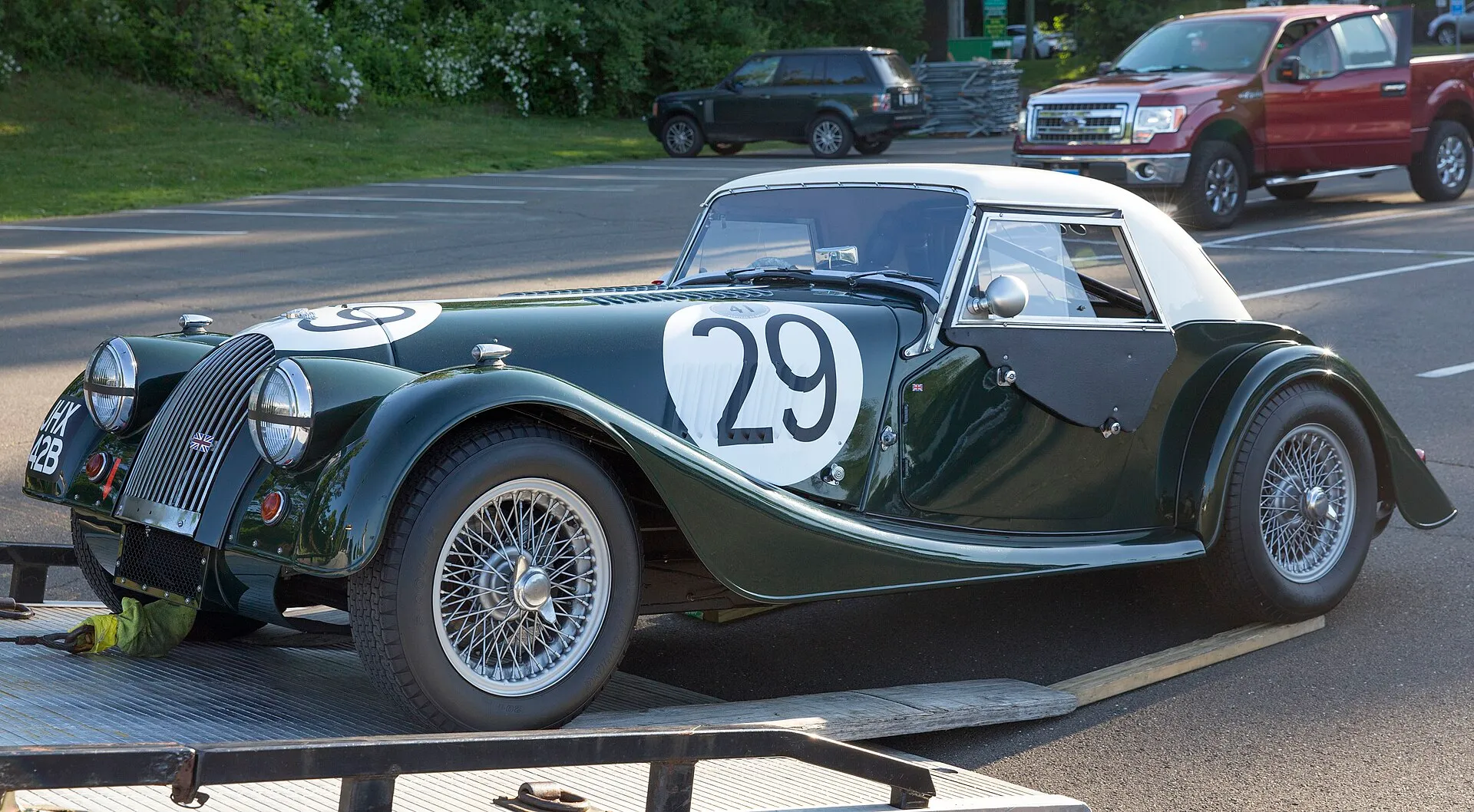
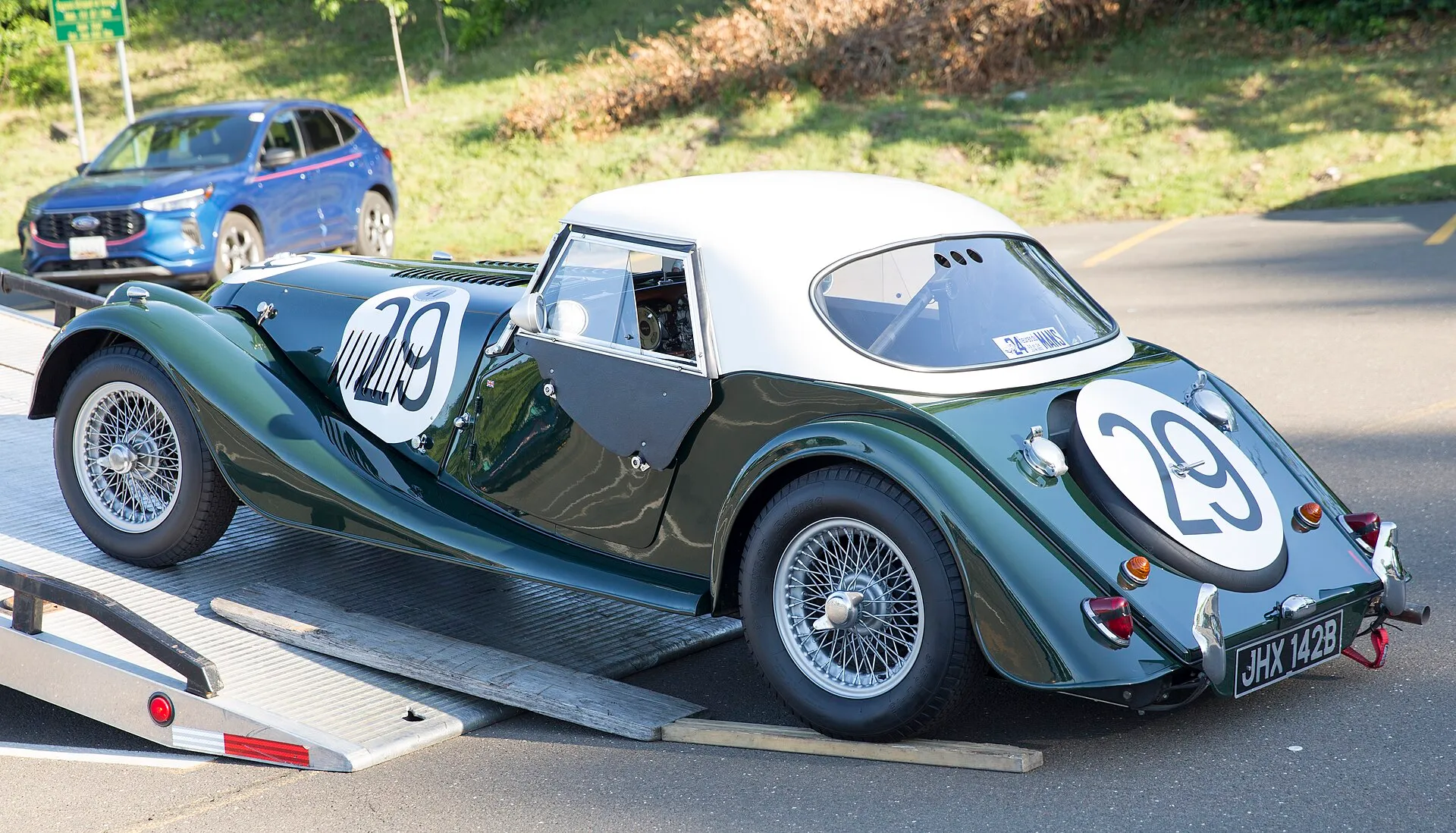
For 1962 Lawrence persuaded Peter Morgan to enter the car as a works team, which the organisers would find harder to refuse. He then quietly had TOK 258 rebodied, lower and with less frontal area, and fitted a hardtop. Peter objected, and then accepted it. Hagerty UK
In June 1962 Lawrence and Shepherd-Barron won the 2-litre GT class and finished 13th overall, over 2,255 miles at almost 94 mph. Hagerty UK, 24h-lemans.com And then, after twenty-four hours of racing, the car was driven home to England on the road! Unsigned company history
Sources differ
Which car won: Hagerty says Lawrence had TOK 258 itself rebodied. Classic & Sports Car, reporting the 2011 auction of the winner, says it was chassis 4840, a new car that wore the TOK 258 number for Le Mans and was re-registered JHX 142B after Lawrence sold it, the number going back to his earlier Plus 4. The firm that later sold 4840 tells it the same way. The Le Mans record below sets out all three, and what the Registry holds. Hagerty UK, Classic & Sports Car, 2011, Seller’s listing
The distance: 2,261 miles in the Registry timeline and the company history, “over 2,255 miles” according to the race organisers and Hagerty. Morgan’s own history repeats 2,261 miles at an average of 94 mph. Morgan, History (2022), Unsigned company history, 24h-lemans.com, Hagerty UK
So which car won? A registration plate can move from car to car, and this one did. The Registry holds both of the cars that claim the win. The published accounts, and the Registry owners’ own words, are below—you be the judge!
Racing
Morgan at Le Mans
The entries the sources below name, from Prudence Fawcett in 1938 to an LMP2 car in 2013.
-
1938
Morgan 4-4
Prudence Fawcett and Geoffrey White
13th overall, 2,210 km. Fawcett was the first person to drive a Morgan at Le Mans. 24h-lemans.com, Wikipedia
-
1939
Morgan 4-4, race number 37
Geoffrey White and Dick Anthony
15th overall and second in the 1.5-litre class, behind an HRG; 1,545.8 miles at 64.4 mph. The highest-placed British car. Wikipedia, mogsport.net
-
1962
Plus 4, registered TOK 258, race number 29
Chris Lawrence and Richard Shepherd-Barron
Won the 2-litre GT class, 13th overall; over 2,255 miles at almost 94 mph. Hagerty UK, 24h-lemans.com, Wikipedia
-
2002
-
2004
Aero 8
Finished. 24h-lemans.com
-
2013
Morgan LMP2, no. 45 (OAK Racing)
Jacques Nicolet, Jean-Marc Merlin and Philippe Mondolot
Finished; the race’s official “Art Car”. 24h-lemans.com
Which car was TOK 258?
The plate won Le Mans. Which car was under it, the sources do not agree, and the Registry holds both candidates.
-
Registry · chassis 3464
known as the Morgan who won its class at LeMans in 1962
1956 Plus 4, TOK 258 No. 3464 Jersey, Channel Islands, United Kingdom
-
Registry · chassis 4840
#5, Plus 4 Super Sport produced; 1961-06-21; to have raced as TOK, but not verified; originally shipped to LawrenceTune
1961 Plus 4, Super Sport No. 4840
Also on chassis 4840, with no note: 1962 Plus 4, Super Sport, Washington, Connecticut, USA.
Sources differ
Hagerty’s account. Chris Lawrence bought a second-hand Plus 4 already registered TOK 258 for £650 and first raced it on his birthday, 27 July 1958. The car Le Mans turned away in 1961 was a different one, registered XRX 1. For 1962 he had TOK 258 itself rebodied with a lower body, and that car won. Hagerty gives no chassis numbers; the Registry’s 1956 Plus 4, chassis 3464, is the car that fits. Hagerty UK
The seller’s account. The firm that sold chassis 4840 says it was new in May 1961, registered XRX 1. It says chassis 3464 was the car refused in 1961, that Lawrence then moved the TOK 258 plate onto 4840, and that 4840 won, citing the race organisers’ scrutineering records in the car’s file. A photograph on Wikimedia Commons of the car at Greenwich in 2024 carries the same account. Seller’s listing, Wikipedia
Classic & Sports Car’s account. Reporting the 2011 auction of Lawrence’s Le Mans car, it says chassis 4840 was registered TOK 258, a number Lawrence had used on his 1956 Plus 4, for Le Mans. It was re-registered JHX 142B after Lawrence sold it a year later, and the TOK 258 number went back to his earlier car. It does not mention XRX 1. Classic & Sports Car, 2011
The Registry records chassis 3464 as “the Morgan who won its class at LeMans in 1962”, and chassis 4840 as having raced as TOK “but not verified”. Both notes are the owners’ own; neither has been checked here. Know more?
1963–1967The coupé, and the SLR
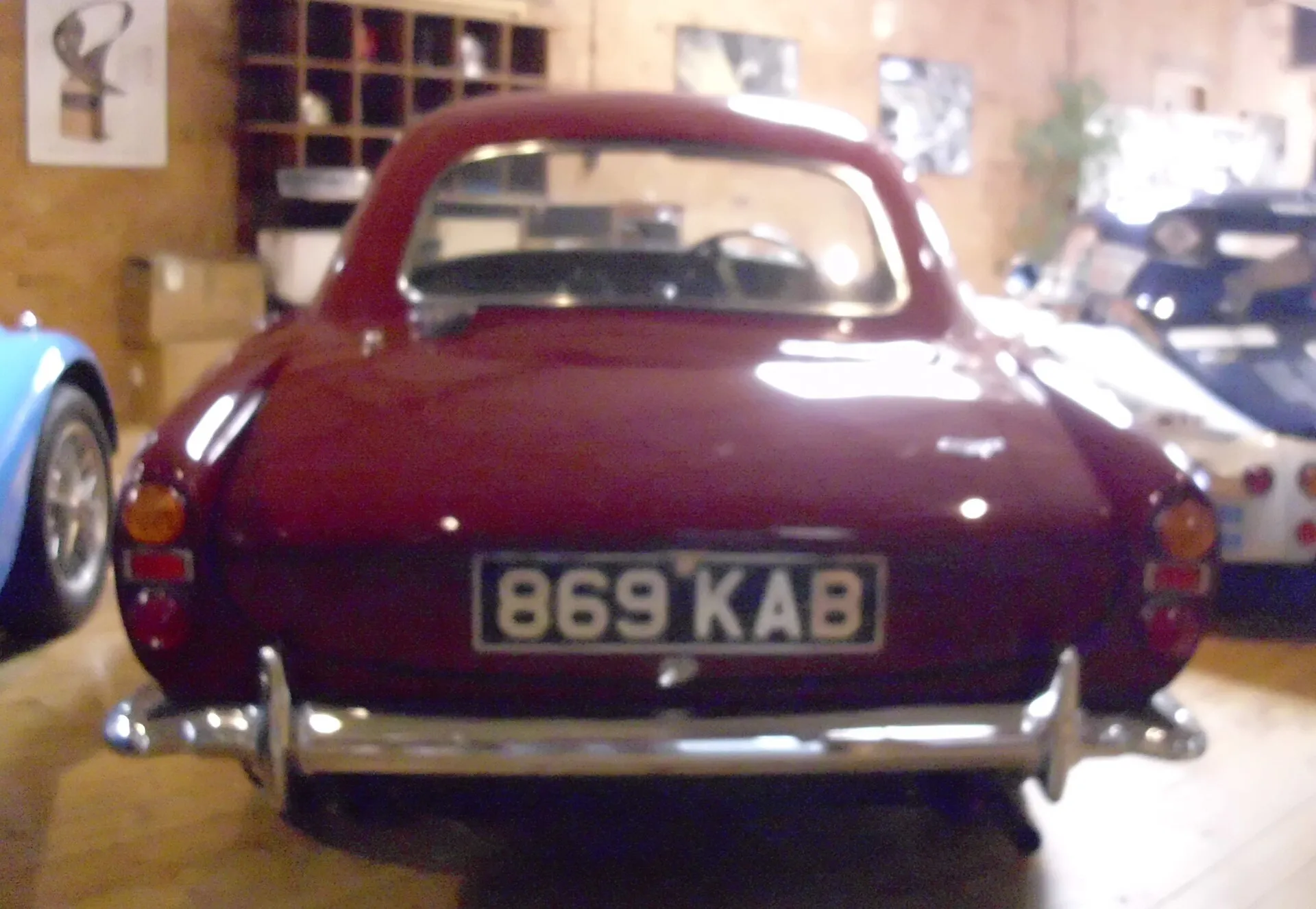
At the Earl’s Court show in 1963 Morgan surprised everyone with the Plus 4 Plus: a closed glass-fibre coupé on the Plus 4 chassis, with a Triumph TR4 engine. It was light and quick, with a top speed of about 115 mph, and it did not sell. Twenty-six were built before it was dropped in 1967. Wikipedia, Unsigned company history The Registry holds 26. See them. When I first visited the factory in 1972, there was an open shed by the entrance gate full of used and extra parts, including two fibreglass shells for the Plus 4 Plus! I wonder whatever happened to them?
In 1964 Chris Lawrence and John Sprinzel designed the SLR, a streamlined racing coupé on a Plus 4 chassis. Unsigned company history Very few were built. I saw one under wraps at Isis Imports in San Francisco in 1996, the only one in the USA at that time, and needless to say my camera was working overtime!
1966–1968A V8 from Buick
By 1966 Triumph’s four-cylinder engine was near the end of its life. Rover offered Morgan its new aluminium V8, and Morgan hired an engineer, Maurice Owen, to build a car around it. Unsigned company history The engine had begun as a Buick: for the prototype, Morgan bought a Buick 215 from General Motors in 1967. Wikipedia According to the Registry timeline, the first Plus 8 ran in February 1967. That prototype was a converted Plus 4, and I saw it at Isis Imports in 1996: the only visible difference was two small bubbles in the bonnet for the SU carburettors. It still looked mighty potent!
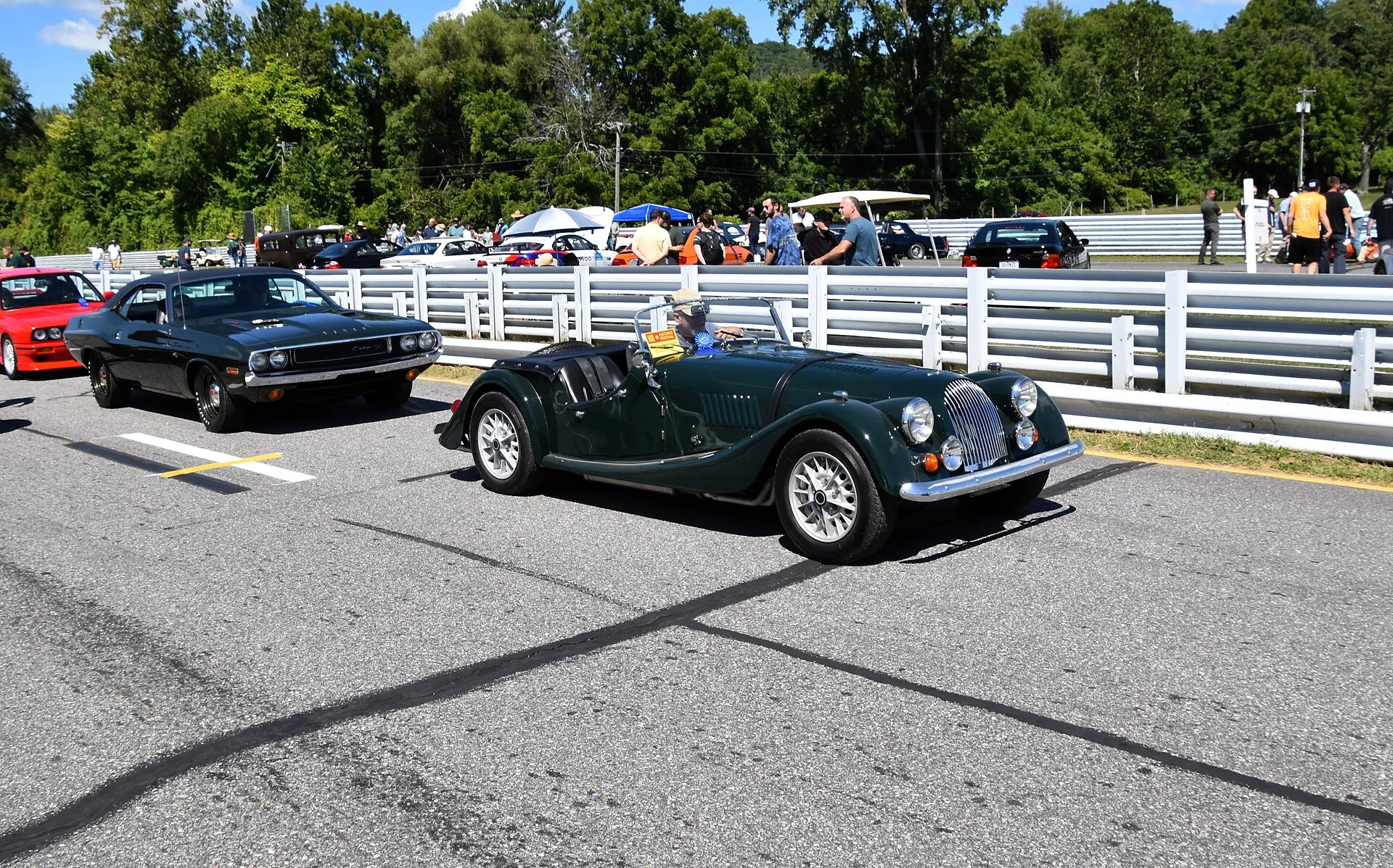
The Plus 8 went on public show at Earl’s Court in October 1968, with Rover’s 3.5-litre V8 and a Moss gearbox. Wikipedia, Grace’s Guide It would stay in production, with the same family of engine, until 2004. The Registry has 223 Plus 8s built before 1973, the Moss-gearbox years. See them.
Motor Sport’s Bill Boddy, visiting the Morgan stand at the London show, called it “the new V8 sports car”, and in December 1968 he road-tested one. It had 161 horsepower net from the Rover engine, the Moss gearbox from the Plus 4, a top speed of 125 mph and a price of £1,487, purchase tax included. (The Registry’s price list gives £1,155 for 1968, which looks like the price before tax.) Morgan was making two a week and meant to reach about five a week in 1969. Motor Sport, November 1968, Motor Sport, December 1968
Sources differ
The company history’s text says the Plus 8 was announced at the Earl’s Court show of 1968, and Motor Sport’s November 1968 show report, which puts the new V8 on the Morgan stand, bears that out; but a caption in the same document says it was introduced in July 1968. The Registry timeline, Wikipedia and Grace’s Guide agree on Earl’s Court, whose show ran 16–26 October 1968. Unsigned company history, Wikipedia, Grace’s Guide
A year later, serving in the Army in western Louisiana with nothing to do in my spare time but read, I came across the December 1969 issue of Road & Track, and it hit me like a ton of bricks! There, in all its pristine glory, was THE car that I had to have. A shape like that, with a V8, was simply too much to pass over. I wrote to the factory and ordered one with nearly every option they offered… The rest of that story is in my Saga, and the next chapter is the Plus 8’s own: thirty years in which America closed its doors to the Morgan, and a San Francisco importer found a way back in.