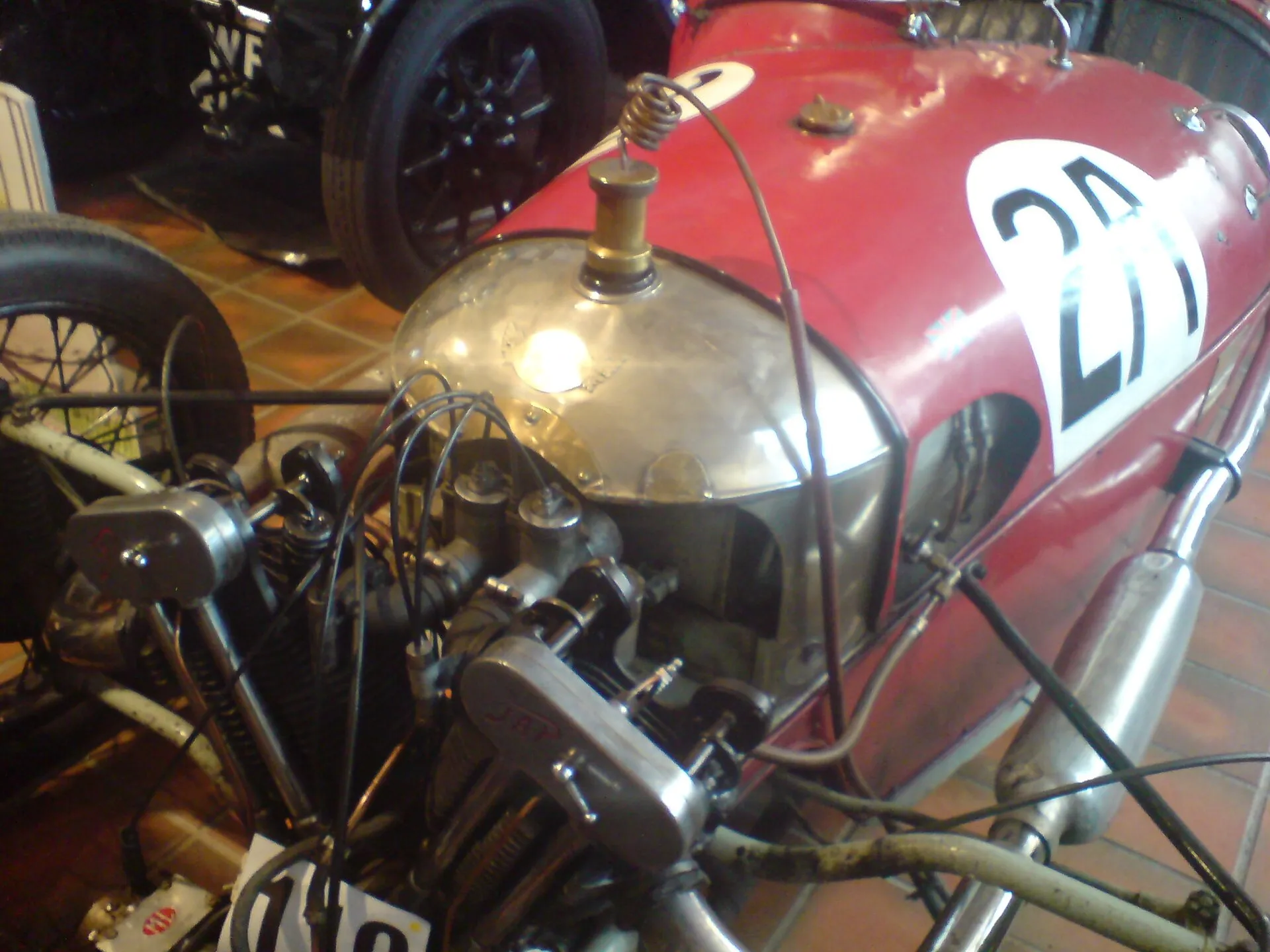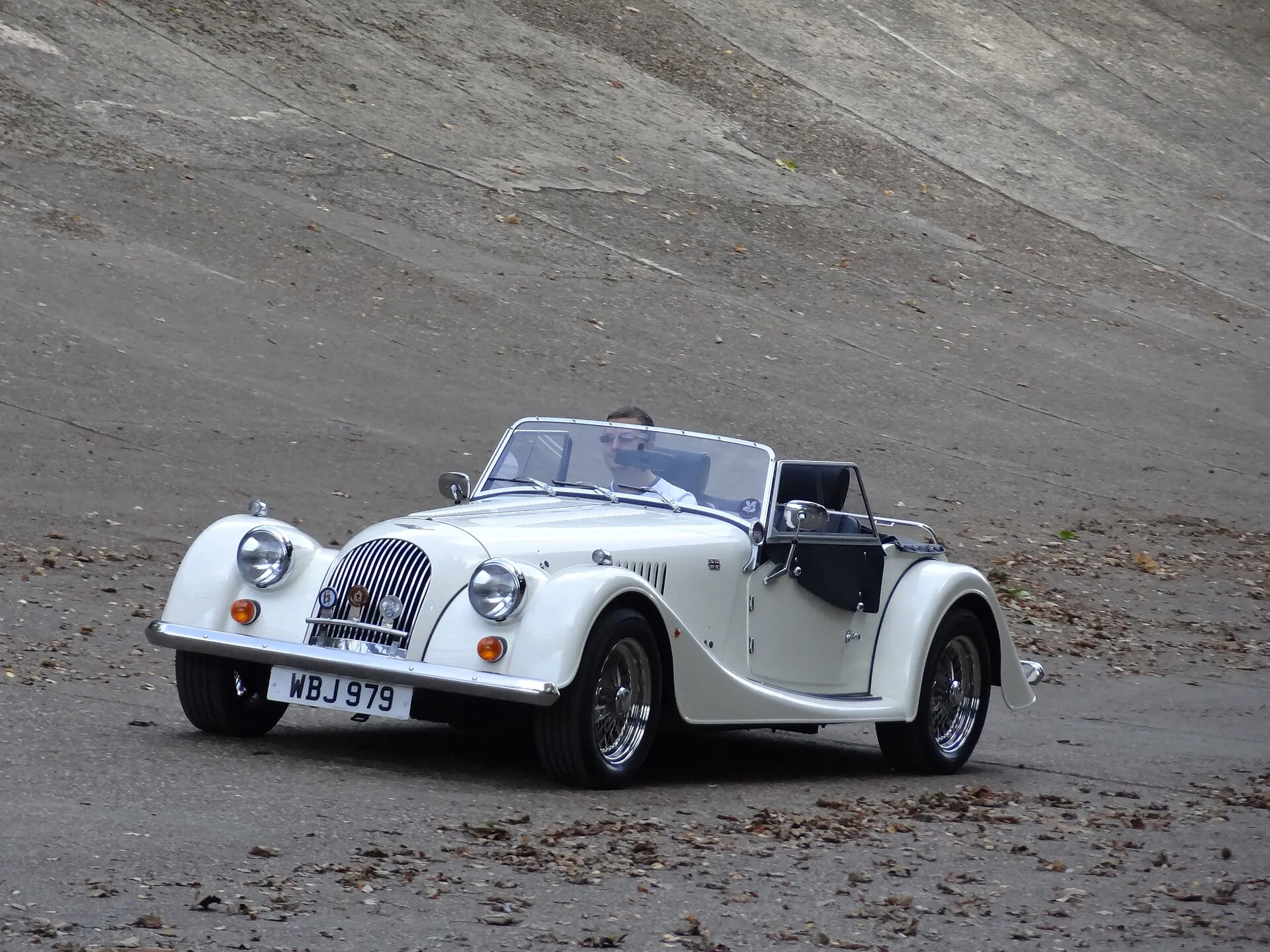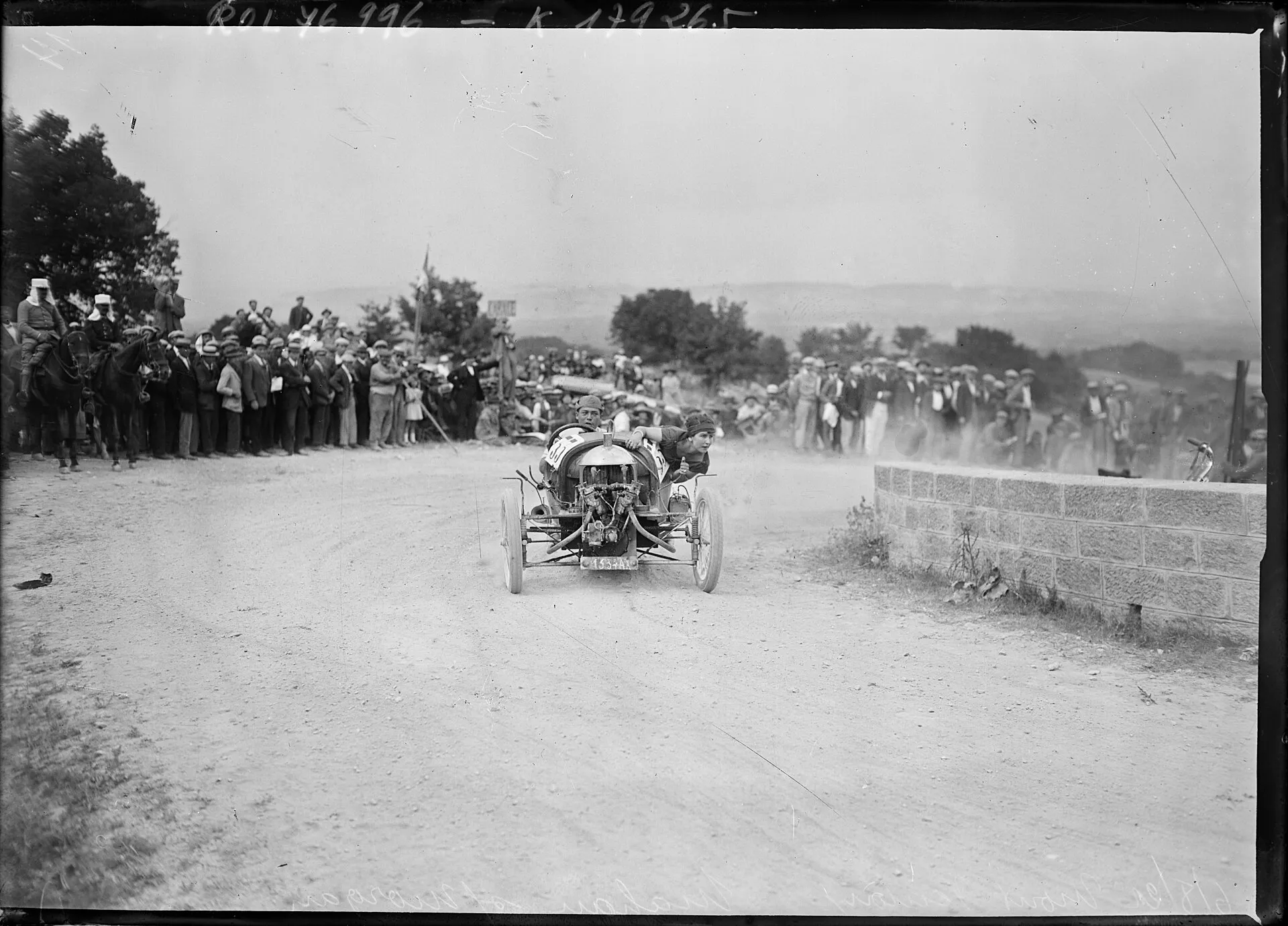
By 1913 the Morgan had a problem: it was too good, and it had one wheel too few. At Amiens the officials treated it as a sidecar, in 1914 a British trial turned it away, and in 1924 Brooklands banned it outright… and that, as you will see, became something of a habit.
The Registry holds 26 cars built by 1924, the oldest of them dated 1909 by their owners. See them. The story so far is in Chapter I.
1913Amiens
In July 1913 Morgan sent racing cars to the Cyclecar Grand Prix at Amiens, with longer chassis, lower seats and overhead-valve J.A.P. engines. W. G. McMinnies, the editor of The Cyclecar, covered the 163 miles at 41.9 mph, against a field full of four-wheelers, and came home first. Motor Sport, 1965, Unsigned company history
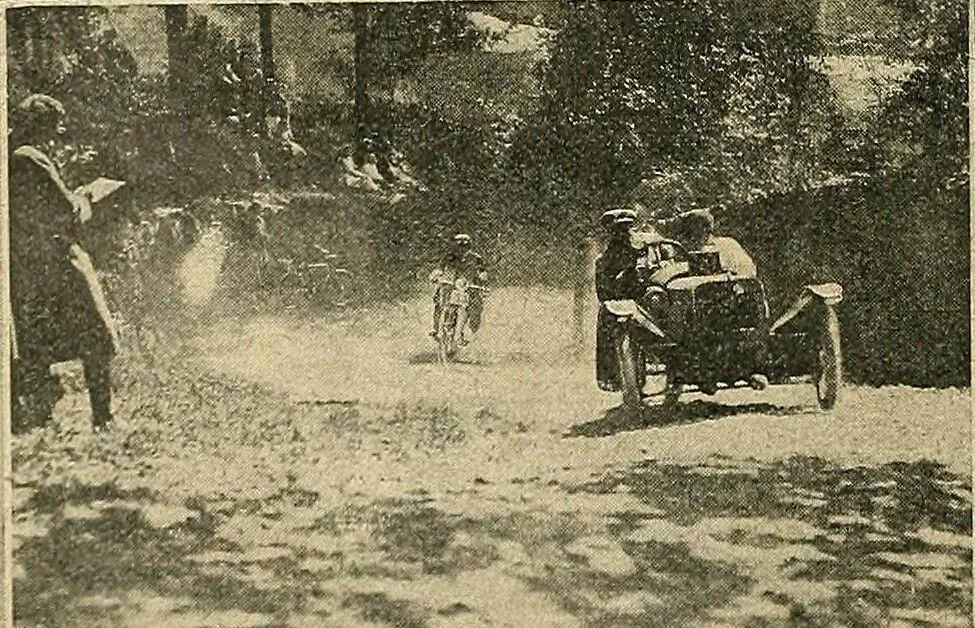
And yet—did he win? Motor Sport’s 1965 history says the officials gave the race to a Bédélia, on the grounds that a Morgan was a sidecar, and the Registry timeline gives the cycle-car prize to a Bédélia. The company history, Wikipedia and Hagerty simply say Morgan won. Motor Sport, 1965, Unsigned company history, Wikipedia, Hagerty UK The Motor Cycle’s report of 17 July 1913 explains how both can be true. The race ran on Sunday 13 July, and the Morgans were classed with the sidecars, as three-wheelers, though they started with the cycle cars. McMinnies changed a plug, stopped for a puncture, and still won the three-wheeler class in 3 hours 53 minutes 9 seconds. Bourbeau’s Bédélia won the cycle-car class in 3 hours 55 minutes 54 seconds, at 41.4 mph, and the magazine’s caption says McMinnies “made the fastest time of all the passenger machines”. (The Violet-Bogey that finished eight seconds behind the Bédélia was disqualified for a loose mudguard.) The Motor Cycle, 17 July 1913 Either way, McMinnies named his car the Jabberwocky of Picardy, and Morgan named the model after the race: the Grand Prix. Unsigned company history
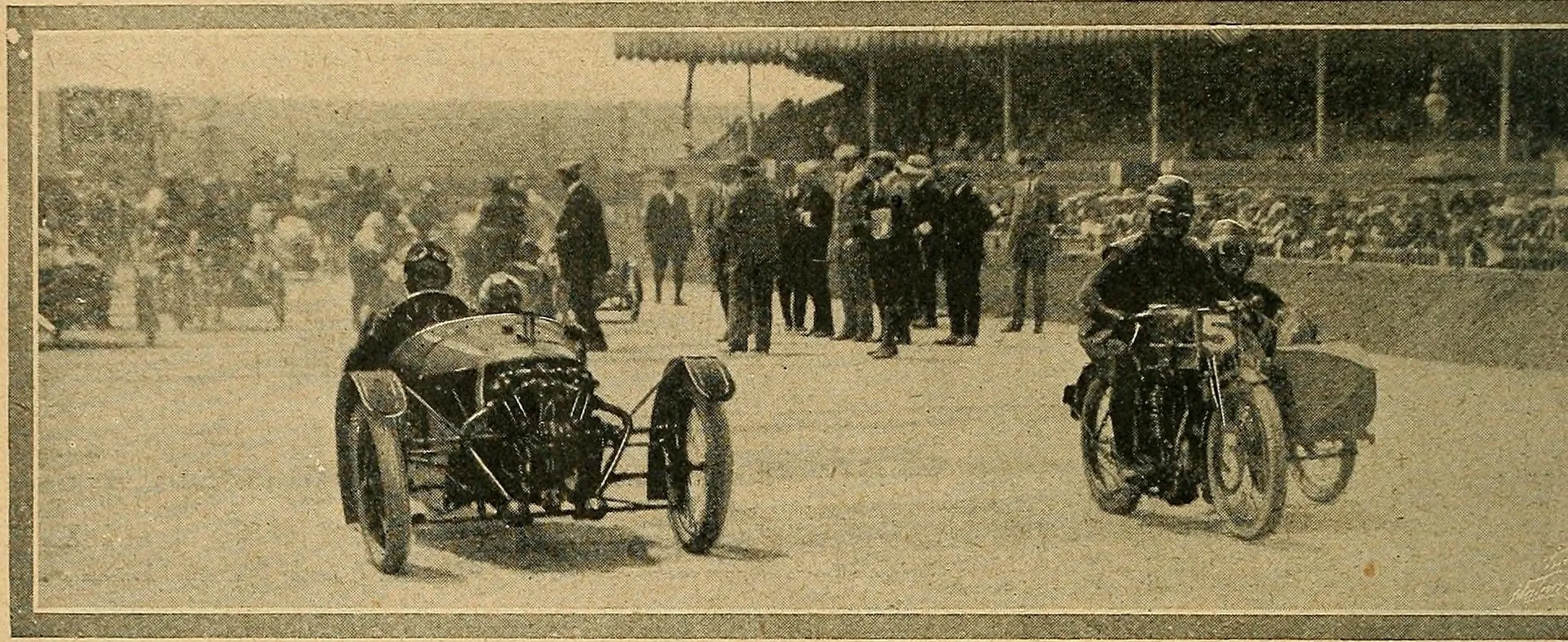
HFS was not one to let that go quietly! On 17 July he wrote to the magazine, “Is the Three-wheeler a Cycle Car?”, complaining that the Cycle Car Club’s hill-climb had shut out three-wheelers, and that the Brooklands motor-cycle racing club had gone further and barred three-wheelers over 1,000 cc altogether. The Auto-Cycle Union’s own definition included them, he said, and it was “only natural” for a three-wheeler to beat a four-wheeler of equal power. The Motor Cycle, 17 July 1913 (letter) When the club replied, he answered that his three-wheelers had finished first, second, fourth and fifth on time, but that winning on the club’s formula would have needed “about twice the speed of the fastest four-wheeler, a superiority which I am too modest to claim for the Morgan”. The Motor Cycle, 24 July 1913, The Motor Cycle, 7 August 1913 The magazine’s own man at Amiens put it nicely: officially the Morgan “ran as a sidecar, but all the same the great mass of spectators refused to look upon it as belonging to that category”. The Motor Cycle, 24 July 1913
It was a big year all round. Wikipedia says HFS won the A.C.U. Six Days’ Trial. Wikipedia A Morgan set the fastest time of the day at the Shelsley Walsh hill climb, and another won the Cyclecar Club’s fuel trial at 69.4 mpg. A two-seater cost 85 guineas. Unsigned company history In the English Six Days in August, through Cumberland, Westmorland and the Durham dales, Mrs Morgan rode with HFS in his 8 hp runabout. The Motor Cycle, 21 August 1913 The reviewer wrote that he “drove with wonderful dash”, and that his ascent of Tow Top “was amazing; he even passed solo mounts on his way up”! The Motor Cycle, 28 August 1913
Sources differ
Whether HFS “won” the Six Days’ Trial. Wikipedia says he won the A.C.U.’s Six Days’ Trial in 1913. Wikipedia The magazine’s table awards his Morgan a gold medal, which many others won, and the passages of its review that name him praise his driving without saying he won. The Motor Cycle, 28 August 1913 The review also calls the cycle cars “frankly disappointing, only three getting through, and only one gaining the coveted gold medal”. The Morgan firm wrote in September that the three-wheeler had been classed with the sidecars, which led The Standard to write of “the only two surviving cycle cars, the G.W.K. and the J.B.S.”, “whereas the Morgan not only survived but qualified for a gold medal”. The Motor Cycle, 4 September 1913
From the magazines: more from 1913
At the Cycle Car Club’s first open hill-climb, at South Harting in Sussex on 28 June, the magazine reported that A. W. Lambert’s single-seated Morgan “made fastest time of the day”, though a one-cylinder Chota did best on the club’s formula. The Motor Cycle, 3 July 1913 In the argument that followed, a club official, writing for its secretary, replied that three-wheelers had not been debarred and had taken awards in two classes, and the editor added that Morgan “apparently was excluded from Classes III. and V.”, which was probably what he meant. HFS wrote to uphold “the broad definition of the A.C.U. in the spirit as well as in the letter”. The Motor Cycle, 24 July 1913, The Motor Cycle, 7 August 1913
The Scottish Six Days’ Trials, reported on 31 July, went badly. On the last day, before the lunch check at Pitlochry, “Morgan’s steering gear went wrong, and he injured a front wheel and had to withdraw”, and on the same stage W. G. McMinnies, in a Grand Prix Morgan, “when travelling at high speed his steering failed”, ran into a telegraph pole, wrecked the car, and escaped without injury. The page names the two mishaps separately and does not say whether they were the same. The Motor Cycle, 31 July 1913
In the English Six Days, by way of Tow Top, Cockermouth and Westgate, another Morgan, J. R. Blackburn’s, retired near Cockermouth with a broken piston and cylinder. On one of the northern hills the reporter wrote that HFS “came up splendidly on top to the last corner”, and that “certainly Morgan knows how to get the best out of this handy little runabout”. The table of official results lists “H. F. S. Morgan (8 Morgan)” with 12 marks lost and a gold medal, among the sidecars and three-wheeled cycle cars. The Motor Cycle, 28 August 1913
Closer to home, the Malvern and District Motor Club held a speed trial at Madresfield Court on the Earl Beauchamp’s private drive, and “H. F. S. Morgan was driving his Grand Prix model”. The Motor Cycle, 10 July 1913 In September, at a speed trial where the touring cycle-car class was won on the road by Lionel Martin’s Singer, Martin was disqualified for missing the examination and “Oliver (Morgan) was counted as the winner”; in the general section “South, driving a water-cooled Morgan, had a walk-over”. The Motor Cycle, 25 September 1913 At the Cyclecar Club’s autumn trial in November, V. Busby’s Morgan had “a four-speed gear, i.e., a separate two-speed gear box in addition to the usual Morgan gear”; Spencer’s “ran back a little, hesitated, and slipped his clutch to the summit”. The Motor Cycle, 6 November 1913
1914One wheel short
Then the Royal Automobile Club had its turn. In 1914 its trial for light cars and cyclecars refused the Morgan entry because it had three wheels, not four. Unsigned company history HFS designed a four-wheeler, and by the Registry timeline’s account patented one that September, but it never went into production. The company history notes that it would be twenty-two years before a four-wheeled Morgan went on sale… Unsigned company history
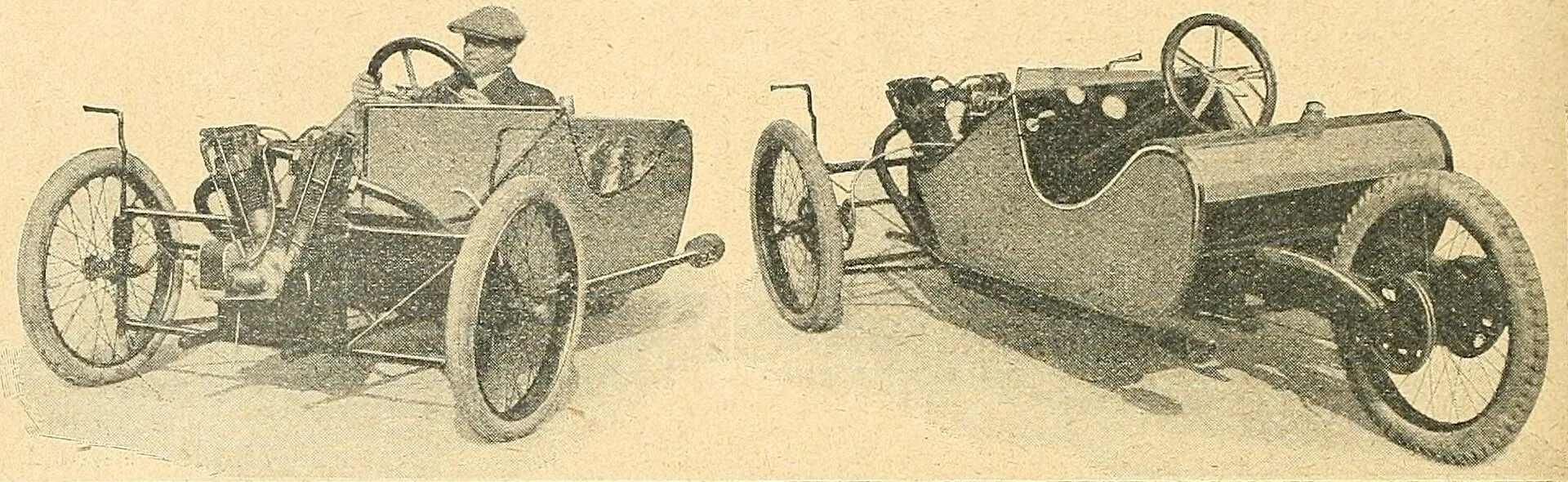
The idea was older than the patent, incidentally. The magazine’s notes of 23 July 1914 reported a Morgan with a 1,100 cc M.A.G. engine under test on the road, and that “a Morgan four-wheeler is a possibility of the future. Such a machine has been on the road some time, but Mr. Morgan has decided not to market it next year, at any rate.” The Motor Cycle, 23 July 1914 And HFS had floated the notion in print three years before, “possibly at Malvern”. The Motor Cycle, 23 February 1911
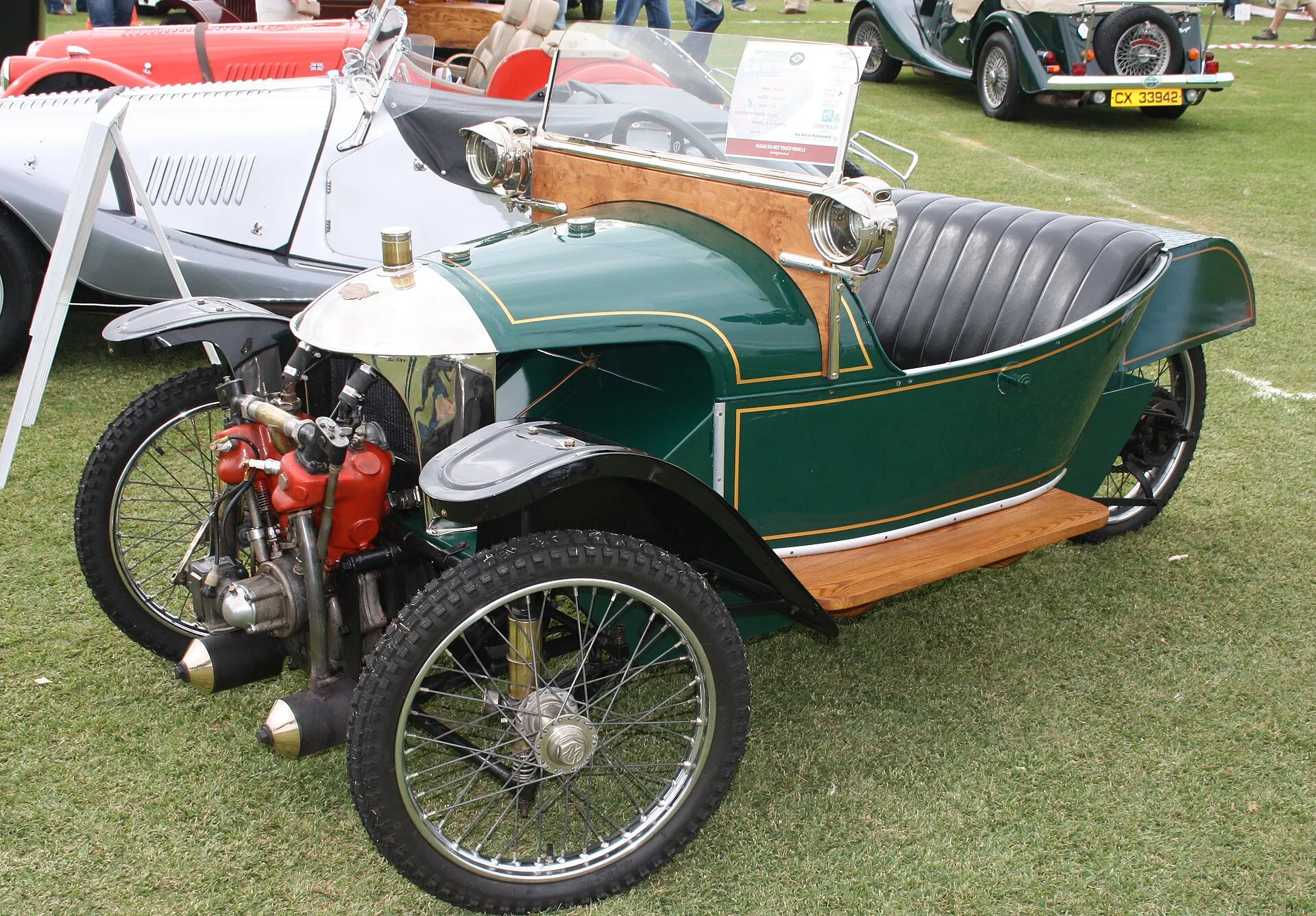
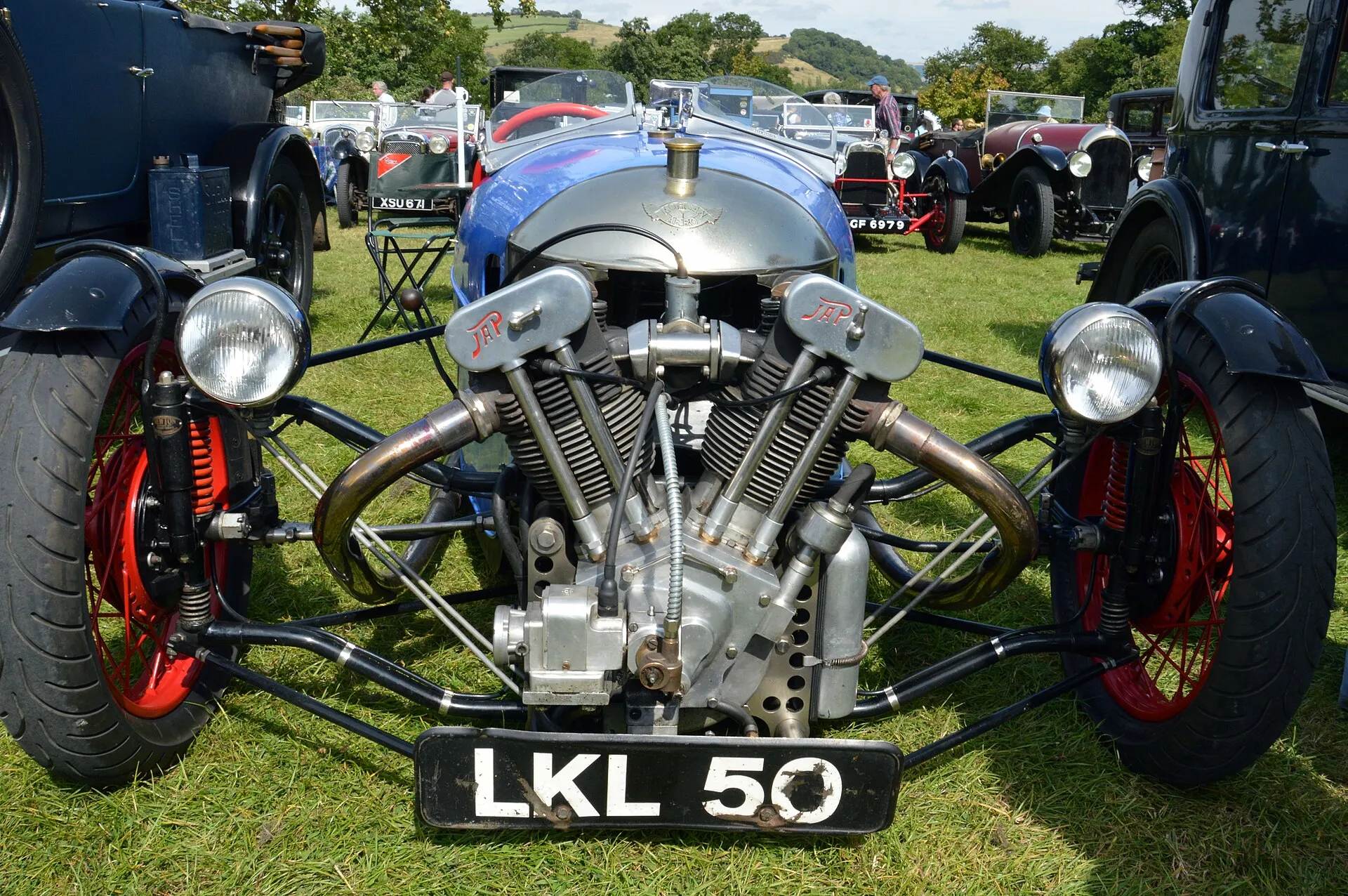
Then the war arrived, quite literally in the middle of a trip. HFS had set out for the International Six Days Trial at Grenoble in early August, and the magazine’s own party, dashing back across France, met him near Gien “returning, he having been troubled with a main bearing bush on his engine”. The trial had already been called off, and the French army was mobilising. The Motor Cycle, 6 August 1914 The Isle of Man race that autumn, for which Morgan had entered two 8 hp cars, was abandoned too. The Motor Cycle, 6 August 1914, The Motor Cycle, 3 September 1914 The car built for it, a Grand Prix chassis with a special eight-valve M.A.G. engine of 1,078 cc and two long straight exhaust pipes, “has proved much faster”, the magazine said, than anything the company had yet made. Alas, there was no race for it that year… The Motor Cycle, 8 October 1914
By the end of the year the Morgan was very nearly the last of its kind. On 26 November “Ixion” wrote that “apart from the ever-green Morgan, there is hardly a single genuine ‘cycle car’ left in existence. Both the name and the thing are practically obsolete”. The Motor Cycle, 26 November 1914
From the magazines: more from 1914
After the Scottish Six Days’ Trials the Morgan Motor Co. wrote that its four-speed gear had been standard for two years, and that the cars in the trial were, with one exception, entered by purchasers. A correspondent replied that two of the drivers “made no secret of the fact that their machines did not belong to them”, and that only one of the four, Mr James, was a private owner. The Motor Cycle, 30 July 1914, The Motor Cycle, 23 July 1914 The reports of the trial are kinder to the cars than to their drivers: “Morgan and McMinnies, on their Morgan runabouts, seldom had trouble with the hills”, though McMinnies failed on a climb through wheel slip and another Morgan withdrew with a bent front axle. The Motor Cycle, 16 July 1914 At Caerphilly HFS burst a tyre, and at the Porthcawl speed trials H. E. Moon’s 8 hp Morgan lost the cycle-car class to a 12 hp Buckingham by only 2¾ seconds. The Motor Cycle, 2 July 1914
On the Grenoble trip the magazine’s party reached Grenoble on the Saturday evening to learn that the French army had been mobilised an hour before. The Motor Cycle, 6 August 1914 For the Auto-Cycle Union’s International Cycle Car Race, fixed for 24 September in the Isle of Man, Vernon Busby also entered a Morgan; by 3 September the Union had abandoned it, intending to hold it “as soon as circumstances permit”. The Motor Cycle, 6 August 1914, The Motor Cycle, 3 September 1914 The racer had a six-gallon tank said to be enough for about 200 miles and an “exceptionally low centre of gravity”, and was fastest “particularly on gradients”. The Motor Cycle, 8 October 1914
In September 1914 a Halifax dealer was advertising a new sporting Runabout at £91 and a Grand Prix at £106; in November the Grand Prix was still listed, shop-soiled, at £106. The Motor Cycle, September–November 1914 (advertisements) The Cyclecar Club’s rally that November pictures W. Cooper on “a new racing Morgan with disc wheels”, and the award for the 1915 model that had travelled farthest to the finish “went, we understand, to the Morgan Motor Co.” The Motor Cycle, 26 November 1914
1914–1919The war, and a flying ace
During the First World War car-making dwindled, and the works turned to munitions and machinery. Wikipedia, Unsigned company history HFS built a four-seater for his own family in 1915, and after the war it went on sale as the Family Runabout. Unsigned company history
Two pilots who won the Victoria Cross drove Morgans. Captain Albert Ball, the fighter ace, said that driving his was the closest thing to flying without leaving the ground—and if anyone would know, he would! Morgan Motor Company Motor Sport’s 1965 history says his was a water-cooled, M.A.G.-engined model with disc wheels; the company history places the remark with the Grand Prix model. Motor Sport, 1965, Unsigned company history A reader’s letter to Motor Sport in 1977 describes a family photograph of Frank Whitworth, manager of the Colmore Depot, handing a Morgan three-wheeler to Captain Ball. Motor Sport, April 1977 Lieutenant William Leefe Robinson, who shot down a German airship over Britain in September 1916, drove one with discs on its front wheels and an aeroplane mascot above the radiator. Motor Sport, 1965
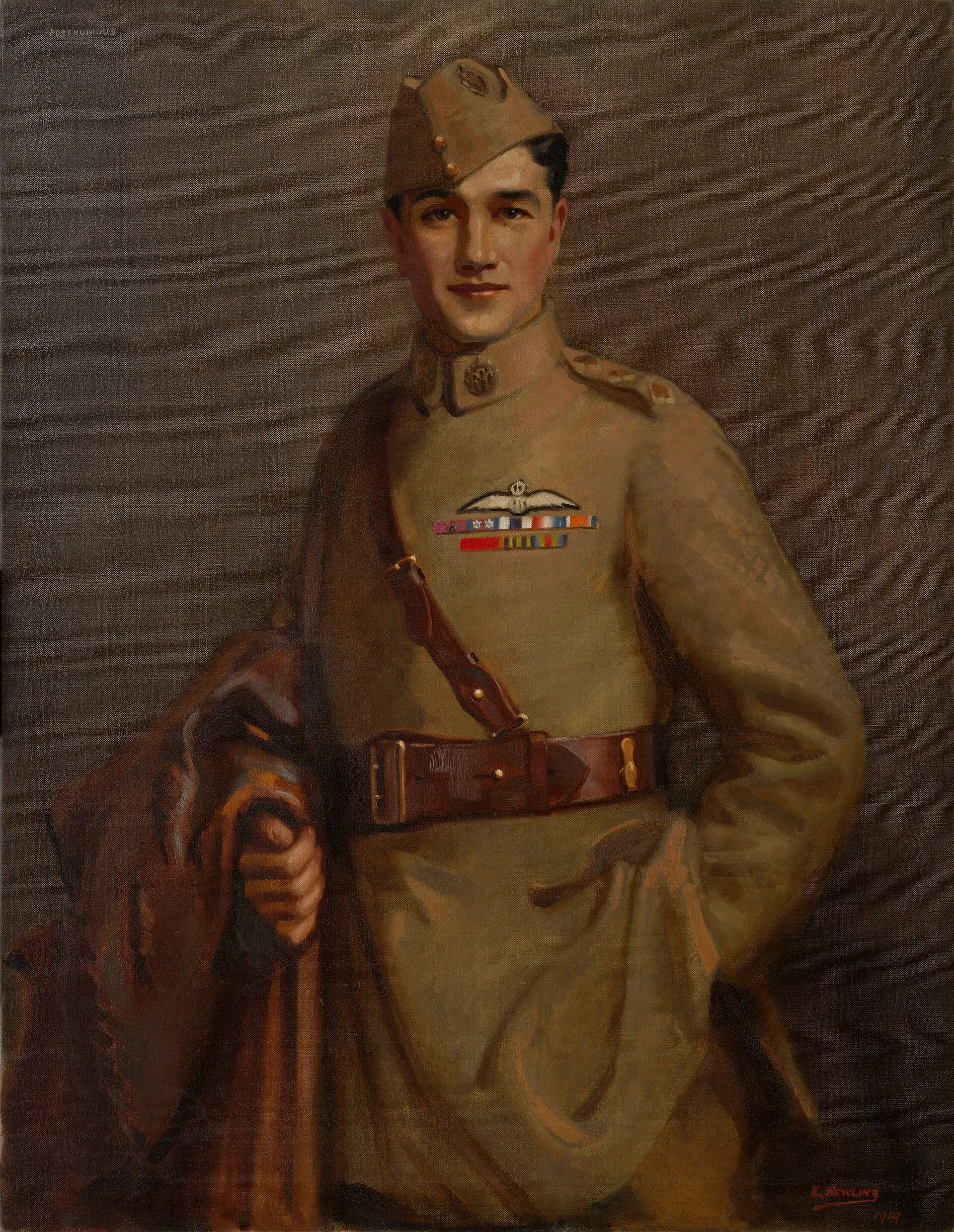
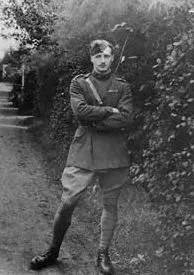
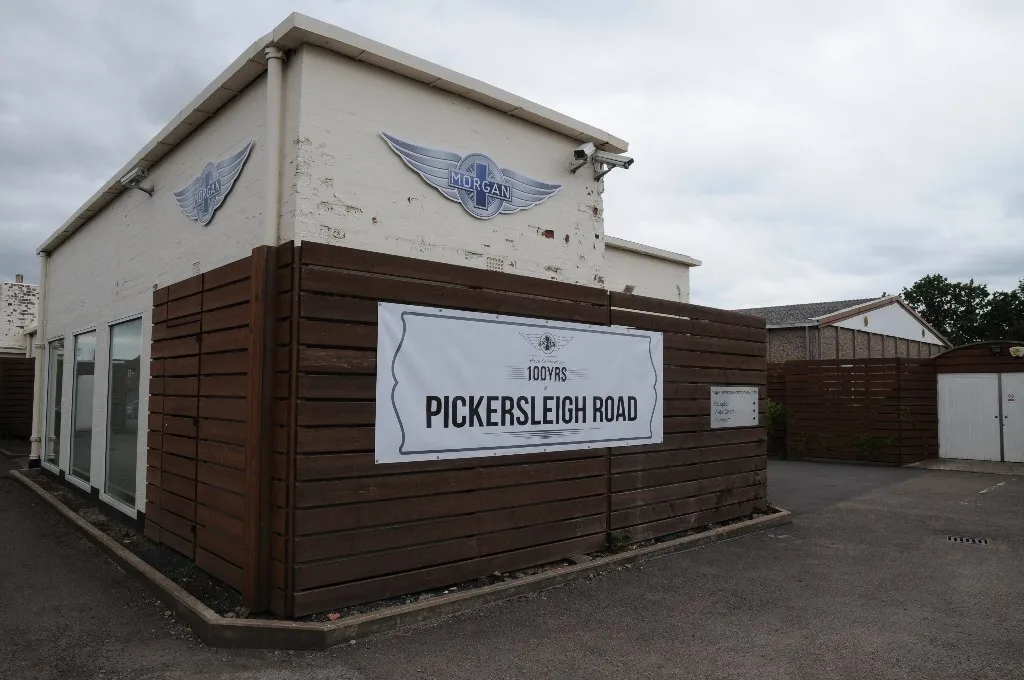
After the war the demand needed a bigger factory, on Pickersleigh Road in Malvern Link, built to make fifty cars a week. HFS’s eldest daughter, Sylvia, laid its foundation stone. Unsigned company history Grace’s Guide records an extension of 30,400 square feet opening in October 1919, bringing the works to 50,000. Grace’s Guide The Aero, with its aero screens, appeared at the Olympia show in November 1919, according to the Registry timeline. Morgan’s own history dates it 1920, and says it was inspired by Ball’s specially bodied Grand Prix car. Morgan, History (2022)
Sources differ
When the Pickersleigh Road works opened: the Registry timeline has it completed in August 1914; the company history says the new factory opened in 1918; Grace’s Guide gives an extension opening in October 1919. Morgan’s own website says its cars have been built in the same factory “since 1914”. Morgan’s own history is the most specific: HFS bought the Pickersleigh Road land from Earl Beauchamp in December 1913, and “in the summer of 1914, two large workshops were built”. That agrees with the timeline, and 1918 is more likely when full production restarted after the war. Morgan, History (2022)
1919–1924Thirty a week, and France
By the Olympia show of 1920 Morgan was building about thirty cars a week! Motor Sport, 1965 Grace’s Guide puts the output from 1919 to 1930 at about 18,000 three-wheelers, which fits nicely. Grace’s Guide
Sources differ
How many a week. Motor Sport says about thirty at the time of the 1920 show. Motor Sport, 1965 The factory’s own production figures give 2,300 cars for 1920 and 2,500 for 1921, nearer 44 and 48 a week, and make 1921 the busiest year Morgan has ever had. See the figures.
The French wanted them too, but French import duty made them dear. Robert Darmont had imported Morgans into France during the war; in 1921 he and his brother André took a licence to build them at Courbevoie, near Paris, and that very year their Morgans took the first three places in the Paris–Nice trial. Wikipedia Another Frenchman, Sandford, built his own version. Motor Sport, 1965 The Registry holds 1 Darmont-Morgan. See it.
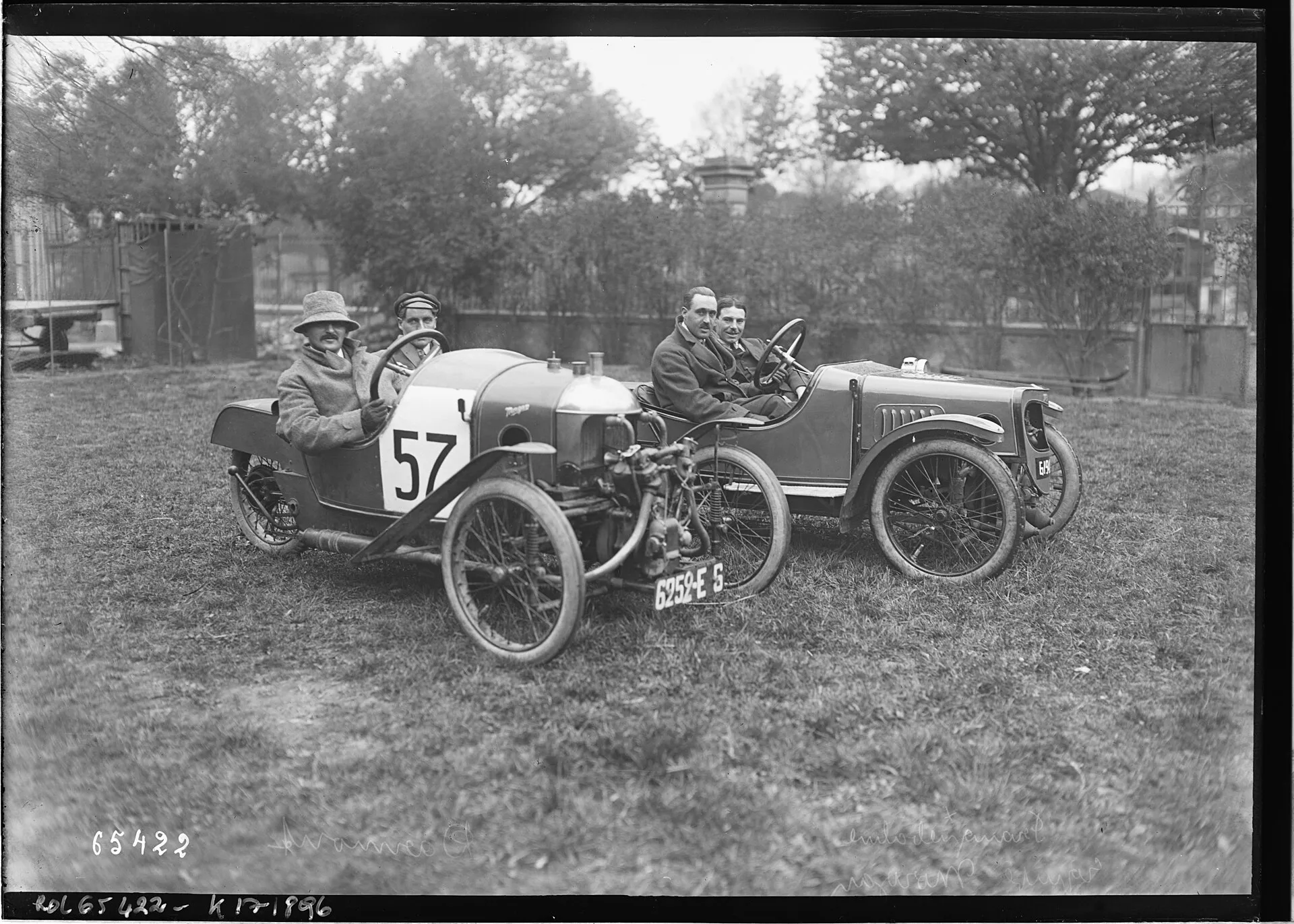
The French press photographers of Agence Rol caught Morgans all over France in these years: on the Paris–Nice trial, up Mont Ventoux, at the cyclecar races at Le Mans, and winning the 500 cc class of the French cyclecar championship at Montlhéry in 1924. Their pictures are now in the Bibliothèque nationale de France, and what a collection it is!
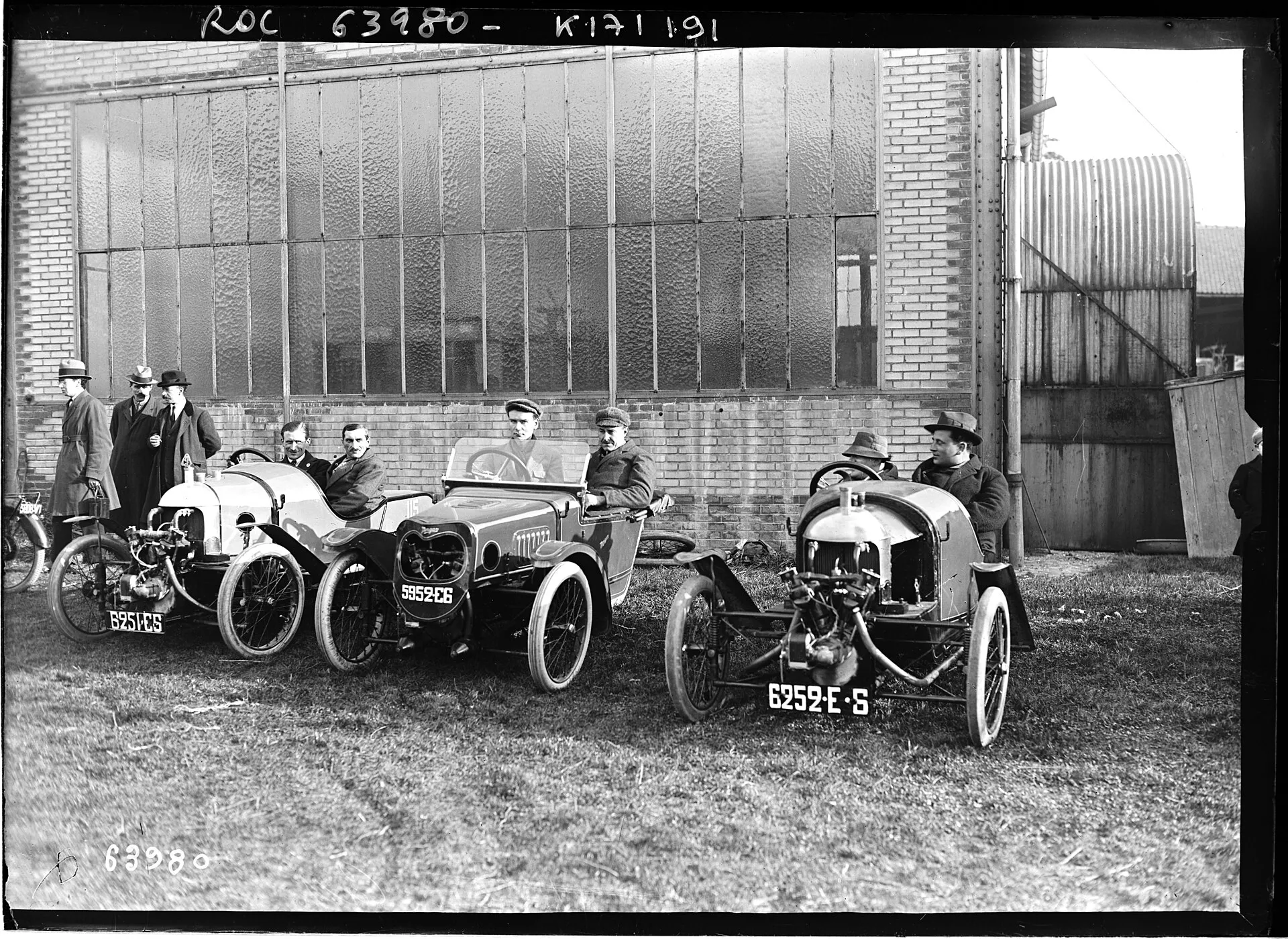
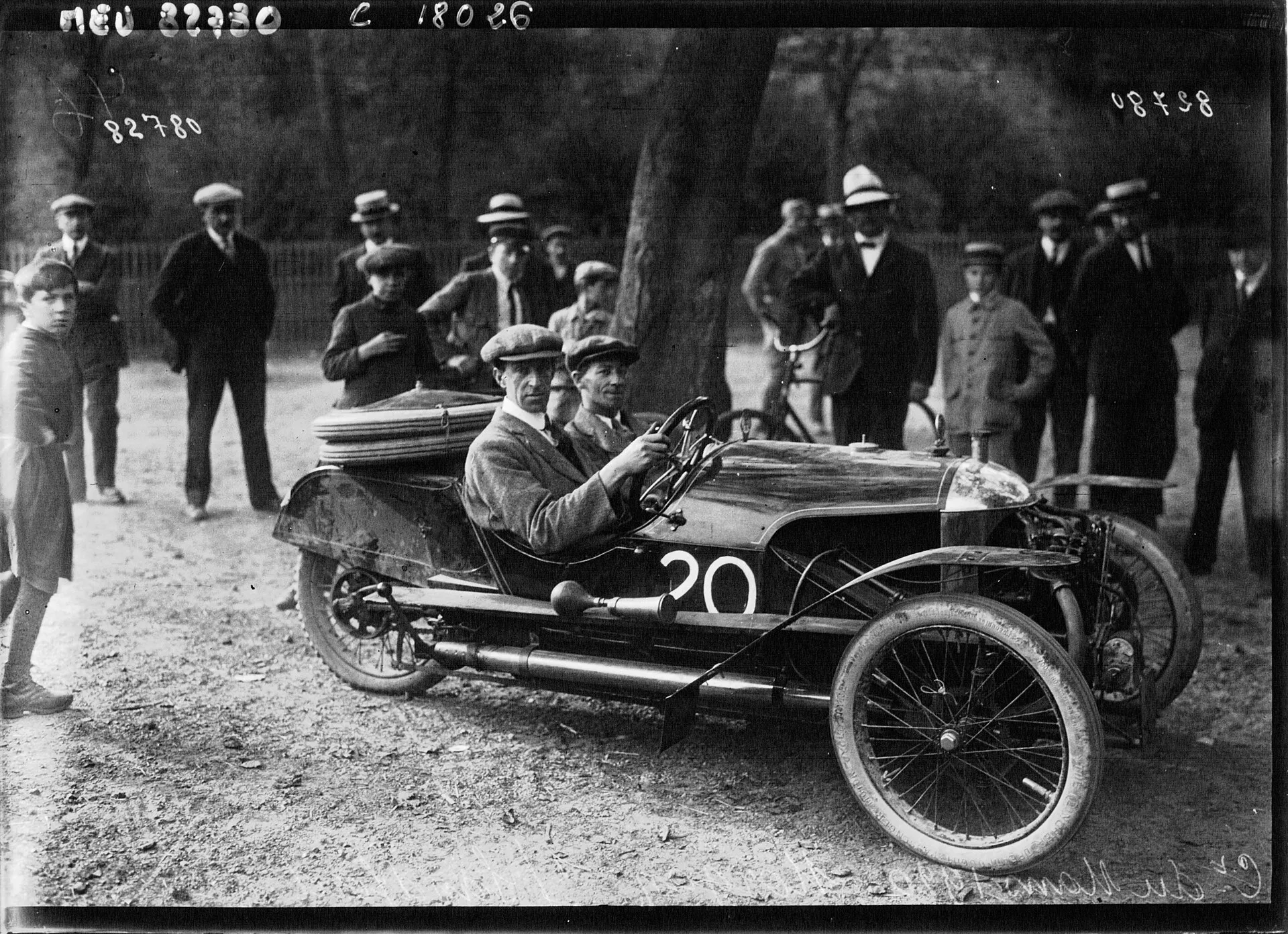
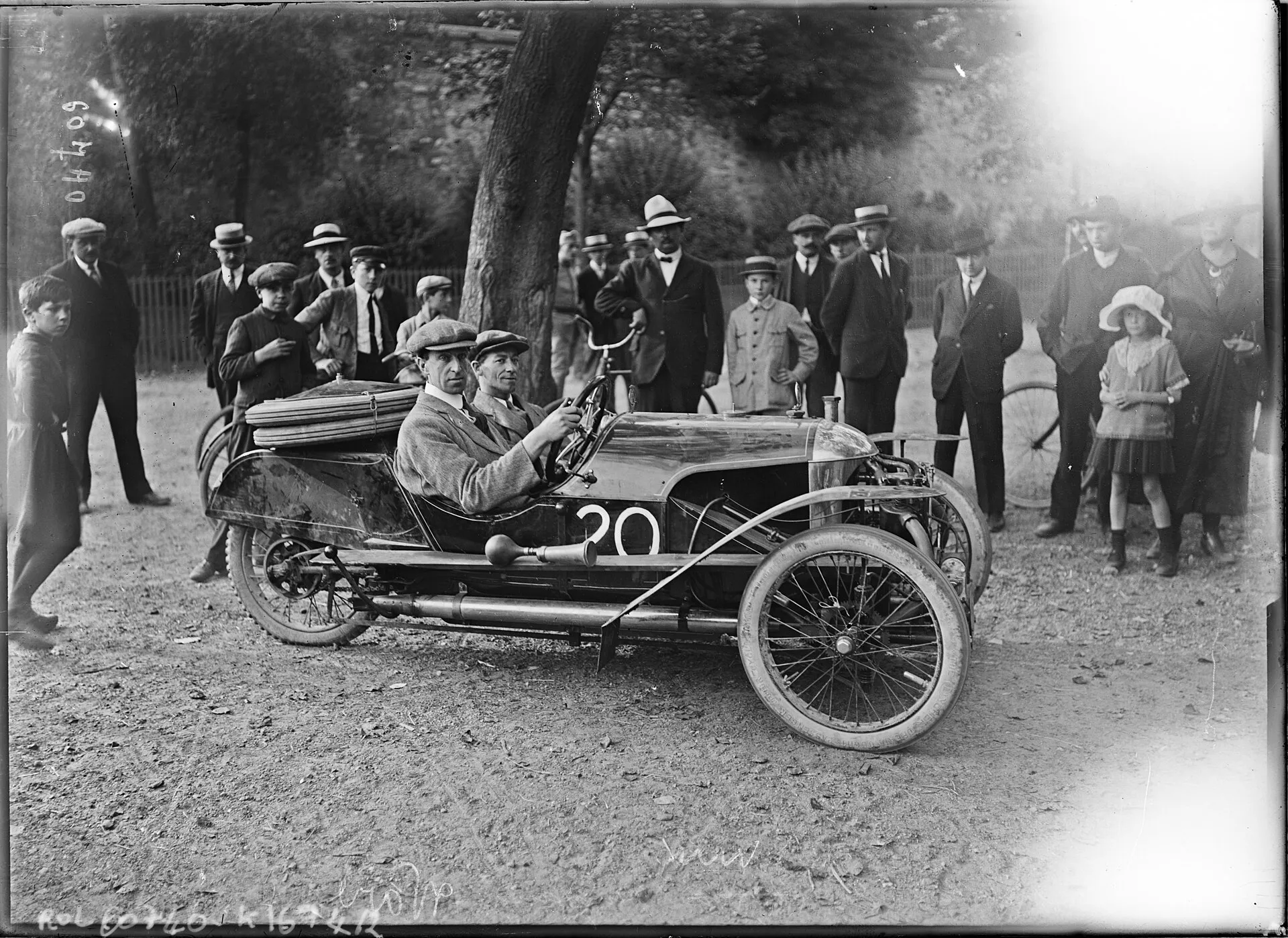
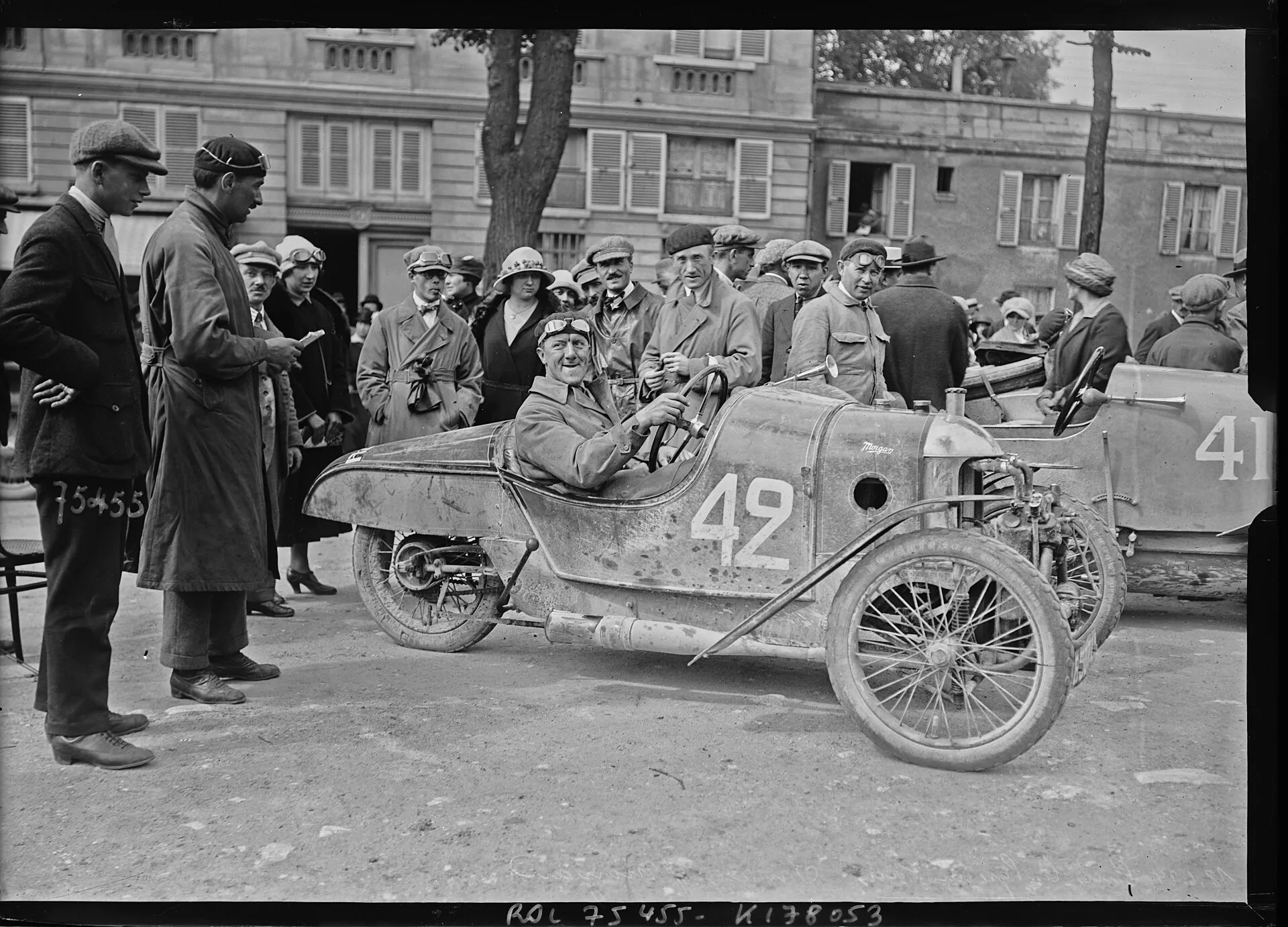
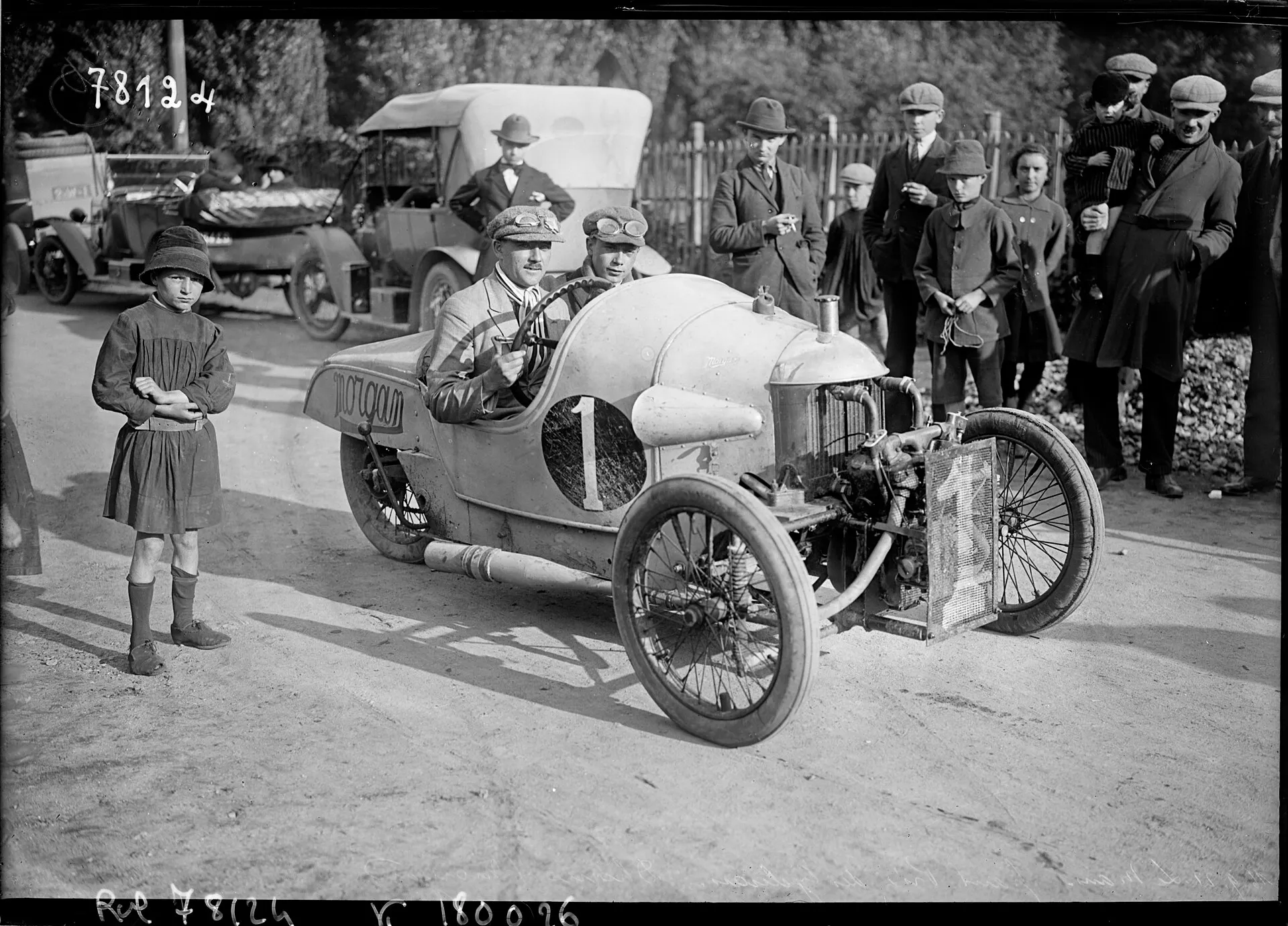
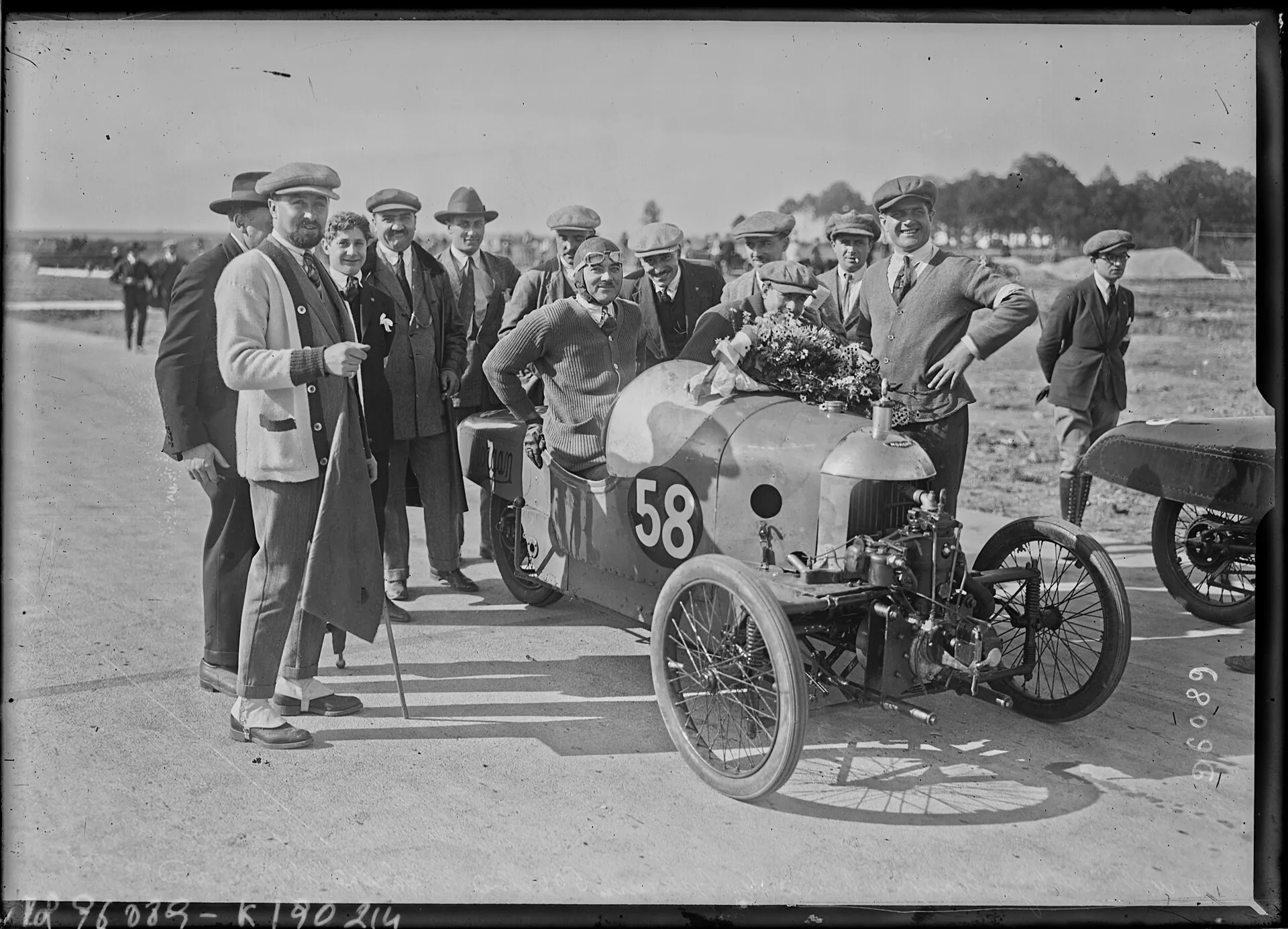
1924Banned
The Morgans were fast enough to embarrass much bigger cars, and at Brooklands they were made to start a lap behind the four-wheelers in their class. Unsigned company history Then disaster struck: in the Junior Car Club’s 200-mile race in 1924, E.B. Ware’s Morgan lost a rear tyre on lap 35, ran into the fencing and overturned, badly hurting Ware and his mechanic, Allchin. The club banned three-wheelers. Motor Sport, 1996
That made three times in eleven years that the establishment had found a way not to count the Morgan: the prize at Amiens, the trial in 1914, and now Brooklands. The ban lasted four years. Needless to say, HFS kept building them…