Here is a curious thing about Morgan: it never made its own engines. For these twenty-five years that meant every turn in the story was decided somewhere else—by J.A.P. and Matchless, by Ford, by Coventry Climax, and above all by a man at the Standard Motor Company who had once drawn Morgan’s patent. In between came the fastest three-wheeler in the world, a fourth wheel at last, two runs at Le Mans, and another war…
The Registry holds 456 cars from these years. See them.
1925–1929Back at Brooklands
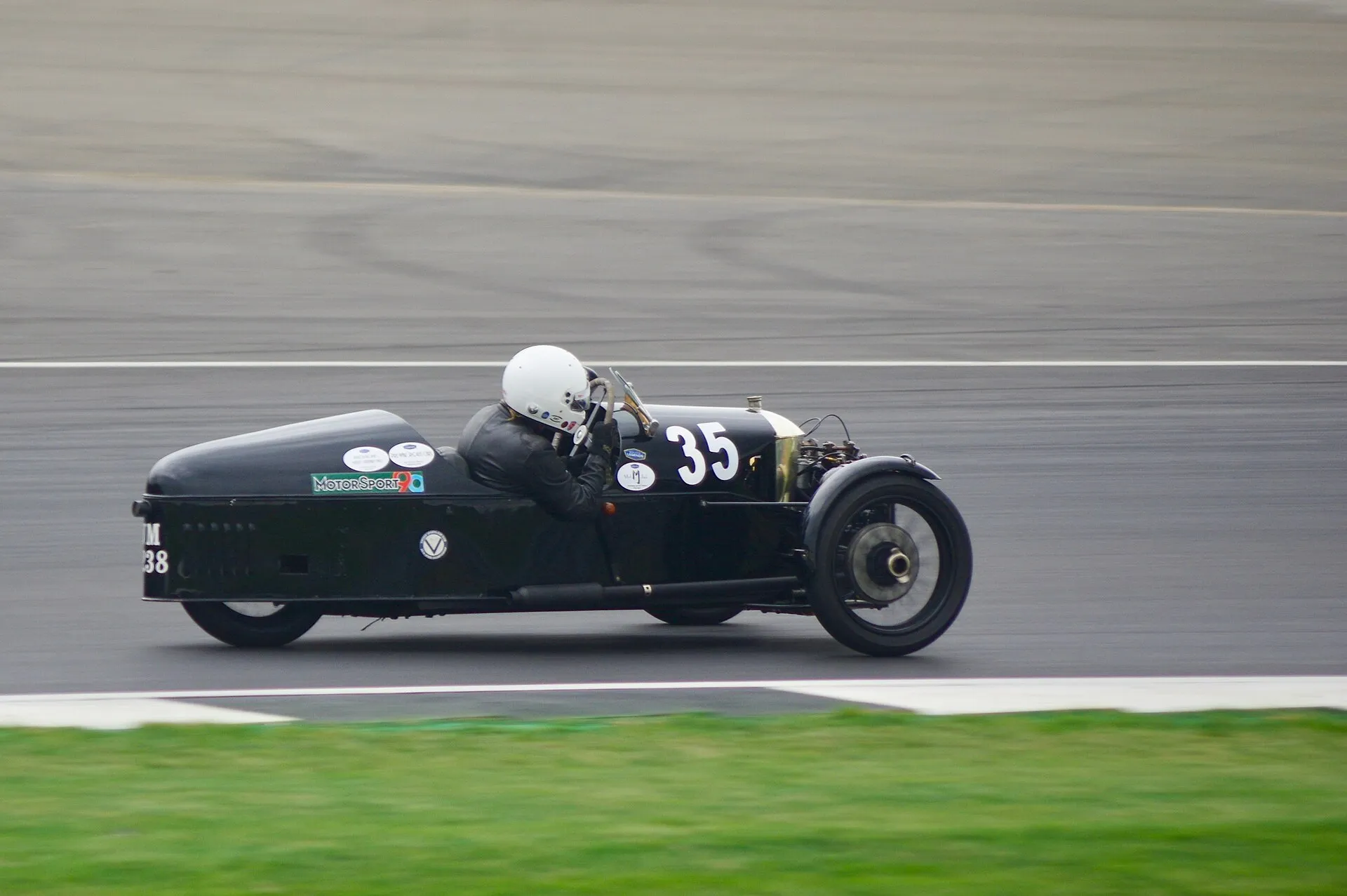
George Goodall joined in 1925 as general manager, and stayed to run the company until the end of 1958. Unsigned company history The range grew sportier, and the prices stayed honest: in 1927 a Standard three-wheeler cost £89, an air-cooled Family £111 and a water-cooled Aero £127, and the new Super Sports, with its lovely rounded tail, came in at £155 and was down to £145 before long. Motor Sport, 1965
The Brooklands ban held until a new club was formed just to end it! The New Cyclecar Club’s first meeting there, in August 1928, brought three-wheelers back, racing among themselves on a course marked out with tubs and sand-banks. Motor Sport, 1996 R.R. Jackson’s Morgan won the first race for three-wheelers only, at 67.85 mph. Motor Sport, 1965
1929–1930A hundred miles in an hour
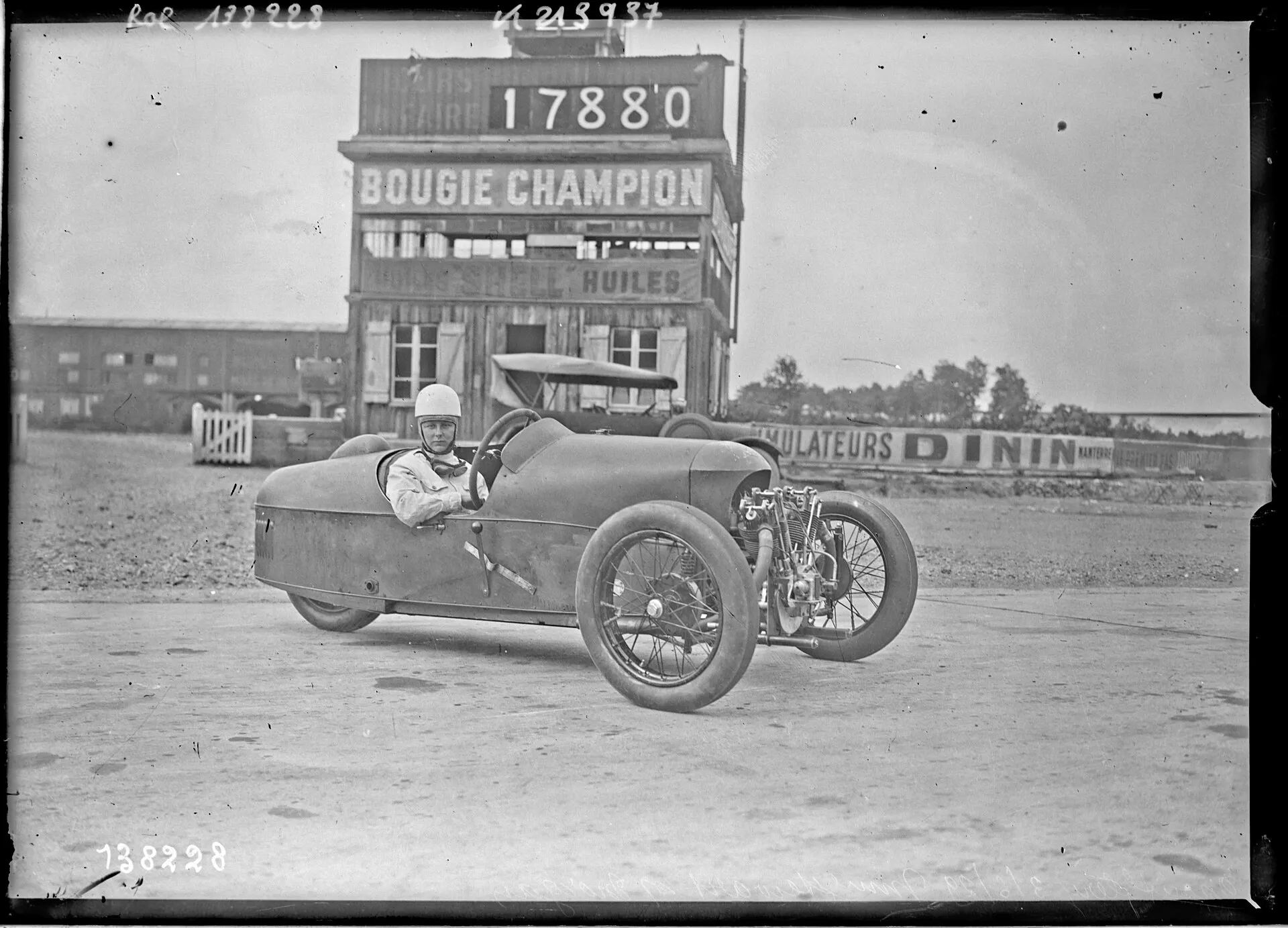
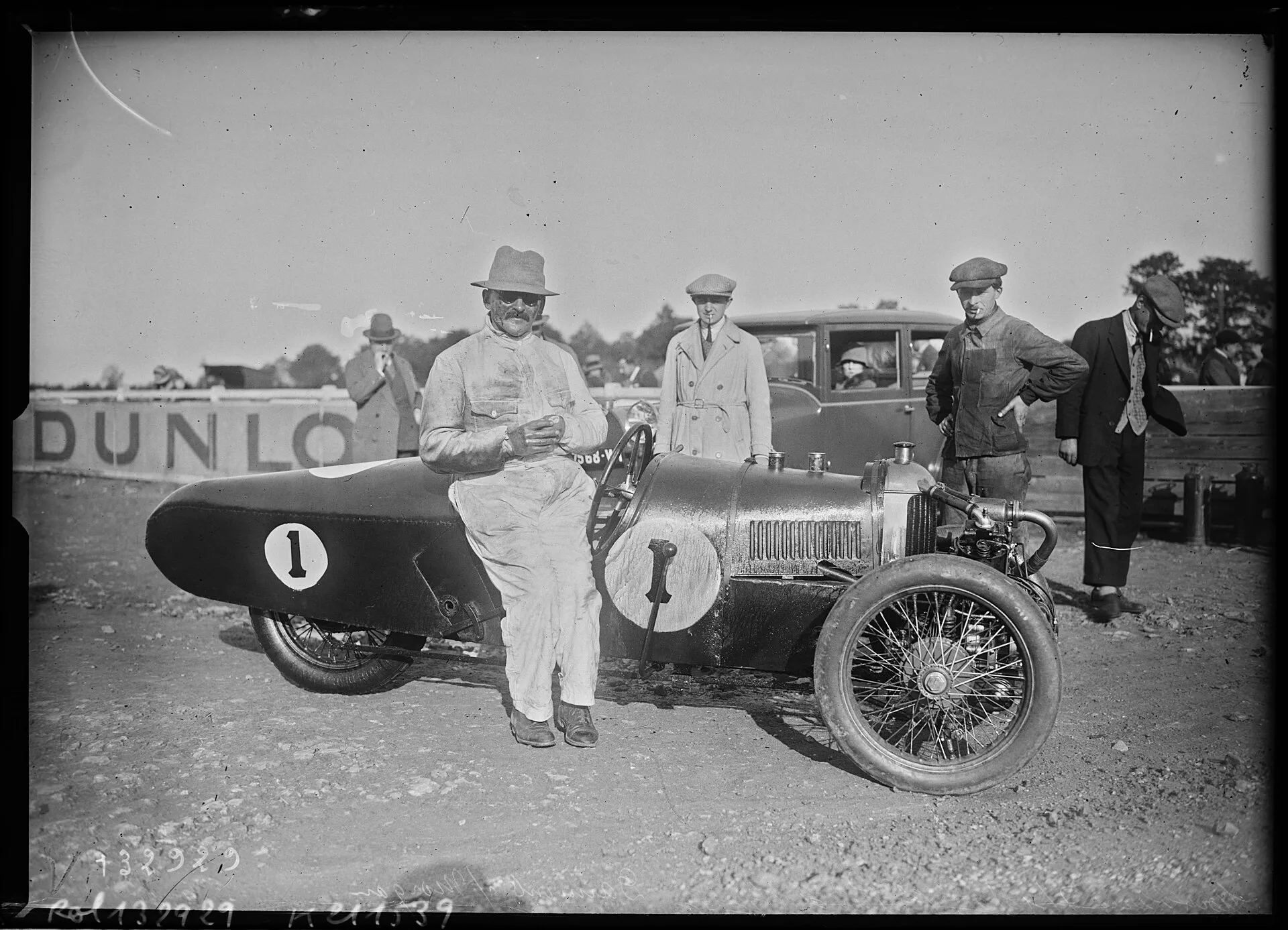
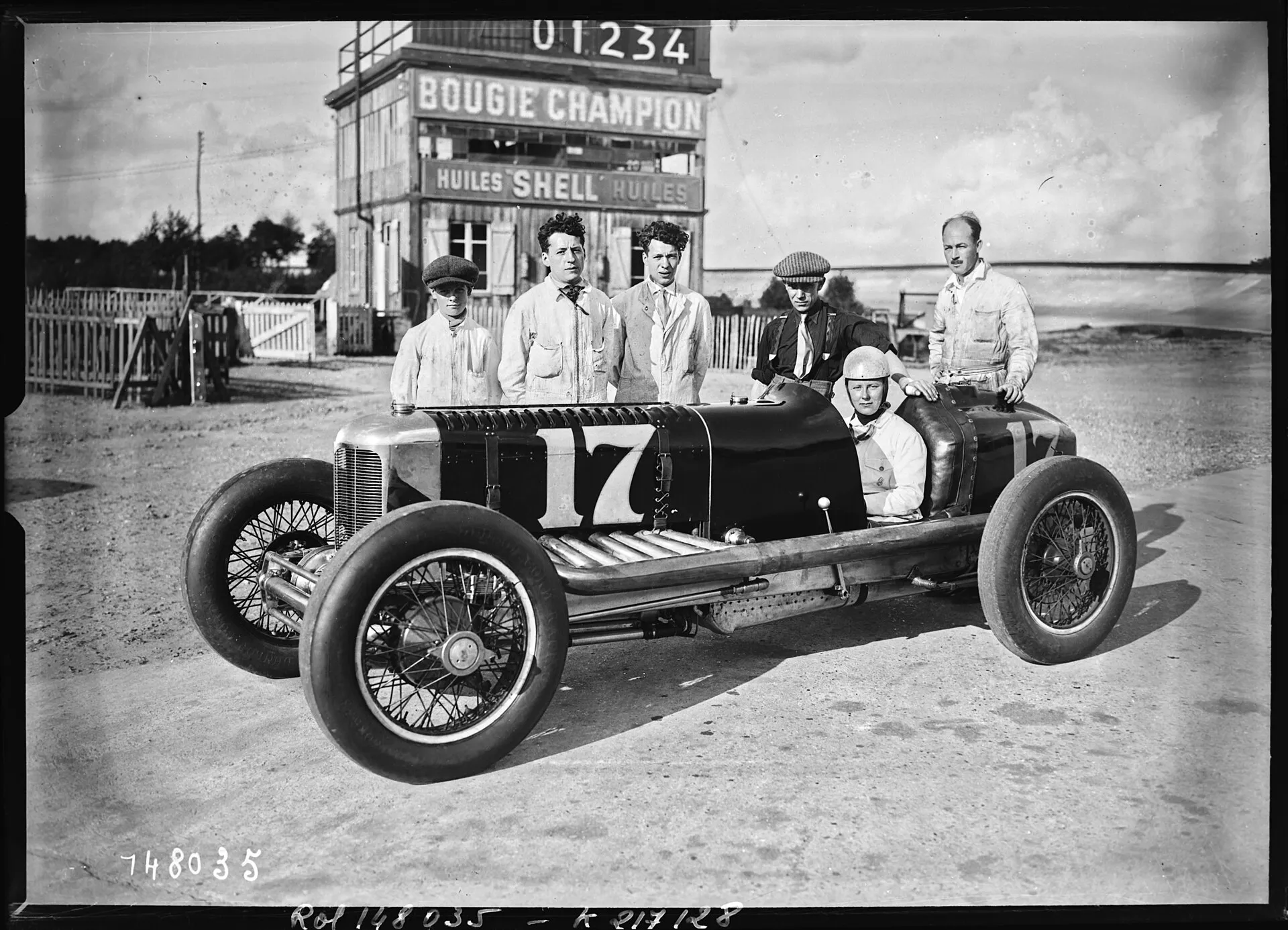
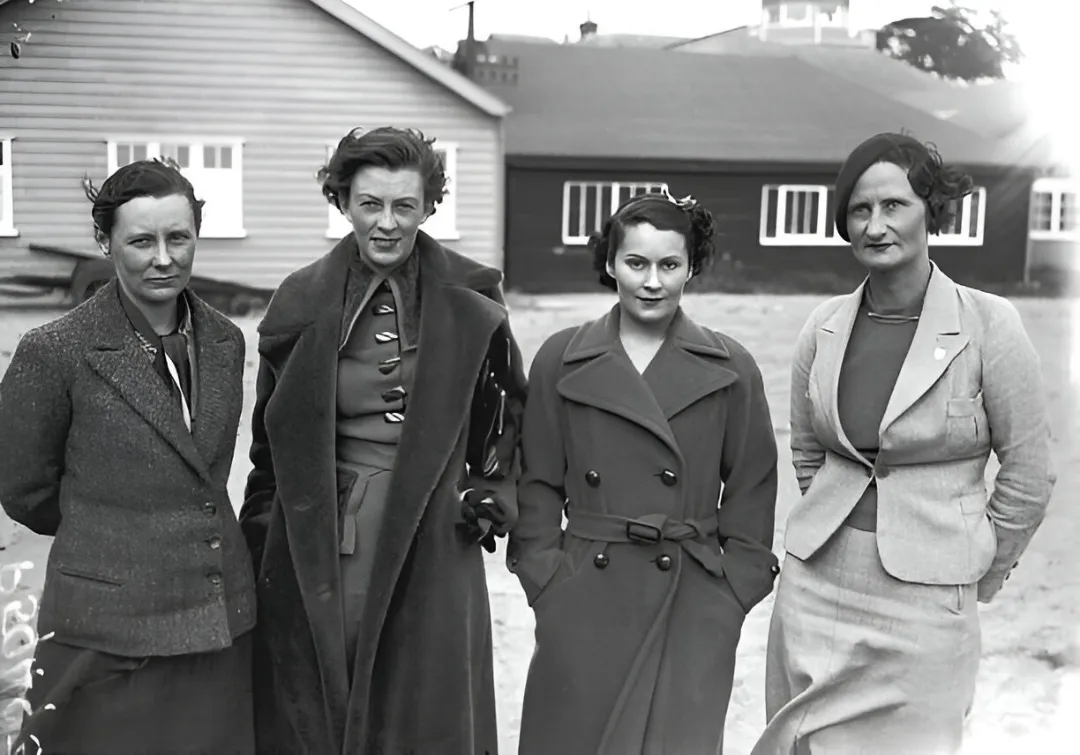
Gwenda Stewart was a remarkable woman. She had driven ambulances in the First World War and set motorcycle records in the 1920’s. Wikipedia At the banked track at Montlhéry, south of Paris, she took a Morgan Super Sports with a 998 cc J.A.P. engine, prepared by Douglas Hawkes, to 101.5 mph for the hour. No three-wheeler had ever covered a hundred miles in an hour before! Motor Sport, 1965
In 1930 she came back with S.C.H. Davis and set records from 1,500 kilometres to 24 hours; the car finally stopped after 21 hours, having averaged 64.85 mph including stops. Her highest timed speed was 113.52 mph—in a three-wheeler! Motor Sport, 1965 In 1935 she lapped Brooklands at 135.95 mph, beating Kay Petre’s record, and in 1937 she married Douglas Hawkes. Wikipedia
Sources differ
When the hundred miles in an hour was done. Wikipedia dates her Morgan record to 1930 at 113 mph, and Morgan’s own history puts the hour record in 1930. Motor Sport’s 1965 history separates the two: the hundred miles in an hour in 1929, the faster runs in 1930. The Registry timeline agrees with Motor Sport. Wikipedia, Morgan, History (2022), Motor Sport, 1965
1931–1935Three speeds, and a Ford
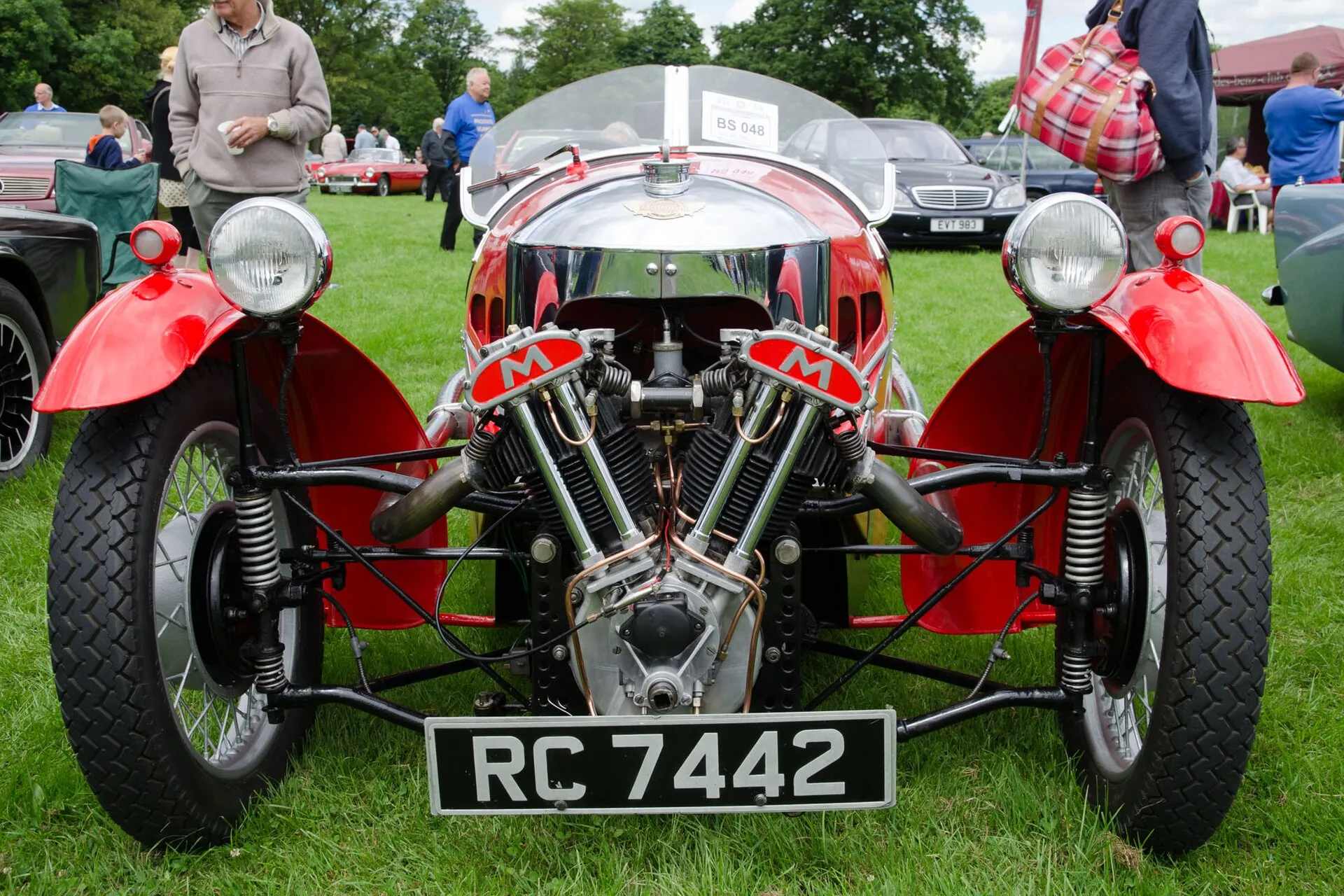
A new three-wheeler in 1931 brought three forward speeds and, at long last, a reverse gear, with a single chain and detachable wheels. Then came the F-type, with a Ford four-cylinder engine behind a flat radiator. The company history calls it the most popular three-wheeler Morgan ever made. Unsigned company history The V-twins carried on alongside, with Matchless engines replacing the J.A.P.s. Braunstein chart, v94
Sources differ
When the F-type arrived: 1932, according to Hagerty and Wikipedia’s three-wheeler article; 1933, according to the company history, Wikipedia’s company article and the Registry timeline. Hagerty UK, Wikipedia, Unsigned company history
1935–1937The fourth wheel
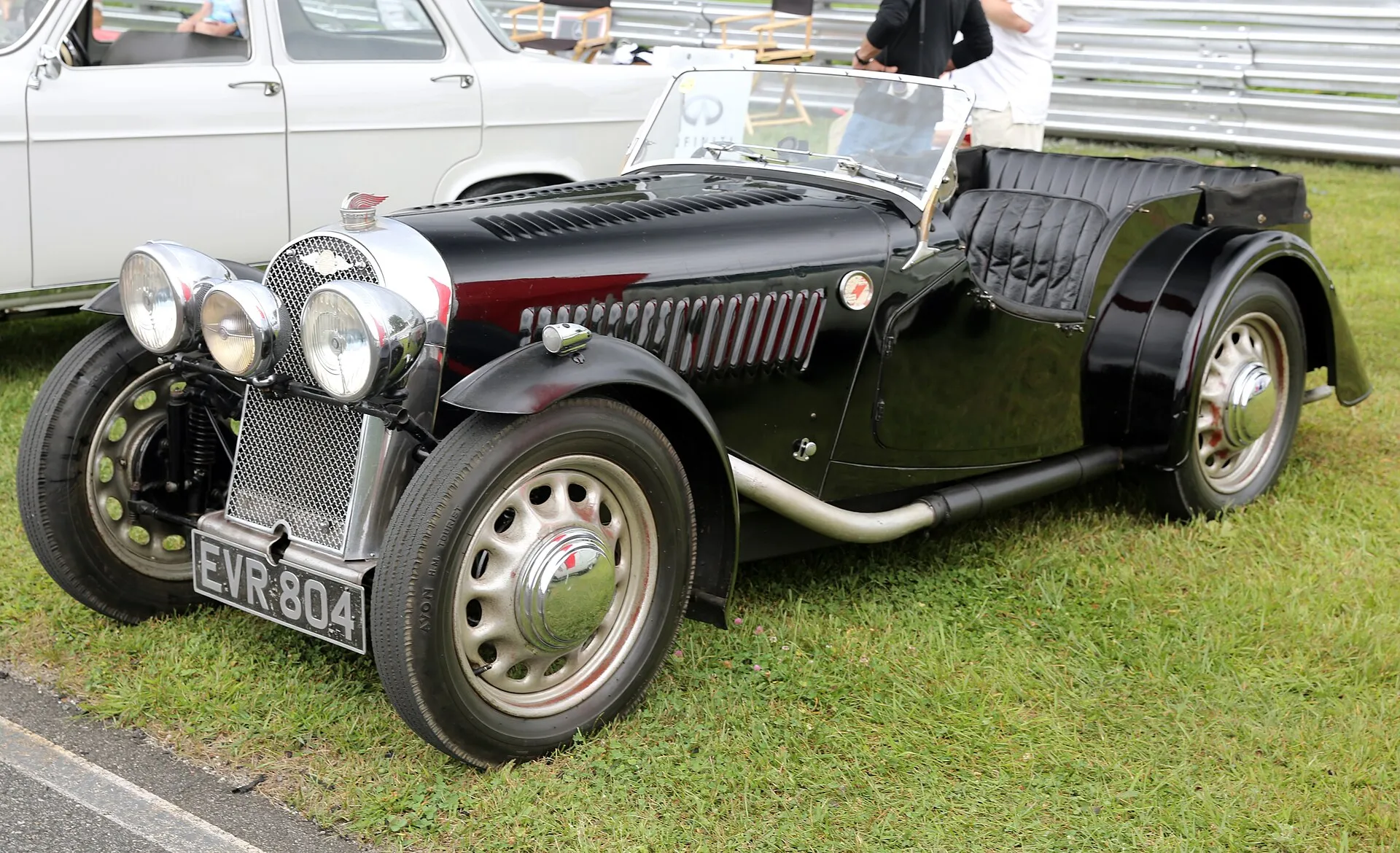
Twenty-one years after the RAC turned it away, Morgan added the wheel. The Registry timeline dates the announcement to December 1935. The car was the 4-4: four cylinders, four wheels. It had a Z-section steel chassis and an ash frame panelled in aluminium, and a 1,122 cc Coventry Climax engine of 34 bhp. Unsigned company history, Wikipedia It was shown at the London and Paris shows in 1936. Unsigned company history Mine came thirty-five years later, but you can see the family resemblance from across the street!
The two kinds of Morgan met almost exactly. Here are the factory’s own figures, from its production records:
The year Morgan changed course
A falling three-wheeler line met a new four-wheeled idea. Move through the factory figures and watch the balance tip.
1936 · The first four-wheeler goes on sale, and the two formats meet almost exactly.
From the price list2s Sports £101; MX2 SS £126; MX4 SS £136; 4s Family £96; 4s Sports Family £110; 4cyl £115
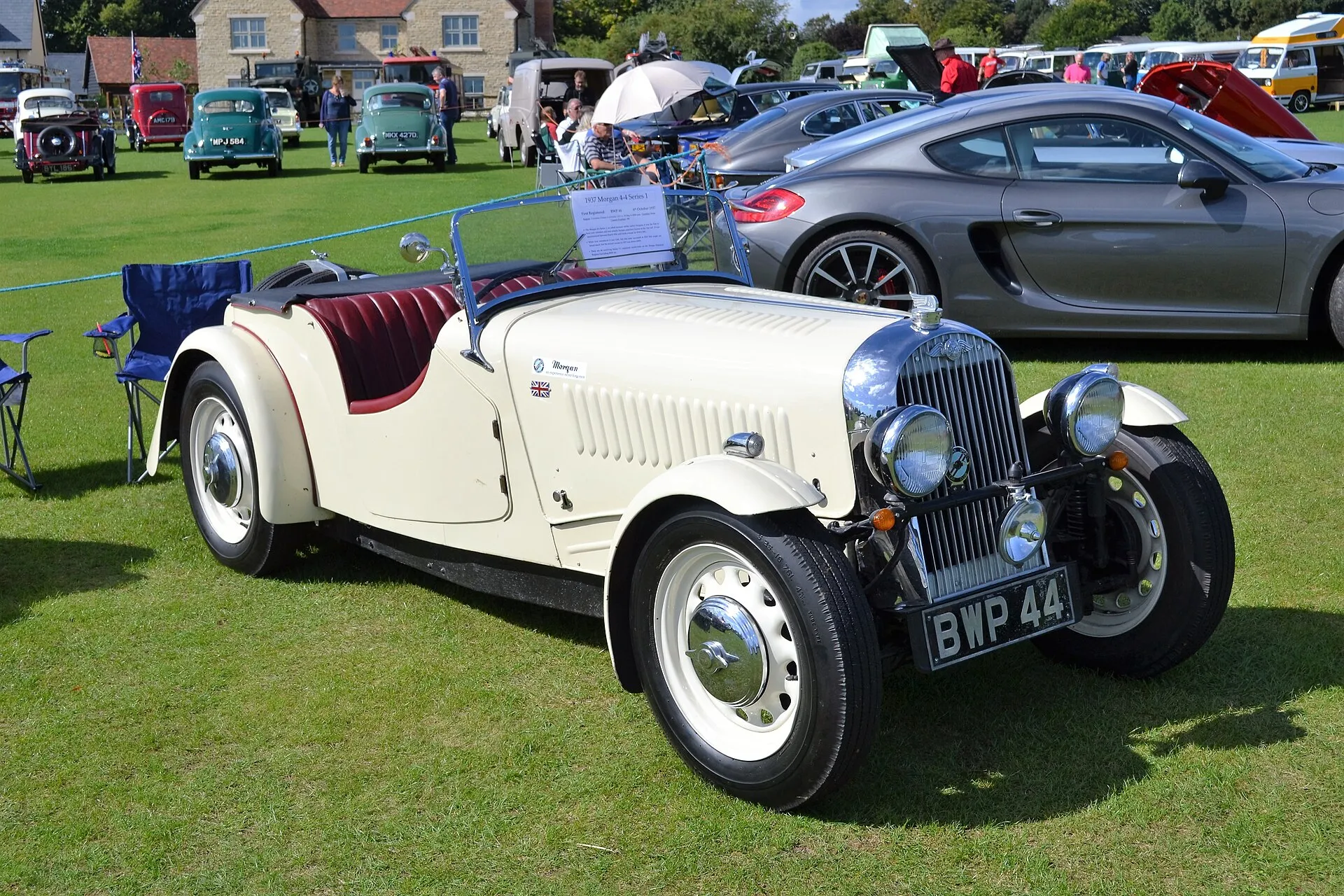
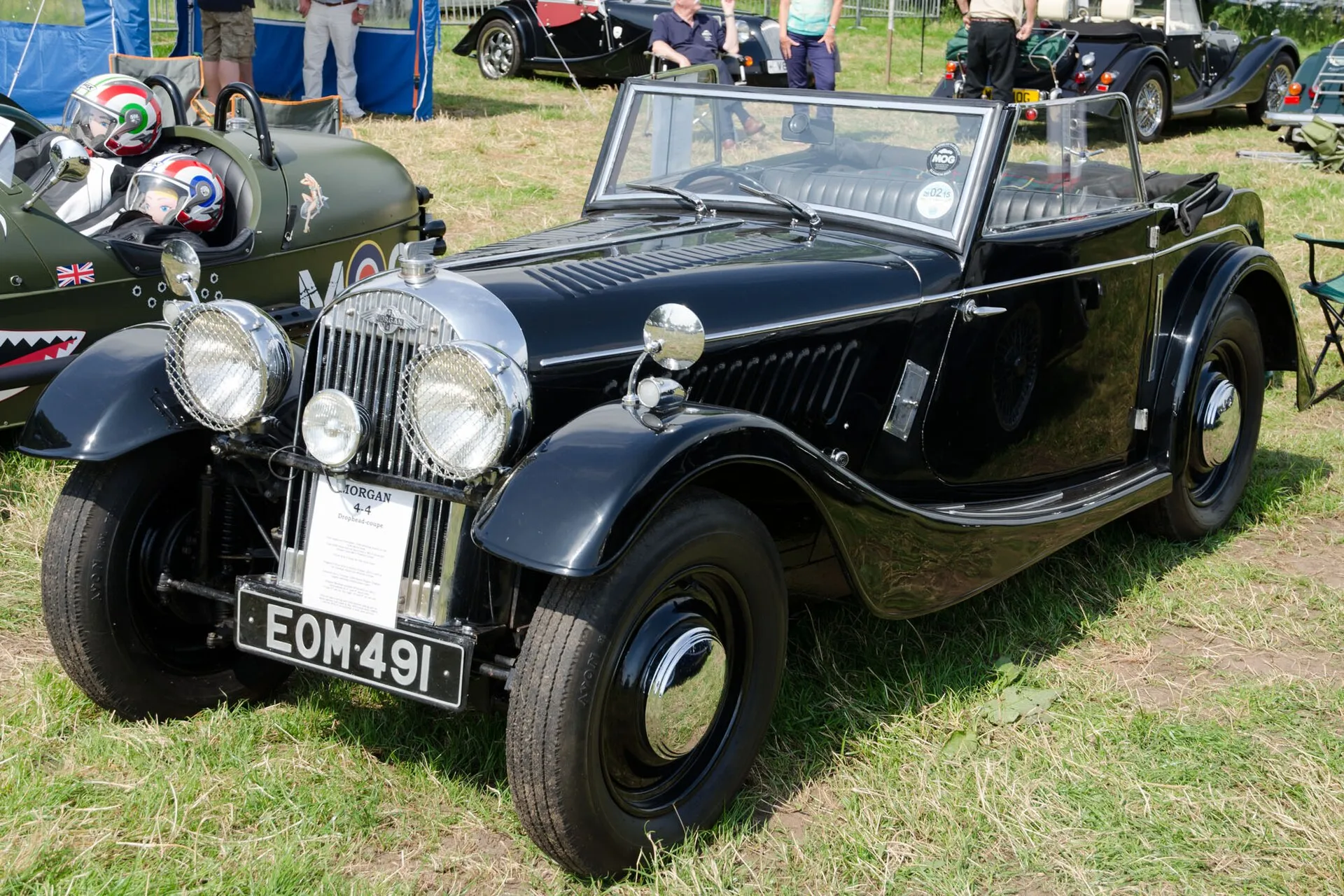
HFS’s father died in 1936, and HFS became chairman and governing director. Wikipedia, Unsigned company history A four-seater followed the two-seater, and in 1938 a drophead coupé. Unsigned company history The Registry has 203 4-4s built before 1951. See them.
Sources differ
The 4-4’s debut: announced in December 1935, by the Registry timeline; March 1936, by an enthusiast’s history. gomog.com Motor Sport says only that the first four-wheeler arrived in 1936, and its autumn 1935 guides to the 1936 cars list no four-wheeled Morgan, which fits a launch after the 1935 show season. Motor Sport, August 1965, Motor Sport, July 1996, Motor Sport, Oct–Nov 1935 And HFS’s father died in 1936 by Wikipedia and the Registry timeline, in 1937 by the company history and by Bill Boddy in Motor Sport. Morgan’s own history says 1936, naming his father as Prebendary George Morgan. Grace’s Guide gives the date: the Prebendary of Hereford Cathedral, Henry George Morgan, died on 10 November 1936, and HFS became chairman in 1937, which probably explains the later year. Wikipedia, Unsigned company history, Motor Sport, August 1965, Morgan, History (2022), Grace’s Guide: H. G. Morgan, Grace’s Guide: H. F. S. Morgan
1938–1939Le Mans, twice
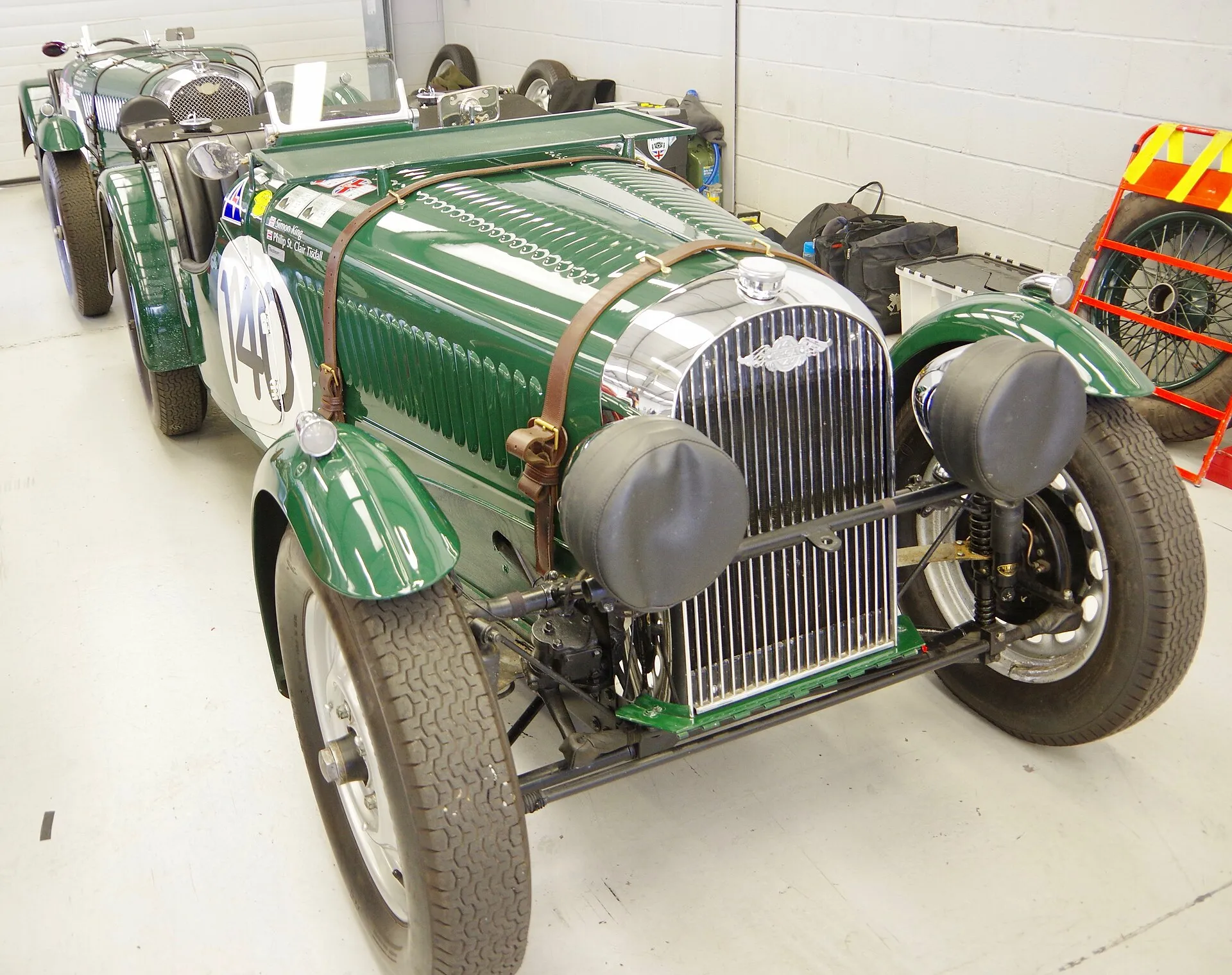
Prudence Fawcett wanted to race at Le Mans, and she got her way! Lance Prideaux-Brune, who held the Morgan agency at the Winter Garden garage, brought HFS round: Morgan would supply a car, on condition that the garage ran the whole operation. Dick Anthony prepared its engine to 1,098 cc to fit the class. mogsport.net
On 18 and 19 June 1938 she and Geoffrey White drove the 4-4, number 40, registered BNP 370, to 13th place out of 42 starters: 1,373 miles at 57.2 mph. She was the first person ever to drive a Morgan in the race. Wikipedia, mogsport.net, 24h-lemans.com It was also her last race: she gave up motor racing when she became engaged to a flyer—on condition that he gave up flying! mogsport.net
In 1939 White went back with Dick Anthony, in car number 37. They finished 15th, second in the 1.5-litre class behind an HRG, having covered 1,545.8 miles at 64.4 mph, and they were the highest-placed British car. Wikipedia, mogsport.net Anthony joked afterwards that Morgan had built a car to last him twenty-four years when all he needed was twenty-four hours. mogsport.net (Having put 40,000 miles on mine, I can vouch for the first part!)
Sources differ
The company history says White and Anthony came first in their class in 1939. The race results put them second, behind an HRG. Unsigned company history, Wikipedia, mogsport.net
1938–1939Sir John Black’s engine
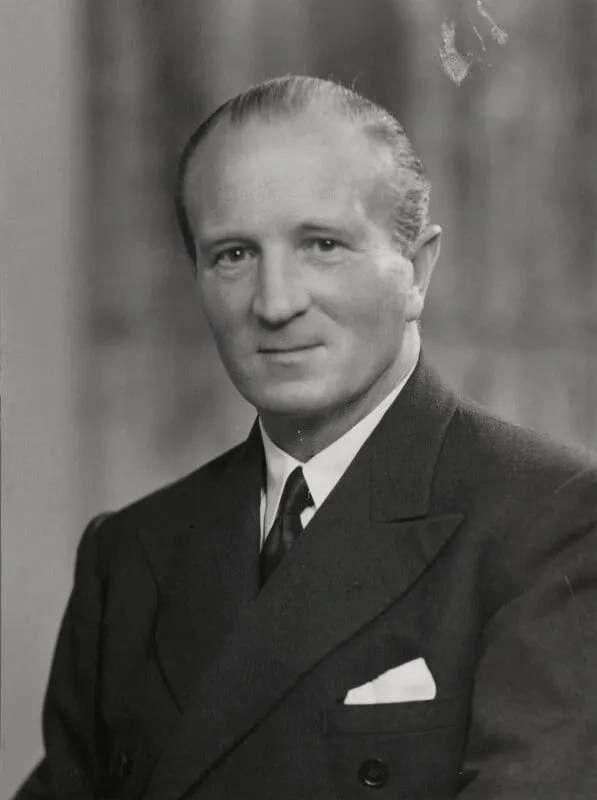
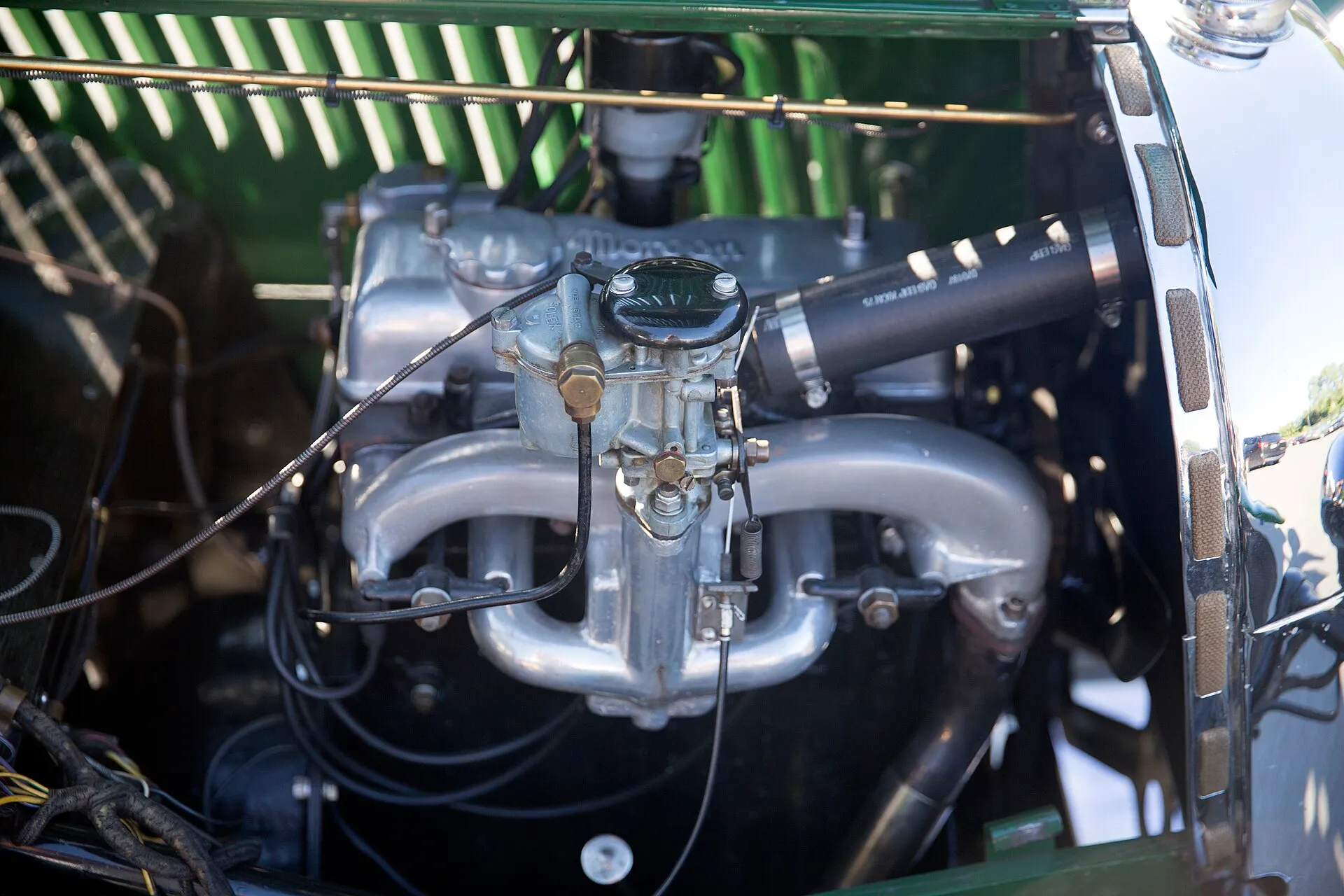
Here he is again, just as I promised! John Black, who had drawn the patent for the first Morgan in 1910, was now Sir John Black of the Standard Motor Company. At his express wish, Standard built Morgan a special 1,267 cc engine for the 4-4. Unsigned company history
Two experiments from these years never went further. A 4-4 with a 22 hp Ford V8 went very well, but was dropped when the horsepower tax rose from 15 to 25 shillings. (A Morgan with a V8! It would take another thirty years…) A 1,000 cc car with an Arnott supercharger did over 80 mph. Unsigned company history
Sources differ
When the Standard engine arrived: 1938, by the company history and the Registry timeline; 1939, by Wikipedia and an enthusiast’s history, which dates it to May 1939. Unsigned company history, Wikipedia, gomog.com
1939–1945The second war
Car-making stopped altogether. Only the service shop and the spares department carried on; the rest of the works made parts for the Oerlikon anti-aircraft gun, aircraft undercarriage and other precision work, and three rows of workshops went to the Standard Motor Company’s aero-engine division. Halfway through the war the wood shop was leased to Sir Alan Cobham’s Flight Refuelling, which modified a Handley Page Hereford bomber right there in the factory to take on fuel in the air! Unsigned company history, Morgan, History (2022)
The owners kept the cars going, as owners do. In May 1944 a letter in Motor Cycling proposed a club for Morgan three-wheelers. Its first bulletin went out that October, and its first meeting was held in South London in February 1945, while bombs were still falling on the city. In September 1945 the Morgan Three Wheeler Club held its inaugural general meeting in Malvern. Three Wheeler Club
1945–1952The last three-wheelers
With steel short after the war, Morgan’s aluminium-panelled bodies helped it become one of the first British factories back in production. Unsigned company history The last twelve V-twin three-wheelers were built in 1946 and shipped to Australia. Steel was rationed according to exports, so distributors were appointed in the United States, Canada, South America, Australia, South Africa and Europe. Alas, the four-wheeler sold abroad and the three-wheeler did not, and in 1950 the company decided to stop making it. Unsigned company history
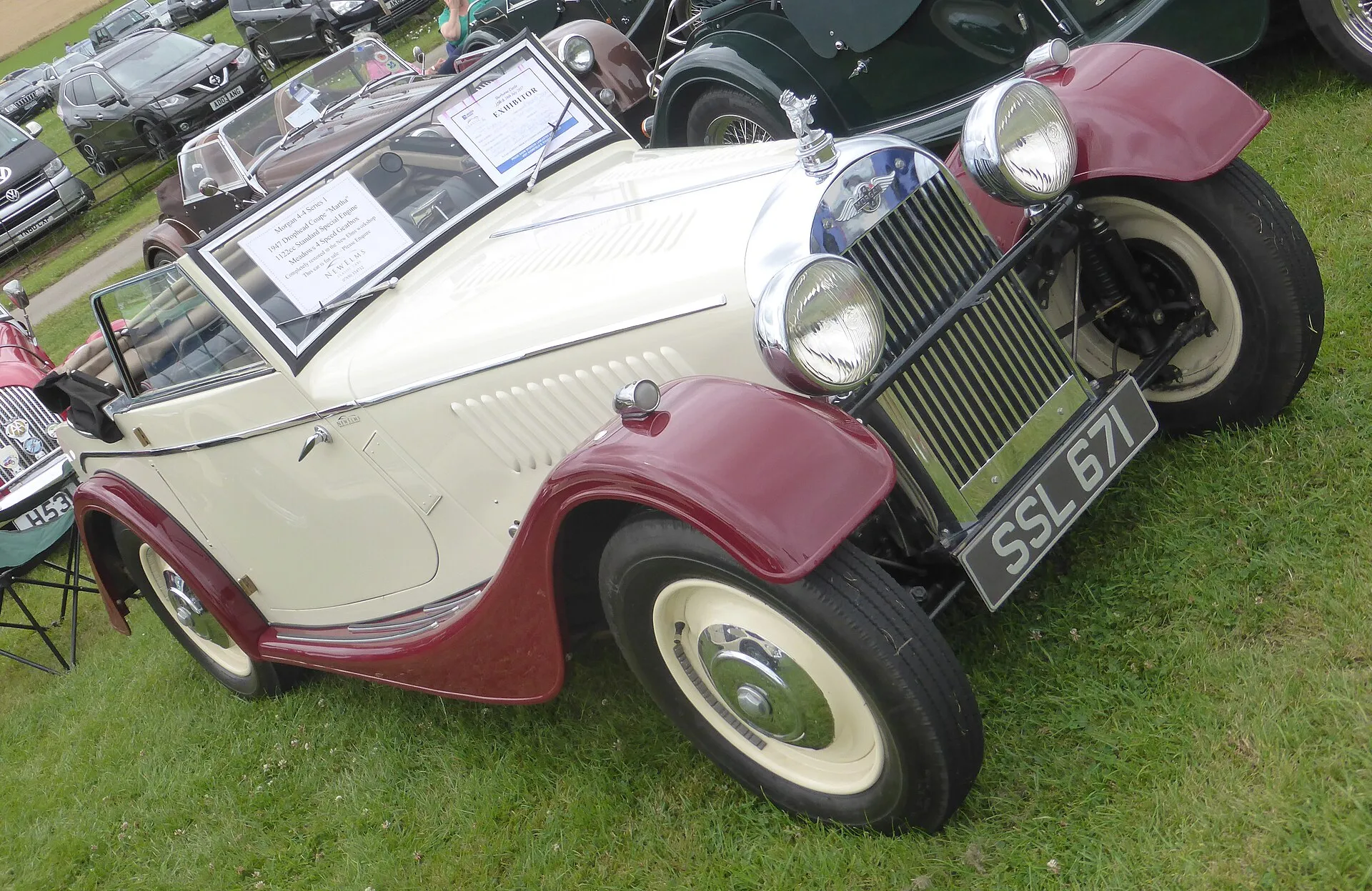
In 1947 two things happened that would shape everything after. Peter Morgan joined the firm, and Standard announced that it would build one engine only. The 1,267 cc unit would end in 1949, and Morgan needed something bigger. Unsigned company history That is where the next chapter begins!
Sources differ
When the last vintage three-wheeler left the works: 1952, according to Wikipedia and Hagerty; 14 July 1953, according to the Registry timeline. Wikipedia, Hagerty UK